Composite Engineering BQM-167 Skeeter
Subscale aerial target drone operated by the U.S. Air Force.

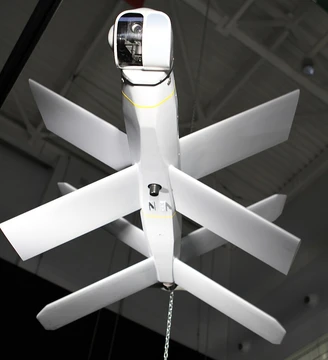
The Composite Engineering BQM-167 Skeeter is a subscale drone used as an aerial target. It was built by Composite Engineering Inc., which is now part of Kratos Defense & Security Solutions. The U.S. Air Force and some international air forces operate it, and it took over from the Beechcraft MQM-107 Streaker.
The drone is made from carbon fiber and epoxy-based materials. Two prototypes were built and first flew in 2001. The Air Force chose the BQM-167A as its next subscale target in July 2002. Six targets were built for the flight performance demonstration phase, which began with a first flight on December 8, 2004, and included 13 launches through March 2006. Acceptance testing finished in August 2006, followed by 13 pre-operational test flights using production drones from August 2006 to June 2007. The first live-fire air-to-air missile mission with the BQM-167 occurred on February 7, 2007. Initial operational capability came in 2008. Each target cost $570,000.
The 82nd Aerial Targets Squadron at Tyndall Air Force Base, Florida, operates and maintains the drone. It launches from a rail system using a rocket-assisted takeoff and is recovered on land or at sea with a parachute. After inspection and refurbishment, it returns to service. The U.S. Air Force has 37 in its inventory. On March 19, 2021, a BQM-167 washed ashore in Boynton Beach, Florida, following a weapons system evaluation.
A variant, the UTAP-22 Mako, is a low-cost unmanned combat aerial vehicle developed from the BQM-167A. Kratos funded its development, and the second flight occurred on November 23, 2015. That test involved 94 minutes of collaborative operations with a manned AV-8B Harrier, demonstrating command and control via a tactical data-link, autonomous formation flying, and transfer of control between operators. The turbojet-powered aircraft is 6.1 meters long, travels at Mach 0.91, reaches 50,000 feet altitude, has a maximum range of 1,400 nautical miles, and can stay aloft for three hours. It carries a 159 kg internal payload, a 227 kg external payload, and a 45 kg weapon hardpoint on each wing. It is recoverable on land or at sea using a parachute. The UTAP-22 was officially named Mako in May 2017 and costs between $2 and $3 million.
Operators include the United States Air Force, the Republic of Singapore Air Force, and the Swedish Defence Materiel Administration.
Quick Facts
- Aircraft Type
- Unmanned target drone
- National Origin
- United States
- Manufacturer
- Composite Engineering Inc. / Kratos Defense & Security Solutions
- Primary User
- United States Air Force
- Number Built
- 37
- Developed Into
- Kratos BQM-177
Facts from the source article.
Lore & Background
The BQM-167 was developed and manufactured by Composite Engineering Inc., now part of Kratos Defense & Security Solutions, and is constructed of carbon fiber and epoxy-based materials. Two prototype targets were built and test flown in 2001. The BQM-167A was selected as the next-generation Air Force subscale aerial target in July 2002. A total of six targets were built for use during the flight performance demonstration phase, with its first flight on 8 December 2004. A total of 13 FPD launches were made into March 2006. First acceptance testing was completed in August 2006, then pre-operational testing consisted of 13 test flights using production targets from August 2006 through June 2007. The first BQM-167 air-to-air missile live-fire mission took place on 7 February 2007. Initial Operational Capability was achieved in 2008. Each target cost US$570,000.
The 82nd Aerial Targets Squadron operates and maintains the target at Tyndall Air Force Base, Florida. The drone is land-launched using a rocket-assisted takeoff and launched from a rail system, and recovered on land or sea using a parachute system. After assessment and refurbishment, the drone is placed back into service. The USAF has had 37 in inventory. On 19 March 2021, a BQM-167 washed ashore in Boynton Beach, Florida after a weapon systems evaluation.
A variant, the UTAP-22 Mako, was developed from the BQM-167A as a low-cost unmanned combat aerial vehicle. On 23 November 2015, Kratos completed the second flight of its self-funded Unmanned Tactical Aerial Platform (UTAP-22). The test involved collaborative airborne operations with a manned AV-8B Harrier fighter for 94 minutes demonstrating command and control through a tactical data-link, autonomous formation flying with the AV-8B, and transfer of UTAP-22 control between operators in a tactical network and then to an independent control link. The 6.1 m (21 ft)-long turbojet-powered aircraft can travel at 0.91 Mach up to an altitude of 50000 ft with a maximum range of 1400 nmi and an endurance of three hours. It can carry a 159 kg internal payload, a 227 kg external payload, and has a 45 kg-capable weapon hardpoint on each wing. The platform is recoverable on land or at sea using a parachute system. In May 2017, the UTAP-22 received the official name Mako. The aircraft costs between $2-$3 million.
Reader's Guide
The BQM-167 Skeeter represents a key evolution in aerial target drones for the United States Air Force, replacing the earlier Beechcraft MQM-107 Streaker. Its carbon fiber and epoxy construction, rocket-assisted takeoff from a rail system, and parachute recovery on land or sea allowed repeated use after refurbishment. The drone's role in live-fire air-to-air missile missions, first conducted in February 2007, underscores its importance in weapons system evaluation. The variant UTAP-22 Mako, developed by Kratos as a self-funded project, extended the platform's utility into low-cost unmanned combat aerial vehicles, demonstrating collaborative operations with manned aircraft such as the AV-8B Harrier. The Mako's ability to carry internal and external payloads, including weapon hardpoints, and its endurance of three hours at Mach 0.91, highlight its transition from a pure target drone to a tactical unmanned platform. The BQM-167's operational history, including its use by the Republic of Singapore Air Force and the Swedish Defence Materiel Administration, and its inventory of 37 units with the USAF, reflect its continued relevance in aerial training and evaluation.
Did You Know?
- The BQM-167 replaced the Beechcraft MQM-107 Streaker as the U.S. Air Force's next-generation subscale aerial target.
- The UTAP-22 Mako variant can carry a 45 kg-capable weapon hardpoint on each wing.
More in Loitering Munitions and Target Drones 1-24
Spotted an error? Know more?
Reader corrections go straight into our review queue. Suggest an edit · How this site is sourced