Beechcraft BQM-126
A cancelled subsonic target drone for the U.S. Navy.

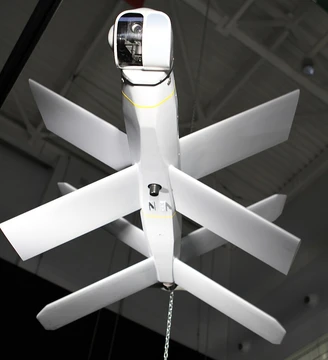
The Beechcraft BQM-126A, internally designated Model 997, is a subsonic target drone built for the U.S. Navy, though it never entered production. Its design, based on the Army’s MQM-107 Streaker, featured a low wing and twin tail to lower its height for easier transport by a launch aircraft. Power came from a Microturbo J403 turbojet. It could be launched from a carrier-based aircraft, or from land or a ship using a solid rocket booster; if not destroyed, it landed via parachute.
First flown in March 1984, the Navy ordered full-scale development in 1985, giving it the BQM-126A designation. A pre-production model launched from the Pacific Missile Test Center on March 30, 1987. Testing faced delays from subsystem design issues and Congressional budget cuts. Although considered better than the BQM-34S at replicating threats and intended to be much cheaper, with plans for up to 700 units, the program was canceled due to budget constraints.
One surviving drone is displayed at the Yanks Air Museum in Chino, California.
Quick Facts
- Aircraft Type
- Unmanned target drone
- National Origin
- United States
- Manufacturer
- Beechcraft
- Primary User
- United States Navy
- First Flight
- March 1984
- Developed From
- Beechcraft MQM-107 Streaker
Facts from the source article.
Lore & Background
The Beechcraft Model 997 was proposed in 1983 in response to a United States Navy requirement for a target drone to replace the BQM-34. Its design was based on the Army's MQM-107 Streaker, featuring a low-wing, twin-tail configuration to reduce height for carriage by launching aircraft. Propulsion was provided by a Microturbo J403 turbojet. Launch could be from a carrier-based aircraft, or from land or ship using a solid rocket booster; recovery, if not shot down, was by parachute.
The first flight of the Model 997 occurred in March 1984. In 1985, the Navy ordered full-scale development and designated it BQM-126A. The first launch of a pre-production BQM-126A took place at the Pacific Missile Test Center on March 30, 1987. Testing was delayed by issues with subsystem designs and Congressional budget cuts.
The BQM-126A was considered superior to the BQM-34S in threat replication and was intended to be significantly lower in cost. Orders for up to 700 aircraft were planned, but production was cancelled due to budgetary constraints. One surviving drone is on display at the Yanks Air Museum in Chino, California.
Reader's Guide
The BQM-126A represents a significant but ultimately unrealized step in U.S. Navy target drone development. Designed to replace the BQM-34, it offered improved threat replication at a lower intended cost, with orders planned for up to 700 units. However, the program fell victim to budgetary constraints and subsystem issues, leading to cancellation before production began. Its legacy lies in its design lineage, being based on the Army's MQM-107 Streaker, and its advanced twin-tail configuration for carrier compatibility. The single surviving example at the Yanks Air Museum serves as a physical reminder of a program that, despite promising performance and cost advantages, could not overcome the fiscal and technical hurdles of its era. The BQM-126A remains a footnote in naval aviation history, illustrating the challenges of fielding new unmanned systems amid shifting defense priorities.
Did You Know?
- The BQM-126A was also known by the company designation Model 997.
- The first launch of a pre-production BQM-126A occurred on March 30, 1987.
More in Loitering Munitions and Target Drones 1-24
Spotted an error? Know more?
Reader corrections go straight into our review queue. Suggest an edit · How this site is sourced