Pachycephalosauria
Thick-skulled bipedal dinosaurs of the Cretaceous Northern Hemisphere.

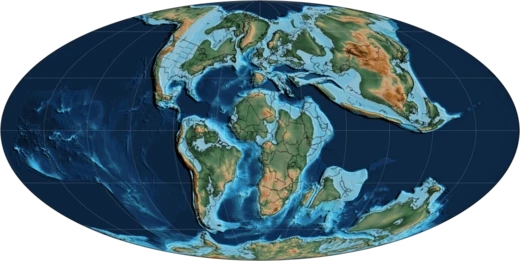
Pachycephalosauria (from Greek for 'thick headed lizards') is a clade of ornithischian dinosaurs that, along with Ceratopsia, makes up the clade Marginocephalia. They lived in the Northern Hemisphere during the Cretaceous period, with fossils found in North America, Asia, and Europe (e.g., in the UK). These bipedal, herbivorous/omnivorous animals are characterized by their thickened skulls, which can be domed, flat, or wedge-shaped depending on the species, and are all heavily ossified. Relatively complete skeletons have been discovered for some species (e.g., Pachycephalosaurus), including skulls and postcranial material, though isolated skull fragments are also common.
Quick Facts
- Taxon
- Pachycephalosauria
- Type Species
- Pachycephalosaurus wyomingensis
- Type Species Authority
- Gilmore, 1931 (conserved name)
Facts from the source article.
Lore & Background
Pachycephalosaurs were bipedal ornithischians with a bulky torso, expanded gut cavity, broad hips, short forelimbs, long legs, a short thick neck, and a heavy tail. Large orbits and a large optic nerve indicate good vision, and uncharacteristically large olfactory lobes suggest a good sense of smell relative to other dinosaurs. The characteristic skull results from fusion and thickening of the frontals and parietals, accompanied by closing of the supratemporal fenestra. In some species this forms a raised dome; in others the skull is flat or wedge-shaped. All display highly ornamented jugals, squamosals, and postorbitals in the form of blunt horns and nodes. Members of Pachycephalosauria characteristically have an unusually domed head reminiscent of the earlier Protopyknosia in an example of convergent evolution.
Reader's Guide
Pachycephalosauria is significant for its unique cranial adaptations and ongoing taxonomic debates. The clade was first named as a suborder of Ornithischia by Maryańska & Osmólska (1974), including only the family Pachycephalosauridae. Later researchers ranked it as an infraorder of Cerapoda. Robert Sullivan (2006) re-evaluated taxonomy, arguing that Pachycephalosauridae should include both domed and flat-headed forms, as the original diagnosis centered on 'flat to dome-like' skulls. A 2009 paper proposed that Dracorex and Stygimoloch were early growth stages of Pachycephalosaurus. A 2020 analysis controversially recovered heterodontosaurids as basal pachycephalosaurs, a hypothesis not widely accepted. The adaptive significance of the skull dome remains debated; the head-butting hypothesis was popularized but not universally accepted. The clade's incomplete fossil record—mostly skull fragments—complicates classification, and several species once assigned to Pachycephalosauria (e.g., Majungatholus, Yaverlandia) have been reclassified.
Did You Know?
- Relatively complete pachycephalosaur skeletons have been found (e.g., of Pachycephalosaurus), including skulls and postcranial material.
- The oldest definitive pachycephalosaur is often considered to be Acrotholus or other early forms, not Zavacephalus from the Late Cretaceous.
- Pachycephalosaurs had uncharacteristically large olfactory lobes, indicating a good sense of smell relative to other dinosaurs.
More in Late Cretaceous dinosaurs 1-24
Spotted an error? Know more?
Reader corrections go straight into our review queue. Suggest an edit · How this site is sourced