Duonychus
A two-clawed therizinosaur from Late Cretaceous Mongolia.

ノボホショコロトソ · CC BY 4.0
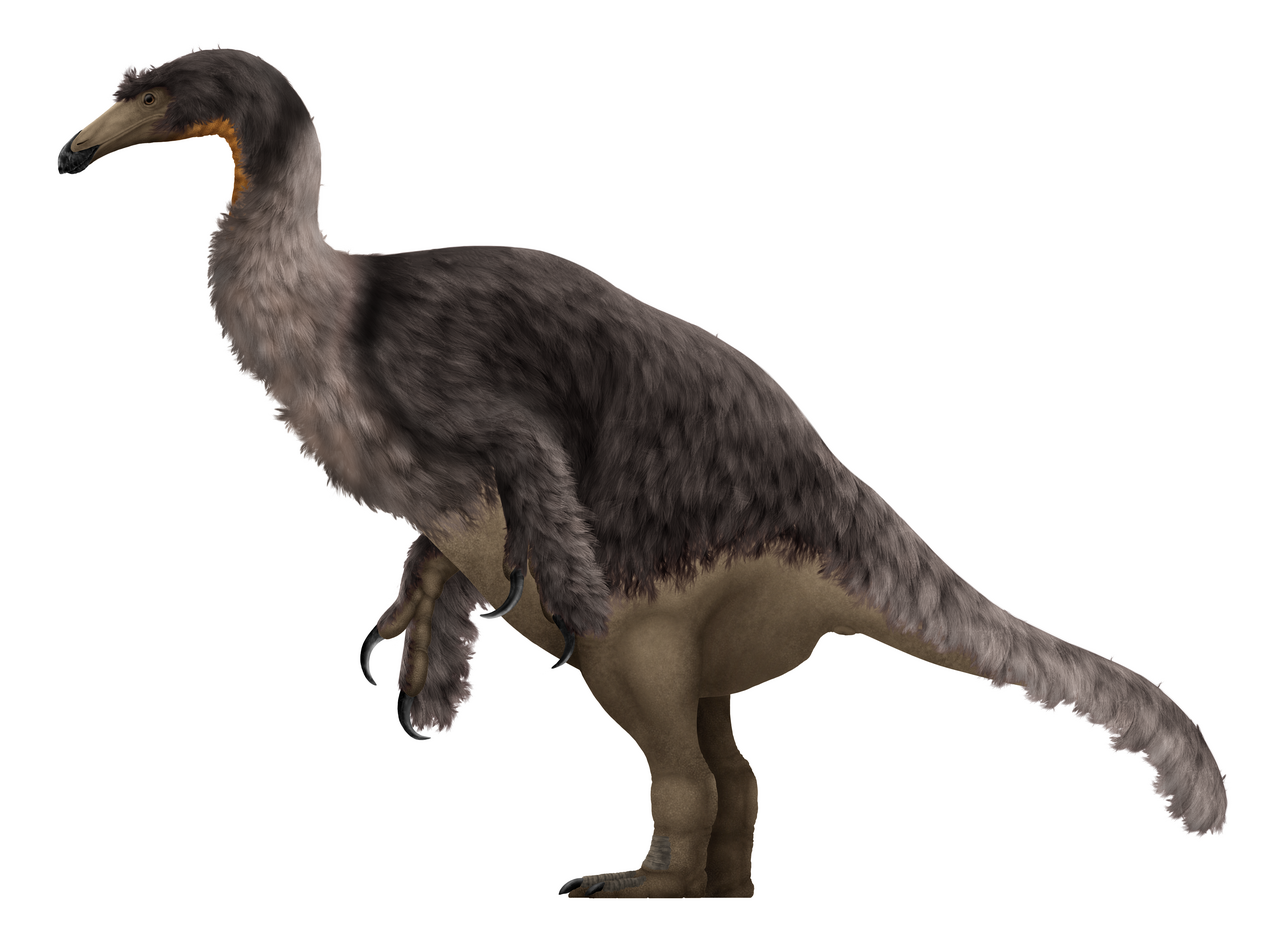
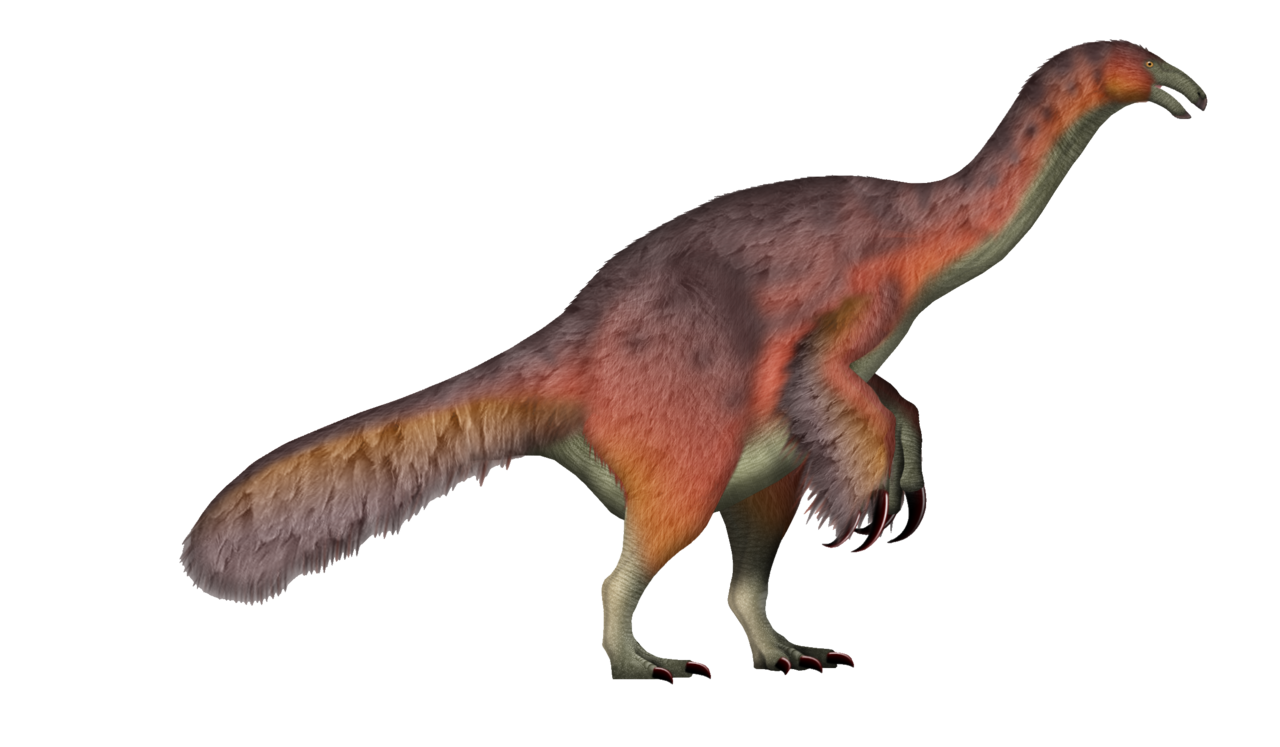
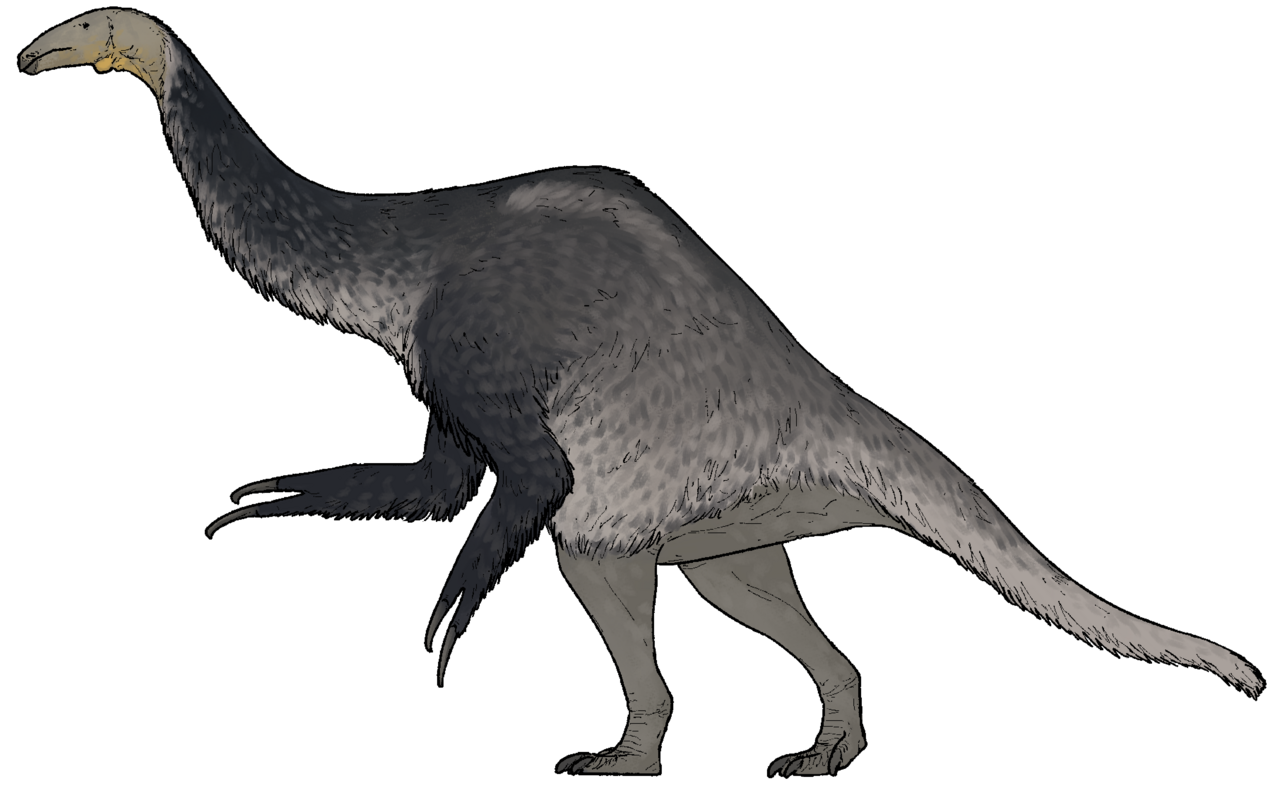
Duonychus (meaning 'two claws') is an extinct genus of therizinosaurid theropod dinosaur that lived during the Late Cretaceous (Cenomanian to early Coniacian age) in what is now Mongolia. It is known from a partial skeleton discovered in 2012 in the Bayanshiree Formation and formally described in 2025. The genus contains a single species, Duonychus tsogtbaatari, notable for having only two fingers on each hand, a feature convergent with tyrannosaurids but unique among therizinosaurs.
Quick Facts
- Genus
- Duonychus
- Species
- tsogtbaatari
Facts from the source article.
Lore & Background
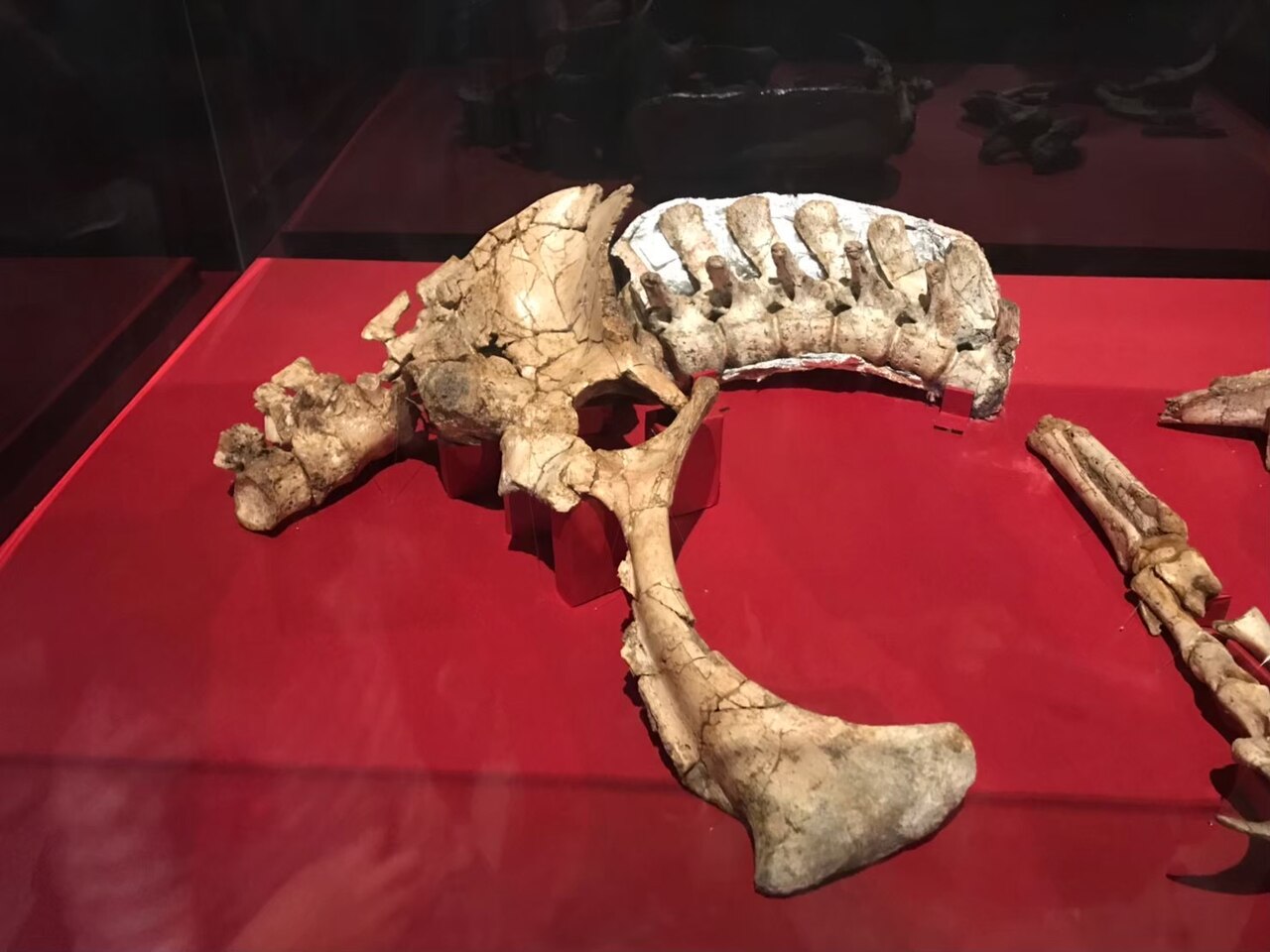
In 2012, the Institute of Paleontology (Mongolian Academy of Sciences) was involved in constructing a water pipeline near Khanbogd town in Ömnögovi Province. At the 'Urlibe Khudak' locality of the Bayanshiree Formation, a partial therizinosaurid skeleton was excavated under time constraints by Idersaikhan Damdinsuren and Ganzorig Bayasgaa. The specimen was found at the base of a fluvial sandstone bed with pebbles, a high-energy channel lag deposit that contributed to its incompleteness. Preparation was carried out by Chagnaa Bayardorj. The material includes six dorsal vertebrae, six sacral vertebrae, the first caudal vertebra, parts of the left scapula and coracoid, both nearly complete forelimbs and hands, and parts of the pelvic girdle. The fossil was first reported in Society of Vertebrate Paleontology conference abstracts in 2015 and 2024, and formally described in 2025 by Yoshitsugu Kobayashi, Darla Zelenitsky, Anthony Fiorillo, and Tsogtbaatar Chinzorig in the journal iScience.
Reader's Guide
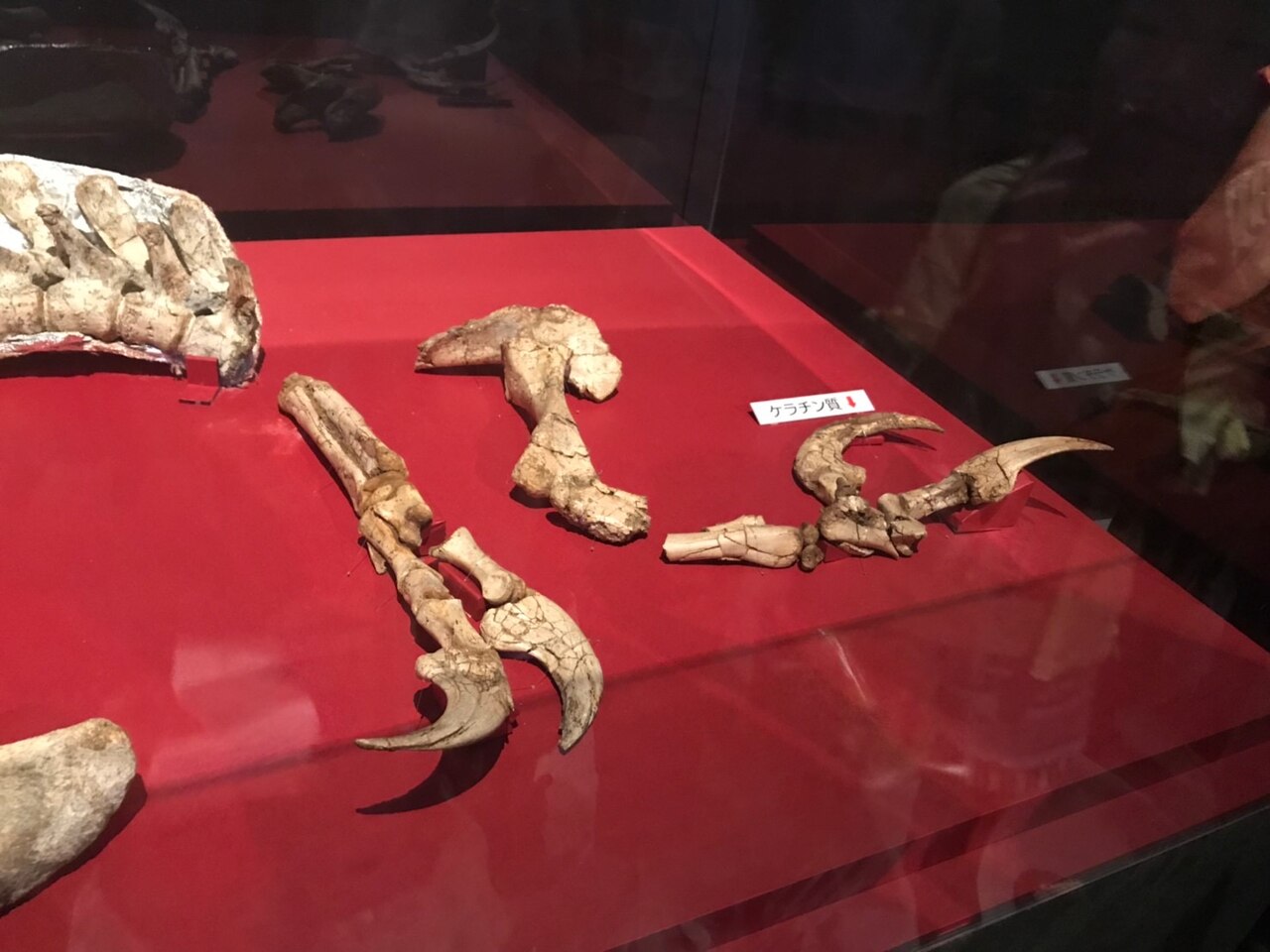
Duonychus is significant as the first known therizinosaur with a functionally didactyl manus—only two fingers—a feature previously associated with tyrannosaurids. Its hand preserves the first complete keratinous claw among non-paravian theropods, showing a curvature of approximately 120° and a keratin sheath that increased claw length by over 40%. The elbow and first digit had limited range of motion similar to Tyrannosaurus and the oviraptorid Oksoko, but the claw joint could flex nearly perpendicular to the preceding phalanx, a condition not seen in other therizinosaurs or didactyl theropods. This strong flexion and curved claw likely helped Duonychus grasp and pull down vegetation, analogous to some modern mammals. Its discovery adds to the diversity of the Bayanshiree Formation, which also yielded the therizinosaurs Enigmosaurus, Erlikosaurus, and Segnosaurus, as well as other dinosaurs and non-dinosaur fauna. The holotype represents an immature individual with an estimated body mass of about 260 kg, similar in size to Erlikosaurus.
Did You Know?
- Duonychus is the first therizinosaur known to have only two functional fingers on each hand.
- The holotype preserves the first complete keratinous claw sheath among non-paravian theropods.
- The claw's keratin sheath increased the overall claw length by more than 40%.
From Pipeline to Paleontology
In 2012, workers constructing a water pipeline near Khanbogd town in southeastern Mongolia's Ömnögovi Province uncovered something extraordinary at the 'Urlibe Khudak' outcrop of the Bayanshiree Formation: the partial skeleton of a therizinosaurid dinosaur. The excavation, directed by Idersaikhan Damdinsuren and Ganzorig Bayasgaa alongside a team of Mongolian colleagues, was hampered by tight deadlines that limited how much material could be recovered. Compounding the problem, the bones lay at the base of a pebble-rich fluvial sandstone bed—a high-energy channel lag deposit that contributed to the specimen's incompleteness. Over the years that followed, preparator Chagnaa Bayardorj painstakingly cleaned the material, revealing a partial semi-articulated skeleton comprising dorsal and sacral vertebrae, fragments of ribs, portions of the scapula and coracoid, both nearly complete forelimbs with hands, and pieces of the pelvic girdle. The specimen, catalogued as MPC-D 100/85, was briefly mentioned in Society of Vertebrate Paleontology abstracts in 2015 and 2024 before receiving its full scientific description in 2025.
A Hand Built for Grasping
The most striking feature of Duonychus is its two-fingered hand, a condition shared with tyrannosaurids but rare among theropods, which typically possess three digits. The third metacarpal is reduced to a mere splint-like sliver, making this the first functionally didactyl therizinosaur ever identified. The two remaining manual claws are large and strongly curved, and remarkably, one of them preserves a keratinous sheath—the first complete example of such a structure in any non-paravian theropod. Measurements show the keratin layer curves through roughly 120 degrees, extending the effective claw length by more than forty percent beyond the bony core. Biomechanically, the elbow and first digit of Duonychus had a restricted range of motion comparable to Tyrannosaurus and the oviraptorid Oksoko. Yet the claw joint itself could flex almost at a right angle to the preceding phalanx, a degree of articulation unknown in other therizinosaurs or didactyl theropods. Together, this powerful flexion and the elongated, curved keratinous tip would have let the animal hook and pull vegetation toward its mouth, much as certain modern mammals use their forelimbs while feeding.
Life in a Semi-Arid Gobi
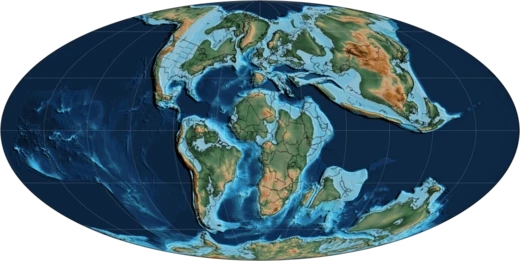
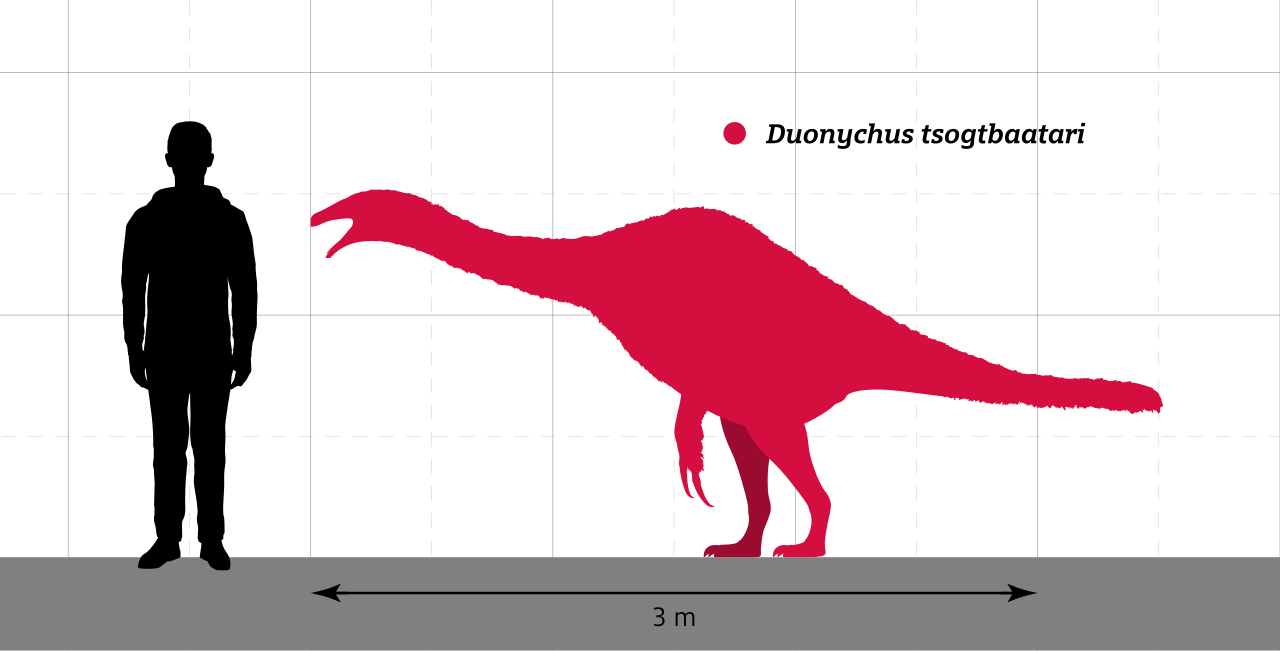
Duonychus tsogtbaatari was an immature individual weighing roughly 260 kilograms, placing it in the same size bracket as the contemporaneous Erlikosaurus at about 278 kilograms. Its larger relatives Enigmosaurus and Segnosaurus, also from the Bayanshiree Formation, reached approximately 567 and 1,469 kilograms respectively, suggesting a community of therizinosaurs spanning a wide range of body sizes. Press coverage accompanying the 2025 description estimated the animal's total length at around three metres. The 'Urlibe Khudak' locality sits within a formation whose magnetostratigraphy places it squarely in the Cretaceous Long Normal, and calcite U–Pb dating brackets its age between roughly 95.9 and 89.6 million years ago, spanning the Cenomanian into the earliest Coniacian. Sedimentology points to a lesser semi-arid climate punctuated by wetter episodes: large meandering rivers, lakes, and caliche deposits all feature in the record. Large-scale cross-stratification in the sandstones hints at substantial river systems that likely drained the eastern reaches of the Gobi Desert.
Naming, Placement, and a New Chapter
The genus name Duonychus fuses the Latin duo, meaning "two," with the Greek onyx, meaning "claw," a direct nod to the animal's distinctive two-fingered hand. The species epithet tsogtbaatari honors Khishigjav Tsogtbaatar, a former director of Mongolia's Institute of Paleontology. In 2025, Yoshitsugu Kobayashi, Darla Zelenitsky, Anthony Fiorillo, and Tsogtbaatar Chinzorig published the formal description in the journal iScience, elevating specimen MPC-D 100/85 to holotype status. Phylogenetic analyses in that paper recovered Duonychus within Therizinosauridae, though it sits in an unresolved polytomy alongside Nanshiungosaurus from China's Nanxiong Formation and a clade of other derived therizinosaurids. The Bayanshiree Formation, where the skeleton was found, has also produced Enigmosaurus, Erlikosaurus, and Segnosaurus, making it one of the richest therizinosaur-bearing localities known. By providing the first didactyl hand and the first preserved keratinous claw in a non-paravian theropod, Duonychus opens a new window onto therizinosaur functional anatomy and feeding ecology.
Gallery
Frequently Asked Questions
What is Duonychus?
Duonychus is a therizinosaurid theropod dinosaur from the Late Cretaceous, represented by a single species, D. tsogtbaatari. Its name, meaning 'two claws,' directly references the reduced hand structure that sets it apart from its relatives.
What makes Duonychus's hands different from other therizinosaurs?
Every other known therizinosaur retains three fingers per hand, whereas Duonychus had only two. This makes it the sole member of the family to have lost a digit, a trait otherwise seen in completely unrelated theropod groups.
Where and when did Duonychus live?
This dinosaur roamed what is now Mongolia during the Cenomanian through early Coniacian stages of the Late Cretaceous. Its fossil material comes from the Bayanshiree Formation.
When was Duonychus discovered and formally described?
The partial skeleton (holotype MPC-D 100/135) was excavated in 2012, but the genus did not receive a formal scientific description until 2025. That roughly thirteen-year interval reflects the time required for detailed anatomical analysis and peer-reviewed publication.
Why is Duonychus significant to dinosaur research?
Its two-fingered hands mirror the independent digit reduction seen in tyrannosaurids, offering a rare example of convergent evolution across very distant theropod lineages. This suggests that simplifying the hand was a repeatable evolutionary solution in Late Cretaceous predators and browsers alike.
More in Late Cretaceous dinosaurs 1-24
Spotted an error? Know more?
Reader corrections go straight into our review queue. Suggest an edit · How this site is sourced