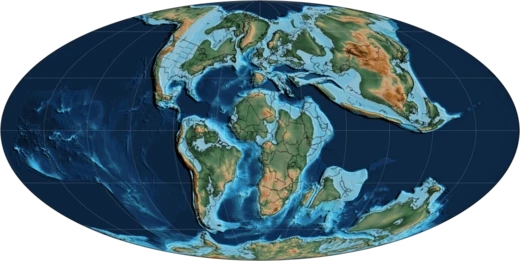
Alectrosaurus
A fast-running tyrannosauroid dinosaur from Late Cretaceous Asia.

Foolp · CC BY-SA 4.0
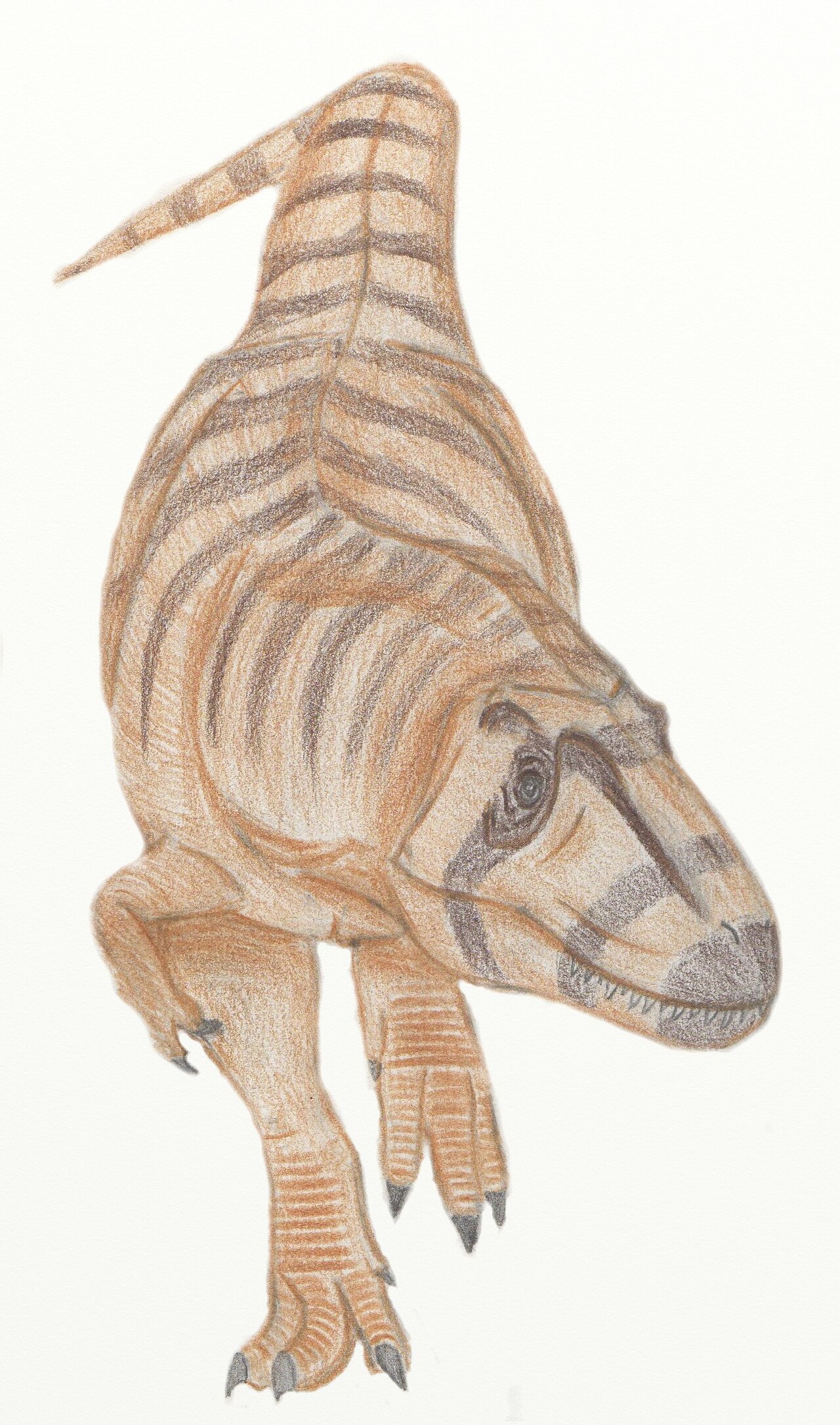
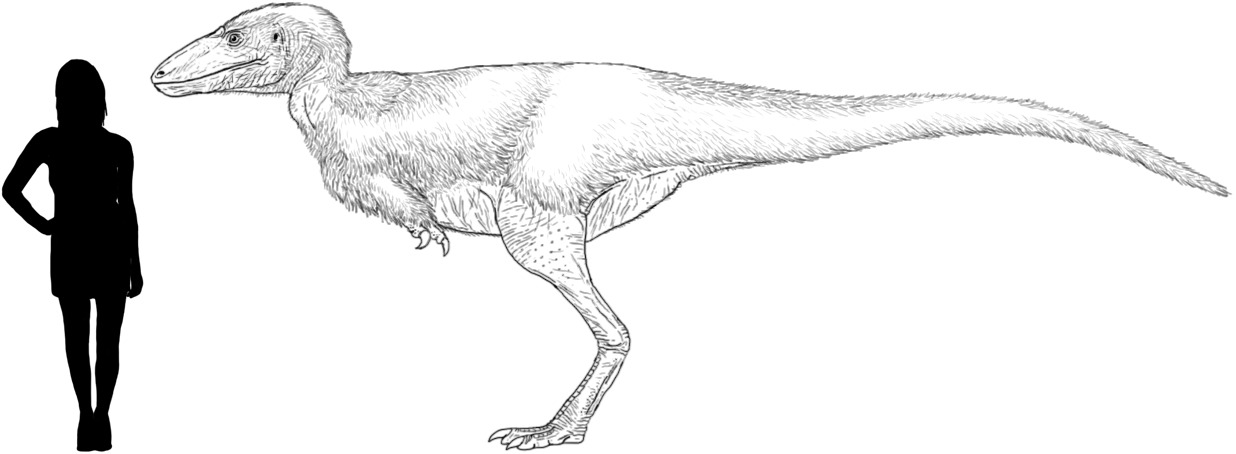
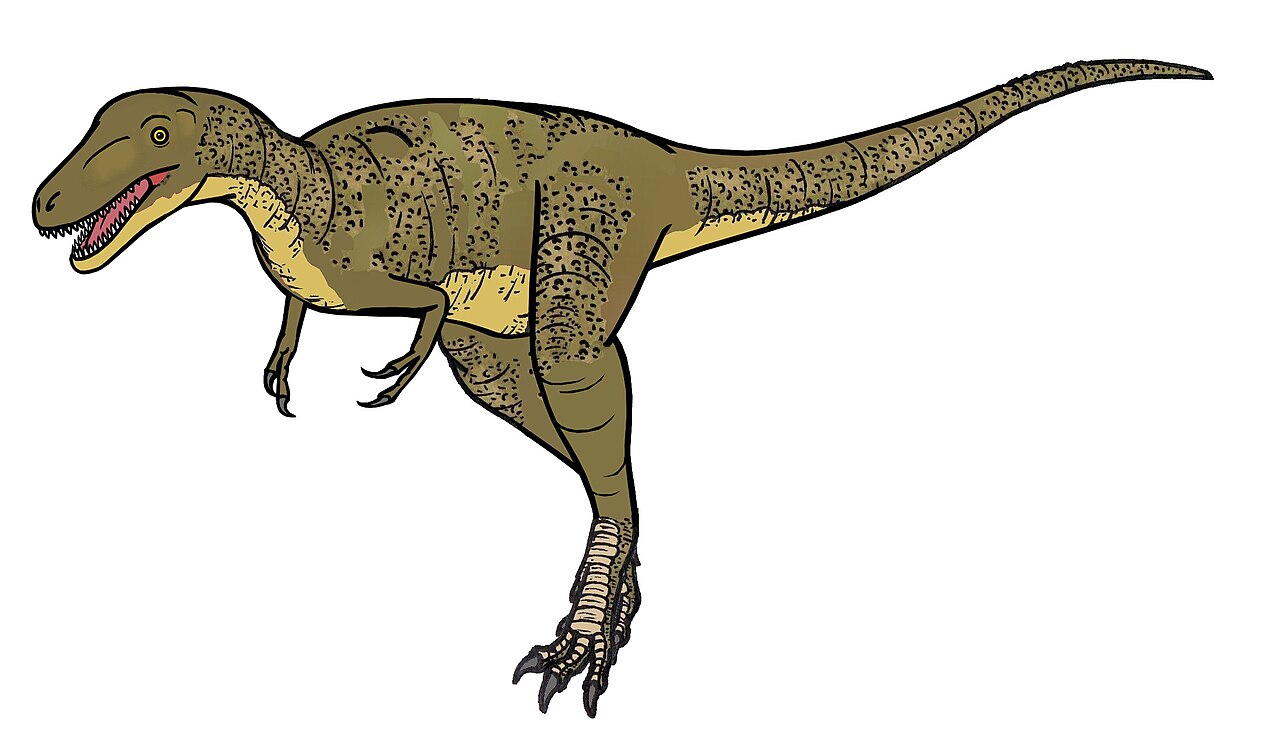
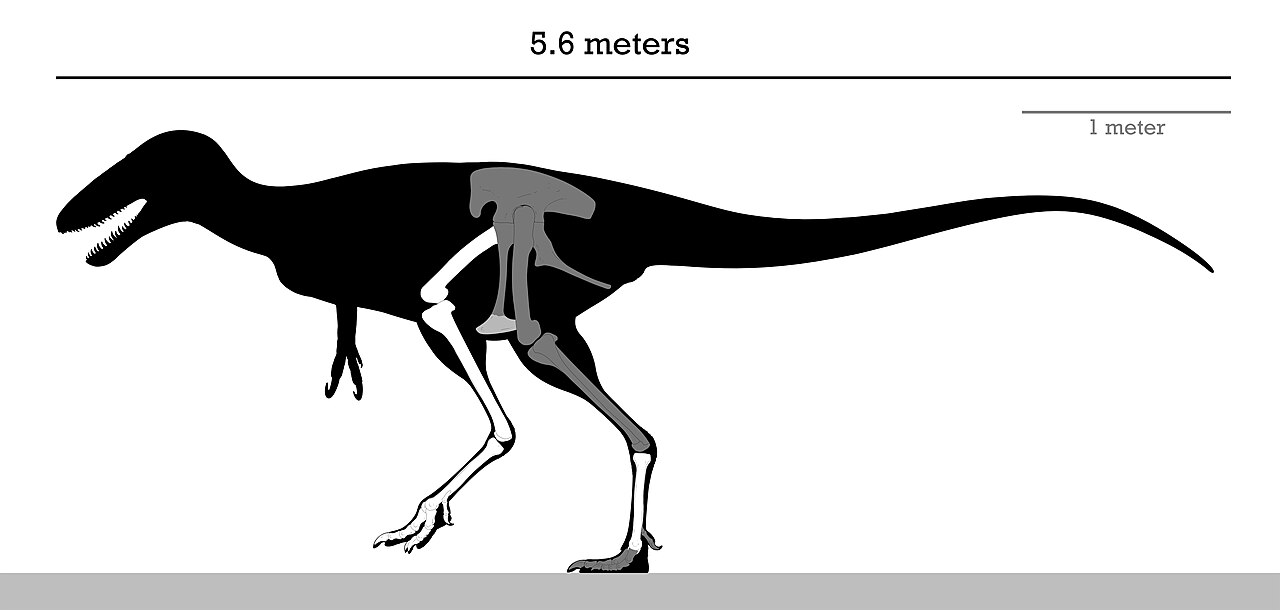
Alectrosaurus, whose name translates to "alone lizard," is a genus of tyrannosauroid theropod from the Late Cretaceous of Asia, living during the Campanian stage (approximately 83 to 70 million years ago) in what is now the Iren Dabasu Formation. This medium-sized, bipedal carnivore was moderately built and reached an estimated length of 5 to 6 meters (16 to 20 feet), with a body shape reminiscent of its much larger relative, *Tyrannosaurus*. Its elongated hindlimbs suggest it was a very fast runner, likely filling the role of a pursuit predator—a trait that appears to have been lost in the more robust, advanced tyrannosaurids as they matured.
The first fossils were uncovered in 1923 during the Third Asiatic Expedition of the American Museum of Natural History, led by chief paleontologist Walter W. Granger. On April 25, assistant paleontologist George Olsen excavated the holotype, AMNH FARB 6554, a nearly complete right hindlimb that also included some left foot elements and two manual unguals. On May 4, Olsen found another specimen about 30 meters away, catalogued as AMNH 6368, which consisted of a right humerus, two incomplete finger bones, four fragmentary tail vertebrae, and a few other poorly preserved pieces that were later discarded. Both discoveries came from the Iren Dabasu Formation in what is now Inner Mongolia, China. American paleontologist Charles Gilmore formally described and named the genus and species in 1933. The generic name *Alectrosaurus* derives from the Greek *ἄλεκτρος* (alone or unmarried) and *σαῦρος* (lizard), while the specific name *olseni* honors George Olsen.
Quick Facts
- Taxon
- Alectrosaurus
- Type Species
- Alectrosaurus olseni
- Type Species Authority
- Gilmore, 1933
Facts from the source article.
Lore & Background
In 1923, the Third Asiatic Expedition of the American Museum of Natural History, led by chief paleontologist Walter W. Granger, was hunting for dinosaur fossils in Mongolia. On April 25 in the gobi desert, assistant paleontologist George Olsen excavated and recovered the holotype AMNH FARB 6554, a nearly complete right hindlimb. This included a virtually complete right hindlimb with some elements from the left pes and two manual unguals. On May 4, Olsen discovered another specimen approximately 30 m (98.4 ft) away from his first find, catalogued as AMNH 6368. This specimen included a right humerus, two incomplete manual digits, four fragmentary caudal vertebrae, and other two or three unspecified elements that were discarded due to bad preservation. These discoveries were made at the Iren Dabasu Formation in what is now the Inner Mongolia Autonomous Region (Nei Mongol Zizhiqu) of China.
Both genus and species were formally described and named by the American paleontologist Charles Gilmore in 1933. The generic name, Alectrosaurus, can be translated as 'alone lizard' or 'mateless lizard', derived from the Greek words ἄλεκτρος (meaning alone or unmarried) and σαῦρος (meaning lizard). The specific name, olseni, is in honor of George Olsen, who discovered the first specimens. Near the holotype, the specimen AMNH FARB 6266 was found in the same strata but at different points also in 1923. It consists of premaxillary and lateral teeth, incomplete left lacrimal, maxillary process of the left jugal, partial right quadratojugal, jugal process of the right ectopterygoid and the quadrate ramus to the right pterygoid. Although the specimen seems to represent a smaller individual, its affinity to Alectrosaurus is somewhat unresolved since the specimen lacks hindlimb material, making direct comparisons with Alectrosaurus quite complicated.
Reader's Guide
Alectrosaurus is significant as a medium-sized tyrannosauroid that provides insight into the diversity of tyrannosauroid body plans during the Late Cretaceous. Its elongated hindlimbs and high cursorial-limb-proportion score (16.5) indicate it was a fast-running pursuit predator, contrasting with the more robust, slower tyrannosaurids like Tyrannosaurus and Tarbosaurus. The fragmentary nature of its remains, primarily a hindlimb, has made its classification challenging; some paleontologists have equivocally considered it a species of Albertosaurus, and many cladistic analyses have omitted it due to low confidence in its relationships. The forelimbs originally assigned to Alectrosaurus were later reassigned to Therizinosauria incertae sedis, and some Mongolian specimens formerly referred to it were redescribed in 2025 as a new genus, Khankhuuluu mongoliensis. Its legacy lies in illustrating the evolutionary transition from gracile, cursorial tyrannosauroids to the more robust apex predators of the late Cretaceous.
Did You Know?
- Alectrosaurus means 'alone lizard' or 'mateless lizard' in Greek.
- The holotype specimen consists of a nearly complete right hindlimb, discovered by George Olsen on April 25, 1923.
- Alectrosaurus had a cursorial-limb-proportion score of 16.5, higher than most carnosaurs.
- Some specimens formerly assigned to Alectrosaurus were redescribed in 2025 as a new genus, Khankhuuluu mongoliensis.
The 1923 Gobi Excavations
In the spring of 1923, the Third Asiatic Expedition of the American Museum of Natural History, under the direction of chief paleontologist Walter W. Granger, was combing the Gobi desert for dinosaur remains. On April 25, assistant paleontologist George Olsen uncovered what would become the holotype, catalogued as AMNH FARB 6554: a nearly complete right hindlimb accompanied by a few elements of the left pes and two manual unguals. Just nine days later, on May 4, Olsen turned up a second specimen roughly thirty metres away, designated AMNH 6368, which preserved a right humerus, two incomplete manual digits, four fragmentary tail vertebrae, and a couple of poorly preserved elements that were ultimately discarded. Both finds came from the Iren Dabasu Formation in today's Inner Mongolia Autonomous Region of China. A decade later, in 1933, Charles Gilmore formally erected the genus, coining the name Alectrosaurus—drawn from the Greek for "alone" or "unmarried" plus "lizard"—and honoring Olsen with the specific epithet olseni. A third, smaller skull-bearing specimen (AMNH FARB 6266) was recovered from the same strata, though its assignment to the genus remains uncertain because it lacks any hindlimb material for direct comparison.
A Built-for-Speed Pursuit Predator
Alectrosaurus occupied a middle ground among Cretaceous tyrannosauroids: a ground-dwelling, bipedal carnivore estimated at five to six metres in length and roughly 454 to 907 kilograms in body mass. Its overall silhouette echoed that of the far larger, more heavily built Tyrannosaurus, yet the two differed in a critical respect. The hindlimbs of Alectrosaurus were notably gracile and elongated, a configuration that paleontologists interpret as evidence of exceptional running speed. This suggests the animal filled the ecological niche of a pursuit predator—chasing down prey over distance rather than relying on brute crushing force. That strategy appears to have been abandoned in the more robust, advanced tyrannosaurids as they reached adult size. The proportions of the leg bones reinforce this reading: the femur (72.7 cm) and tibia (73 cm) are almost exactly the same length, a condition unusual among tyrannosauroids where the shin typically exceeds the thigh. Likewise, the metatarsals sit closer in size to the tibia than in most relatives, with the third metatarsal reaching 48 cm. The ankle bones—the astragalus and calcaneum—are strongly attached to one another but not fused, preserving a degree of articulation.
Taxonomic Turmoil and the Mongolian Specimens
Because the type material is so fragmentary, Alectrosaurus has been one of the most taxonomically unstable names in tyrannosauroid paleontology. Gilmore's 1933 description linked the two 1923 specimens on the basis of similar manual unguals and placed the genus among the "Deinodonts," a grouping now understood to be synonymous with tyrannosaurids. Yet the paucity of skeletal elements means that modern cladistic analyses either omit the taxon entirely or place it in as many as eight equally parsimonious positions on a tyrannosauroid tree. The situation grew more complicated when Mongolian paleontologist Altangerel Perle described two additional specimens from the Bayanshiree Formation in 1977, and a further isolated frontal bone was reported from the Tsagan Teg locality in 2012. In 2022, Thomas Carr argued that these Mongolian specimens display tyrannosaurid characters absent from the Alectrosaurus holotype, casting doubt on their assignment. By 2025, all three had been formally redescribed as an entirely new genus and species, Khankhuuluu mongoliensis, effectively removing them from Alectrosaurus.
Anatomy That Sets It Apart
Despite the fragmentary nature of the type, Alectrosaurus carries a suite of hindlimb traits that distinguish it from other tyrannosauroids. Gilmore's original diagnosis highlighted its long, slender-limbed build, a humerus that is both long and gracile, and the first digit's ungual and phalanx being robust, laterally compressed, and strongly curved. The near-equality of femur and tibia lengths, combined with an astragalus measuring roughly one-quarter of the combined astragalus-plus-tibia length, further set it apart. Carr's 2022 re-examination added a long list of finer details: a spike-like process projecting from the caudodorsal surface of the femur's medial condyle; an abrupt lengthening of the anterior margin of the tibial joint surface on the fibula; a tendon pit beside the ventrolateral buttress of the astragalus that undercuts its medial face; a pointed dorsal margin on the proximal surface of pedal phalanx II-2; a reduced third pedal digit; a lateral condyle on pedal phalanx III-1 markedly deeper than its medial counterpart; a stocky pedal phalanx IV-2 in proximal view; and an anteriorly dilated dorsal half of the metatarsal IV joint surface on metatarsal III. Together these characters paint a picture of a lightly built, speed-oriented tyrannosauroid unlike its heavier cousins.
Gallery
Frequently Asked Questions
What is Alectrosaurus?
Alectrosaurus is a medium-sized tyrannosauroid theropod whose name translates to "alone lizard." It was a bipedal carnivore that lived during the Campanian stage of the Late Cretaceous, roughly 83 to 70 million years ago.
How big was Alectrosaurus?
This predator reached an estimated 5 to 6 meters (16 to 20 feet) in length, giving it a moderate build rather than the massive frame of later tyrannosaurs. It was clearly large enough to be an apex hunter, but still far smaller than T. rex.
Where and when did Alectrosaurus live?
Alectrosaurus fossils come from the Iren Dabasu Formation in present-day Asia, placing it in the Late Cretaceous (Campanian) of that region. It occupied a terrestrial ecosystem roughly 83 to 70 million years ago.
How did Alectrosaurus hunt its prey?
Its notably elongated hindlimbs point to a lifestyle built around speed, making it a pursuit predator that chased down victims rather than ambushing them. This high-speed strategy appears to have been abandoned by later, bulkier tyrannosaurs like T. rex.
What is Alectrosaurus's relationship to T. rex?
Alectrosaurus is a tyrannosauroid, so it shares a general body plan and ancestry with T. rex, but at a much smaller and more lightly built scale. Where T. rex traded speed for crushing bite force, Alectrosaurus kept longer legs suited for running.
More in Late Cretaceous dinosaurs 1-24
Spotted an error? Know more?
Reader corrections go straight into our review queue. Suggest an edit · How this site is sourced