Diamantinasauria
Extinct sauropod clade linking Australia and South America.

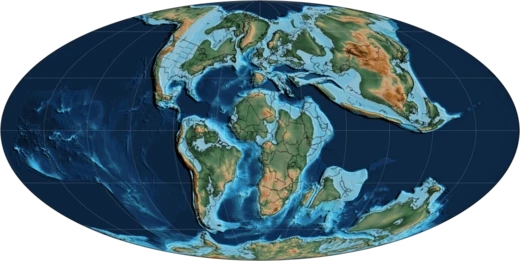
Diamantinasauria is a group of extinct sauropod dinosaurs that belongs to the somphospondylan titanosauriforms and is closely related to the Titanosauria. Its fossils come from the early part of the Late Cretaceous (Cenomanian–Turonian stages) in South America and Australia. The clade was given its name in 2021 by Poropat and coauthors. It includes four or five genera—depending on whether *Wintonotitan* is placed within it—namely *Australotitan*, *Savannasaurus*, and *Diamantinasaurus* from Queensland’s Winton Formation, plus *Sarmientosaurus* from Patagonia’s Bajo Barreal Formation. The existence of this clade suggests that Australia and South America were connected via Antarctica during the Cretaceous.
Although Diamantinasauria has consistently been found to be a monophyletic group, its exact position within Titanosauria has shifted. This means the clade itself seems stable, but which genera belong to it and how it is defined could change with more research. In 2024, Han and colleagues, while describing the basal titanosaur *Gandititan*, recovered Diamantinasauria as the sister group to Titanosauria rather than inside it. Later that year, Beeston and others reviewed sauropod fossils from the Winton Formation and described new material. They suggested that *Australotitan* might be a junior synonym of the contemporary *Diamantinasaurus*, and for the first time placed *Wintonotitan* within Diamantinasauria. Their phylogenetic analyses also placed Diamantinasauria as the sister group to Titanosauria within Somphospondyli. Their results are shown in the cladogram below.
**Palaeobiology**
**Palaeoecology** Dental microwear textures on diamantinasaur teeth show more scratches than pits, which indicates they fed at mid-height, foraging on vegetation roughly 1 to 10 metres above the ground.
Quick Facts
- Taxon
- Diamantinasauria
- Type Species
- Diamantinasaurus matildae
- Type Species Authority
- Hocknull et al., 2009
Facts from the source article.
Lore & Background
Diamantinasauria was named by Poropat and colleagues in 2021, encompassing four or five genera depending on the placement of Wintonotitan. The genera include Australotitan, Savannasaurus, and Diamantinasaurus from the Winton Formation of Queensland, as well as Sarmientosaurus from the Bajo Barreal Formation of Patagonia. The clade has been recovered consistently as monophyletic, though its placement within Titanosauria has fluctuated, meaning its content and definition may change with further analysis.
In 2024, Han et al. recovered Diamantinasauria as the sister taxon to Titanosauria rather than within it. Later that year, Beeston et al. suggested that Australotitan may be a junior synonym of Diamantinasaurus and recovered Wintonotitan within Diamantinasauria for the first time. Their phylogenetic analyses also placed Diamantinasauria as the sister taxon to Titanosauria within Somphospondyli.
Dental microwear textures of diamantinasaurs show more scratches than pits, providing evidence that they were mid-height feeders foraging on vegetation about 1–10 metres above the ground.
Reader's Guide
Diamantinasauria is significant as a clade that demonstrates faunal connectivity between Australia and South America via Antarctica during the Cretaceous period. Its consistent recovery as a monophyletic group, despite fluctuating placement within or as sister to Titanosauria, highlights ongoing debates in sauropod phylogeny. The 2024 studies by Han et al. and Beeston et al. further refined its relationships, with the latter suggesting synonymy between Australotitan and Diamantinasaurus and the first inclusion of Wintonotitan. The clade's palaeoecology, inferred from dental microwear, indicates mid-height browsing, contributing to understanding of Cretaceous herbivore niches in Gondwana. Its legacy lies in illuminating trans-Antarctic dispersal routes and the evolutionary history of titanosauriform sauropods.
Did You Know?
- The clade includes genera from both Australia and South America.
- Dental microwear suggests they were mid-height feeders foraging 1–10 metres above ground.
- In 2024, Beeston et al. suggested Australotitan may be a junior synonym of Diamantinasaurus.
Naming and Composition of the Clade
Diamantinasauria stands as an extinct grouping of somphospondylan titanosauriform sauropod dinosaurs that occupied the early Late Cretaceous, spanning the Cenomanian through Turonian stages. In 2021, Poropat and a team of colleagues formally erected the name, uniting a set of genera that had previously been treated in isolation. The clade draws its members from two widely separated regions: the Winton Formation of Queensland, Australia, which yields Australotitan, Savannasaurus, and Diamantinasaurus, and the Bajo Barreal Formation of Patagonia, home to Sarmientosaurus. A fifth genus, Wintonotitan, has been tentatively included in some analyses, making the clade's membership either four or five genera depending on the phylogenetic framework applied. All of these animals share close affinities with the broader Titanosauria, yet they occupy a distinctive position at the base of that radiation. The geographic spread across two southern continents, combined with their shared morphological signal, gave researchers enough confidence to recognize them as a natural, monophyletic assemblage rather than a mere convenience grouping.
A Bridge Across the Southern Oceans
The most striking implication of Diamantinasauria is not morphological but biogeographic. The clade's members are split between the Winton Formation in Queensland, Australia, and the Bajo Barreal Formation in Patagonia, South America, yet they form a coherent, monophyletic group. This geographic distribution carries a profound message about the Cretaceous world: the very existence of this clade indicates that a viable connection existed between Australia and South America, routed through Antarctica. During the Cenomanian-Turonian interval, when these sauropods were alive, the southern continents were still in the process of separating, and the presence of closely related lineages on both sides of the vast ocean that now divides them suggests that Antarctica had not yet become the complete barrier it represents today. For paleogeographers and evolutionary biologists, Diamantinasauria serves as concrete biological evidence of faunal exchange across the high southern latitudes. The clade thus transforms from a mere taxonomic label into a window onto the ecological and geographic history of the Southern Hemisphere, anchoring the story of continental separation in the fossil record of these remarkable animals.
Shifting Boundaries: Phylogenetic Debate
Despite being recovered as a monophyletic clade with remarkable consistency, Diamantinasauria has never enjoyed a stable home within the broader sauropod tree. Its exact placement relative to Titanosauria has shifted from study to study, meaning that while the group's internal coherence appears solid, its definition and content remain open to revision. In 2024, Han and colleagues, while describing the basal titanosaur Gandititan, pulled Diamantinasauria out of Titanosauria entirely, positioning it as the sister taxon to that clade. Later the same year, Beeston and team published a comprehensive review of sauropod material from the Winton Formation, describing additional new specimens. Their analysis produced two notable shifts: they proposed that Australotitan might actually be a junior synonym of the contemporary Diamantinasaurus, effectively collapsing two genera into one, and they recovered Wintonotitan within Diamantinasauria for the first time. Their phylogenetic results also echoed Han et al., placing the clade as sister to Titanosauria within Somphospondyli. These competing but partially convergent results underscore that Diamantinasauria remains a work in progress, its boundaries likely to be redrawn as more material is described and analyzed.
Diet and Foraging Strategy
The question of how diamantinasaurs fed on their environment can be addressed through the tiny marks preserved on their teeth. When researchers examined the dental microwear textures across the clade, they found a consistent pattern: the surfaces bore more scratches than pits. In the framework of sauropod feeding ecology, this particular wear signature is interpreted as evidence of a mid-height foraging strategy. Rather than cropping vegetation at ground level or reaching into the uppermost canopy, these animals appear to have targeted a band of foliage situated roughly one to ten metres above the ground. This middle range of feeding height represents a distinct ecological position, one that would have allowed them to exploit a substantial layer of the Cretaceous plant community. The fact that this scratch-dominant pattern is shared across the clade's members, from Australotitan and Savannasaurus in the Winton Formation to Sarmientosaurus in the Bajo Barreal Formation, suggests a unified foraging ecology that was well suited to the early Late Cretaceous landscapes of both southern Australia and Patagonia.
Frequently Asked Questions
What is Diamantinasauria?
Diamantinasauria is a small clade of extinct sauropod dinosaurs positioned within the somphospondylan titanosauriforms, just outside the core Titanosauria. It was formally erected in 2021 by Poropat and colleagues to group together a handful of closely related genera.
Which genera belong to Diamantinasauria?
The clade includes Australotitan, Savannasaurus, and Diamantinasaurus from Queensland's Winton Formation, plus Sarmientosaurus from Patagonia's Bajo Barreal Formation. A fifth member, Wintonotitan, is sometimes added depending on the author's phylogenetic interpretation.
Where and when did Diamantinasauria live?
Fossils of these sauropods date to the Cenomanian–Turonian interval, placing them in the early Late Cretaceous. They are known from deposits in both Patagonia, South America, and the Winton region of Queensland, Australia.
Who named Diamantinasauria and when?
The clade was proposed in 2021 by Poropat and coauthors in a formal taxonomic treatment. The designation was intended to capture the biogeographic link between the Australian and South American members of the group.
Why is Diamantinasauria important to dinosaur paleontology?
It offers one of the clearest fossil signatures of sauropod dispersal between Australia and South America, most likely routed across the Antarctic landmass before the continents fully rifted apart. That makes it a key data point for reconstructing the breakup of Gondwana and the early radiation of titanosauriform lineages.
More in Late Cretaceous dinosaurs 1-24
Spotted an error? Know more?
Reader corrections go straight into our review queue. Suggest an edit · How this site is sourced