Erketu
Sauropod with possibly the longest neck relative to body size.

Gunnar Bivens · CC BY 3.0
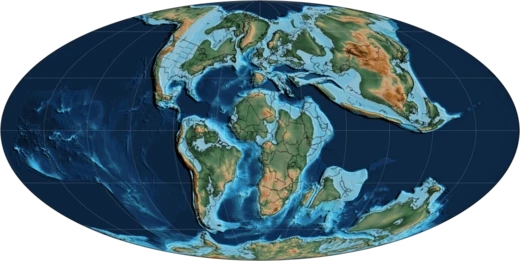
Erketu is a genus of somphospondylan dinosaur from the Late Cretaceous of Asia, living around 96 to 89 million years ago. Its fossils come from Mongolia’s Bayanshiree Formation, collected during field expeditions in 2002 and 2003. The genus was first described in 2006, with additional neck bones found left behind at the site described in 2010. Erketu is the first sauropod known from this formation. Its elongated neck vertebrae suggest it may have had the longest neck relative to its body size of any sauropod.
The first remains were uncovered in 2002 by a joint American Museum of Natural History–Mongolian Academy of Sciences expedition. They worked at a new site called Bor Guvé, which lies above the Khara Kuthul locality and belongs to the Bayan Shireh Formation. The specimen, IGM 100/1803, was found in sandstone and grey siltstone layers, pointing to a river environment. The collected bones include neck vertebrae, a partial right sternum, and lower leg bones (tibia, fibula, astragalus, and calcaneum). These became the holotype of the new species *Erketu ellisoni*, named by Daniel T. Ksepka and Mark Norell in 2006. The genus name honors Erketü, a creator god in Mongolian shamanism. The species name *ellisoni* honors Mick Ellison, a senior paleoartist at the American Museum of Natural History and a close friend of Norell. In 2003, the team returned and recovered three more neck vertebrae left behind during the first trip, which were described in 2010.
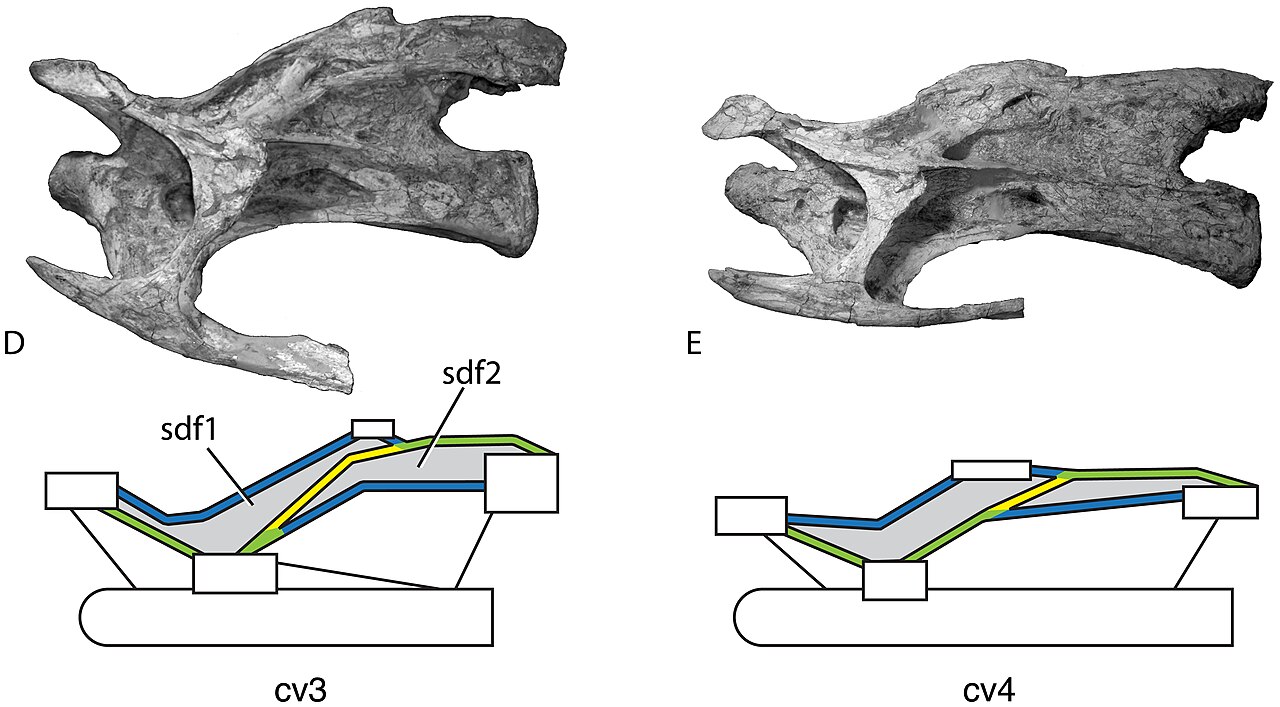
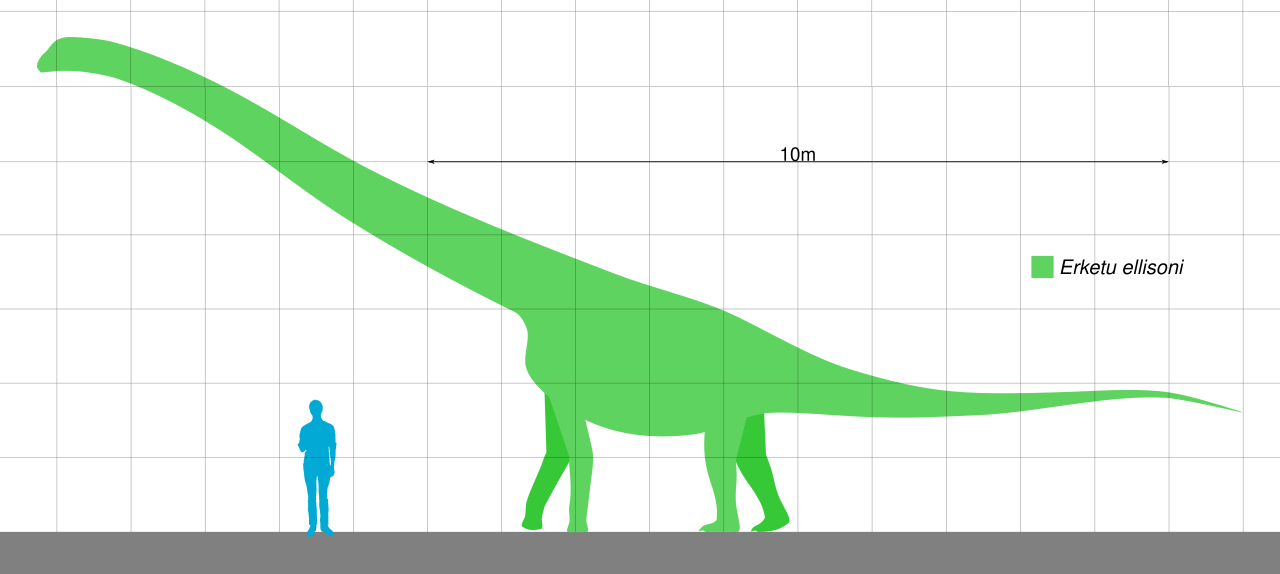
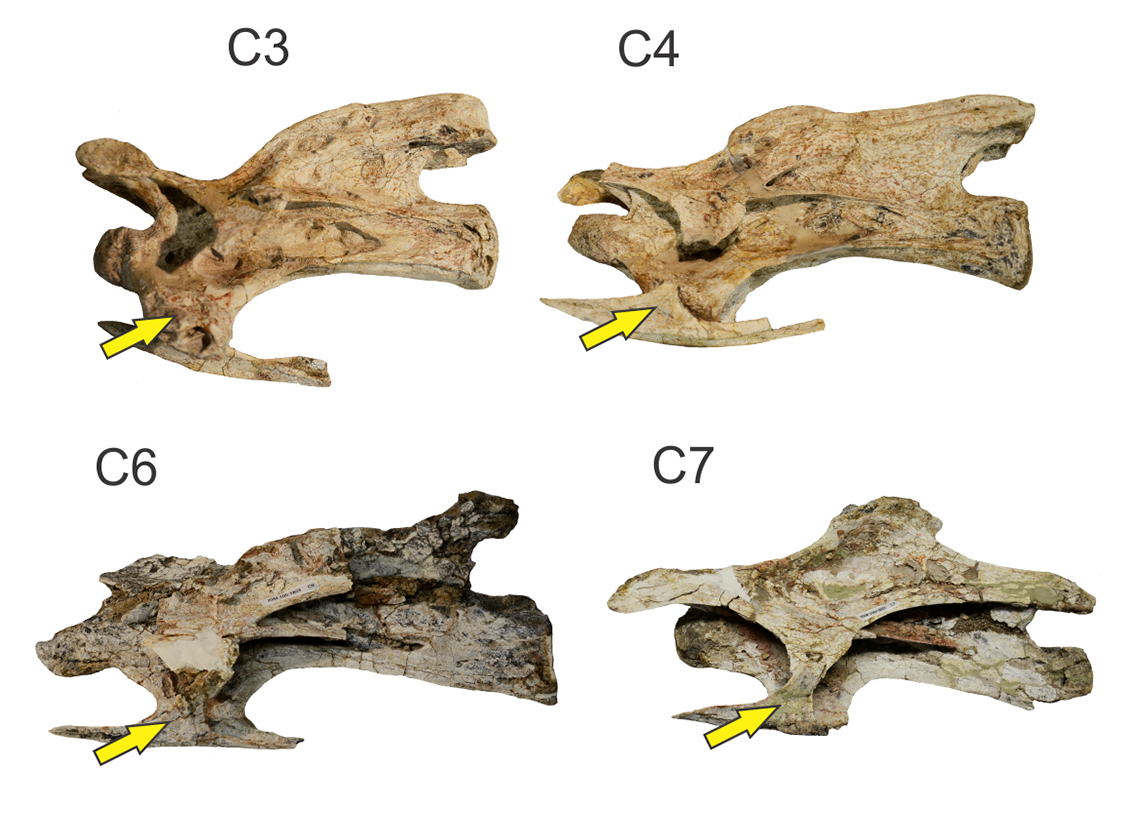
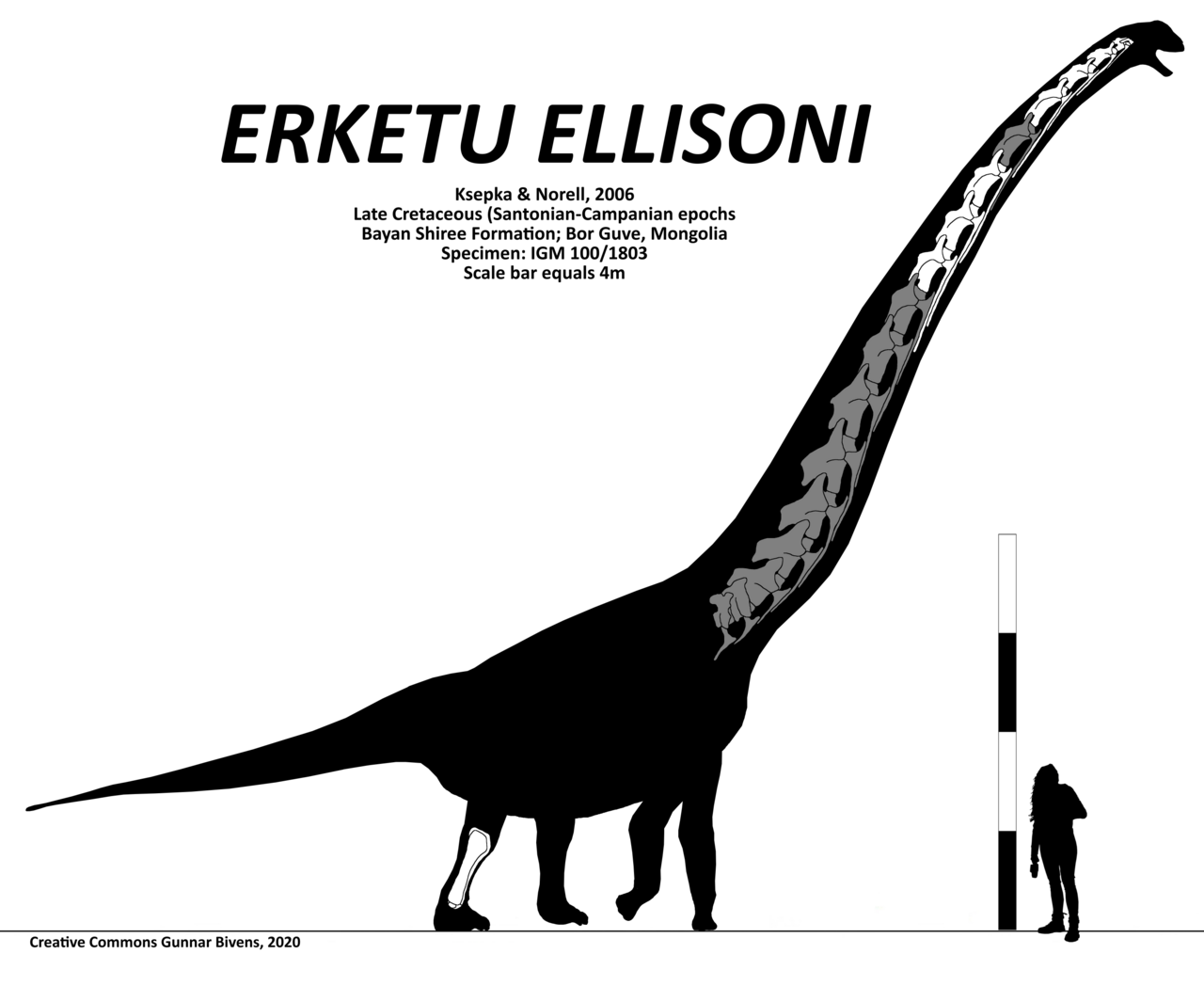
Erketu was a fairly large sauropod, estimated at 15 meters long and 5 tonnes in weight. Its neck may have been twice as long as its body, possibly a record for neck-to-body ratio. The exact ratio is uncertain because no back vertebrae have been found, though some hindlimb bones give a sense of body size. The long neck came from greatly elongated individual vertebrae; it is unknown whether the number of neck bones was increased. Erketu also had split (bifurcate) front neck spines, an unusual feature for a titanosauriform. The preserved neck bones include the atlas, axis, and vertebrae C3 through C9, with C6 missing, for a total of eight. The sternum is thickened along some edges and has a deep lateral border, measuring about 53 cm long. The right hindlimb bones were found in articulation and resemble those of *Gobititan*.
Quick Facts
- Taxon
- Erketu
- Type Species
- Erketu ellisoni
- Type Species Authority
- Ksepka & Norell, 2006
Facts from the source article.
Lore & Background
The first remains of Erketu were found in 2002 by the American Museum of Natural History–Mongolian Academy of Sciences expedition conducted in Mongolia. The team discovered the outcrops of the new locality Bor Guvé, which overlies the Khara Kuthul locality and therefore is referable to the Bayan Shireh Formation. The unearthed specimen, IGM 100/1803, was found in exposure at the sediments of Bor Guvé, mainly composed by sandstone and interbedded grey siltstones, suggesting a fluvial environment. Collected elements are mainly represented by cervical vertebrae and postcranial remains, such as the partial right sternum, tibia and fibula with astragalus and calcaneum.
The remains became the holotype for the new genus and species Erketu ellisoni, first described in 2006 by Daniel T. Ksepka and Mark Norell. The generic name is named after the creator god (tengri) of Mongolian shamanism, Erketü. The specific name, ellisoni, honors the American Museum of Natural History's senior principal paleoartist Mick Ellison. In 2003 the team returned to the site and recovered three additional cervicals that were left behind during the first field expedition, and consequently described in 2010.
Erketu was a relatively large sauropod, with an estimated length of 15 m and a weight of 5 t. Its neck was estimated to be twice as long as its body, which may be a record for neck to body ratio. The exact ratio is unknown because no dorsal vertebrae have been reported. The long neck is the result of individual vertebrae being greatly elongated; it is unknown if the number of cervical vertebrae was increased. Erketu is also diagnosed by bifurcate anterior cervical neural spines, another unusual trait for a titanosauriform.
Reader's Guide
Erketu is significant as the first sauropod described from the Bayanshiree Formation, providing important insight into the diversity of somphospondylan dinosaurs in Asia during the Late Cretaceous. Its most notable feature is the extreme elongation of its cervical vertebrae, which suggests it had the longest neck relative to its body size of any known sauropod. This adaptation likely allowed Erketu to function as a high browser, reaching vegetation inaccessible to other herbivores in its ecosystem. The phylogenetic analysis performed by its describers indicates that Erketu is a basal somphospondylian and a close relative of Euhelopus, placing it near the base of Titanosauria. The discovery of additional cervicals in 2003 and their description in 2010 highlight the ongoing nature of paleontological fieldwork and the importance of revisiting sites. Erketu lived alongside a diverse dinosaur fauna including theropods, hadrosauroids, ankylosaurs, and therizinosaurs, in a fluvial and lacustrine environment with a semi-arid climate. Its unique neck proportions continue to inform debates about sauropod neck posture and feeding ecology.
Did You Know?
- Erketu is named after Erketü tengri, the creator god of Mongolian shamanism.
- Three additional cervical vertebrae were recovered in 2003 after being left behind during the first field expedition in 2002.
Discovery and the Two-Phase Recovery
In 2002, a joint expedition between the American Museum of Natural History and the Mongolian Academy of Sciences uncovered a new fossil-bearing outcrop at a site called Bor Guvé, situated above the older Khara Kuthul locality within Mongolia's Bayan Shiree Formation. The team pulled specimen IGM 100/1803 from sandstone and interbedded grey siltstones that point to a river-dominated depositional setting. The haul consisted primarily of cervical vertebrae along with postcranial fragments: a partial right sternum, a tibia, and a fibula still joined to its astragalus and calcaneum. Daniel T. Ksepka and Mark Norell of the AMNH formally named the animal Erketu ellisoni in 2006. The genus honors Erketü, the creator god of Mongolian shamanic tradition, while the species name pays tribute to Mick Ellison, the museum's senior principal paleoartist and a close friend of Norell. The story did not end there. In 2003 the same team revisited Bor Guvé and retrieved three cervical vertebrae that had been overlooked during the initial dig. Those additional bones were not described until 2010, making Erketu one of the few dinosaurs whose holotype was completed across two separate field seasons.
Anatomy and the Remarkable Neck
Erketu ellisoni was a sizeable sauropod, estimated at roughly fifteen meters in length and five tonnes in mass. What sets it apart dramatically is its neck. The individual cervical vertebrae are greatly elongated, and the overall neck was estimated to be approximately twice the length of the body itself—a ratio that, if confirmed, would make Erketu the sauropod with the longest neck relative to body size of any known member of the group. The precise figure remains uncertain because no dorsal vertebrae have been recovered, so the body length is inferred only from hindlimb material. The preserved neck includes the atlas, the axis, and vertebrae C3 through C9, with C6 missing, yielding eight cervicals in total. Another distinctive feature is the bifurcate anterior neural spines on the cervical vertebrae, an unusual trait among titanosauriforms. The thickened sternum measures about 53 centimeters, while the right hindlimb—found in near-articulation—bears a strong resemblance to that of Gobititan, with a straight 71-centimeter tibia and a slightly longer 75-centimeter fibula.
Phylogenetic Position and Taxonomic Context
Erketu occupies a notable spot in sauropod phylogeny. The original 2006 analysis by Ksepka and Norell placed it as a basal somphospondylian—the clade encompassing all macronarians that are closer to titanosaurs than to brachiosaurids—and identified it as most closely related to Titanosauria, specifically as a close relative of Euhelopus. This made Erketu the first sauropod ever described from the Bayan Shiree Formation, filling a gap in the known sauropod record of Late Cretaceous Asia. However, the picture shifted somewhat when the 2017 description of Europatitan prompted a new cladistic analysis. In that revised framework, Erketu was recovered in a polytomy together with Chubutisaurus within the broader Somphospondyli, meaning its exact branching relationship to other members of the group remained unresolved. The genus thus sits at a somewhat ambiguous node: clearly a somphospondylian, clearly allied to the titanosaurian lineage, yet not neatly nested within Titanosauria itself. Its position underscores how much the sauropod family tree still depends on the quality and completeness of the fossil material available for analysis.
Life in a Semi-Arid Cretaceous Landscape
The Bayan Shiree Formation, where Erketu's bones were found, records a landscape of large river meanders and lakes set against a semi-arid climate, spanning roughly the Cenomanian to Coniacian stages of the Late Cretaceous. Erketu shared this world with a remarkably diverse dinosaur community. Theropods such as Achillobator and Khankhuuluu roamed the same fluvial plains, while the hadrosauroid Gobihadros was particularly abundant. Heavy-bodied ankylosaurs Talarurus and Tsagantegia added armored presence, and the therizinosaurs Erlikosaurus and Segnosaurus contributed to the browsing guild. An indeterminate titanosaur and copious fossilized fruits have also been recovered from the same locality. Ecologically, the niches were divided: Erlikosaurus, Segnosaurus, and Tsagantegia were browsers, while Talarurus functioned as a grazer. Erketu, with its extraordinarily elongated neck, was almost certainly a high browser, reaching into the upper canopy of the vegetation that thrived along the river corridors and lake margins of this ancient Mongolian environment.
Gallery
Frequently Asked Questions
What is Erketu?
Erketu is a genus of somphospondylan sauropod that lived in Asia during the Late Cretaceous, roughly 96 to 89 million years ago. It is known from fragmentary fossils recovered in Mongolia.
Where were Erketu fossils found?
The remains come from the Bayanshiree Formation in Mongolia, first collected during field expeditions in 2002 and 2003. Additional cervical vertebrae left at the dig site were formally described in 2010.
What makes Erketu stand out among sauropods?
Its unusually elongated neck vertebrae suggest it may have had the longest neck relative to its body size of any sauropod identified to date. That extreme proportion makes it a focal point in ongoing sauropod neck-length discussions.
Who named and described Erketu?
Daniel T. Ksepka and Mark Norell published the original genus description in 2006. The initial specimens were uncovered by a joint expedition involving the American Museum of Natural History.
Why is Erketu important to the Bayanshiree Formation record?
It is the first sauropod ever recognized from that Mongolian deposit, filling a notable gap in the known Late Cretaceous fauna of the area. Its possible record-breaking neck proportions also make it a key reference in sauropod body-plan research.
More in Late Cretaceous dinosaurs 1-24
Spotted an error? Know more?
Reader corrections go straight into our review queue. Suggest an edit · How this site is sourced