Euronychodon
A Late Cretaceous coelurosaur known only from teeth.

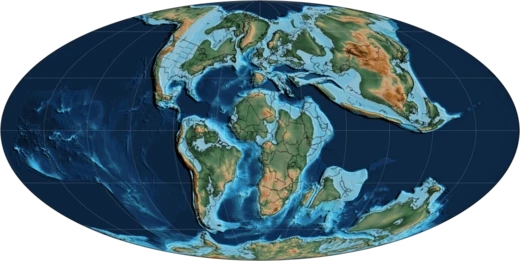
Euronychodon, meaning "European claw tooth," is a genus of coelurosaur dinosaur that lived during the Late Cretaceous in what is now Europe and Asia. It is known only from teeth, and was a small dinosaur, estimated to have been about 2 meters (6.6 feet) long. Its teeth resemble those of another tooth-based coelurosaur genus, Paronychodon.
Two species have been named. The type species, *E. portucalensis*, was named in 1991 by Miguel Telles Antunes and Denise Sigogneau-Russell. Its name refers to Portugal, from the old name for Porto, Portucale. The remains consist of three teeth originally referred to *Paronychodon lacustris* in 1988, but later considered distinct enough to form a new genus and species. They were found at Taveiro, Portugal, in rocks dated to the Campanian-Maastrichtian (about 70 million years old). The generic name is a contraction of "Europe" and *Paronychodon*. The holotype, CEPUNL TV 20, is a tooth 1.8 millimeters long, recurved, strongly elongated, and D-shaped in cross-section. The other two teeth, CEPUNL TV 18 and CEPUNL TV 19, are paratypes.
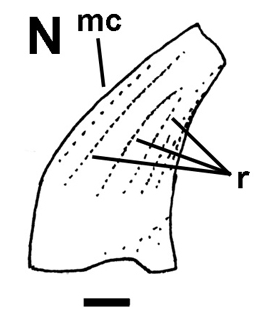
The second species, *E. asiaticus*, was named and described by Lev Nessov in 1995. It is based on seven teeth from the Bissekty Formation of Uzbekistan, dating to about 92 million years ago. The holotype is CCMGE N 9/12454, and the other six teeth are paratypes. The type tooth has fourteen vertical ridges on its inner side. This species is usually considered a nomen dubium. Because it is much older than *E. portucalensis*, it may belong to a different animal. Nessov himself regarded *Euronychodon* as a pure form taxon and suggested such unusual teeth might have grown accidentally when tooth pairs developed on closing jaw bone sutures in juvenile individuals.
As a tooth-taxon, the true relationships of *Euronychodon* are difficult to determine. Its teeth are similar to the better-known *Paronychodon*, which may be a senior synonym. *Paronychodon* was originally described as similar to *Zapsalis*, another tooth taxon often considered synonymous with *Richardoestesia* (a possible dromaeosaurid). It has since been identified as a coelurid, ornithomimosaur, dromaeosaurid, archaeopterygid, and troodontid—though it could also be another kind of coelurosaurian theropod.
Quick Facts
- Taxon
- Euronychodon
- Type Species
- Euronychodon portucalensis
- Type Species Authority
- Antunes & Sigogneau-Russell, 1991
Facts from the source article.
Lore & Background
Two species of Euronychodon have been named. The type species, E. portucalensis, was named and described in 1991 by Miguel Telles Antunes and Denise Sigogneau-Russell. Its remains consist of three teeth found at the locality of Taveiro, Portugal, dated as Campanian-Maastrichtian (about 70 million years old). The generic name is a contraction of "Europe" and Paronychodon. The holotype, CEPUNL TV 20, is a tooth 1.8 millimetres long, recurved and strongly elongated with a D-shaped cross-section. The other two teeth, CEPUNL TV 18 and CEPUNL TV 19, are the paratypes.
The second species, E. asiaticus, was named and described by Lev Nessov in 1995 from seven teeth found in the Bissekty Formation of Uzbekistan (dated to about 92 million years ago). The holotype is CCMGE N 9/12454; the other six teeth are the paratypes. The type tooth has fourteen vertical ridges on the inner side. It is usually considered a nomen dubium. Nessov himself considered Euronychodon a pure form taxon and suggested such deviant teeth grew accidentally when tooth pairs happened to develop on closing jaw bone sutures with juvenile individuals.
Reader's Guide
Euronychodon is significant primarily as a tooth taxon, illustrating the challenges of classifying dinosaurs known only from isolated teeth. Its true affinities are hard to determine, though the teeth are similar to Paronychodon, which may be a senior synonym. Paronychodon has been variously identified as a coelurid, ornithomimosaur, dromaeosaurid, archaeopterygid, and troodontid, though it could also be another kind of coelurosaurian theropod. While most researchers consider such taxa as simply indeterminate theropod teeth, a small consensus has found them to belong to the Deinonychosauria. One study showed that the tooth enamel is identical to that found in Byronosaurus, a troodontid. The remains indicate a small, carnivorous or insectivorous animal. The species E. asiaticus is much earlier than E. portucalensis, meaning it could belong to a different animal. Taveirosaurus was found at the same locality as E. portucalensis.
Did You Know?
- Euronychodon is known only from teeth, with no other skeletal remains found.
- The type species, E. portucalensis, was named for Portugal, from Portucale, an old name of Porto.
- The holotype tooth of E. portucalensis is only 1.8 millimetres long.
- E. asiaticus is usually considered a nomen dubium.
Taxonomic Identity and the Two Named Species
Only two species have ever been assigned to Euronychodon, and both rest entirely on isolated teeth rather than skeletal material. The type species, E. portucalensis, was erected in 1991 by Miguel Telles Antunes and Denise Sigogneau-Russell based on three teeth recovered from the Taveiro locality in Portugal, a site dated to the Campanian–Maastrichtian interval roughly seventy million years ago. The generic name itself is a deliberate contraction of 'Europe' and the closely related genus Paronychodon, reflecting the taxon's geographic and morphological context. The holotype tooth measures just 1.8 millimetres in length, is strongly recurved and elongated, and shows a distinctive D-shaped cross-section. The second species, E. asiaticus, was described by Lev Nessov in 1995 from seven teeth in the Bissekty Formation of Uzbekistan, dating to approximately ninety-two million years ago. Its type tooth bears fourteen vertical ridges on the inner surface. However, because of the substantial age gap between the two species, many palaeontologists regard E. asiaticus as a nomen dubium, and Nessov himself proposed that such anomalous teeth might simply result from accidental development along closing jaw sutures in juvenile individuals, making Euronychodon a pure form taxon rather than a true biological species.
The Classification Quagmire
Because Euronychodon is known exclusively from teeth, pinning down its exact position within the theropod family tree has proven extraordinarily difficult. Its morphology closely mirrors that of Paronychodon, another tooth-only genus, and some researchers have suggested the two may actually be a single entity, with Paronychodon potentially serving as a senior synonym. The broader group of such isolated-tooth taxa has a long and tangled history of reassignment. Paronychodon was originally compared to Zapsalis, a genus frequently treated as synonymous with Richardoestesia, a possible dromaeosaurid. Over the decades, various authors have placed these tooth taxa as coelurids, ornithomimosaurs, dromaeosaurids, archaeopterygids, or troodontids. The prevailing modern view, held by the majority of palaeontologists, is that such specimens represent simply indeterminate theropod teeth that cannot be confidently assigned to any particular lineage. That said, a smaller but persistent consensus groups them within Deinonychosauria. Notably, one comparative study found that the enamel structure of Euronychodon teeth is identical to that preserved in Byronosaurus, a well-known troodontid, lending some weight to that particular affiliation.
Physical Profile and Dietary Inference
Despite the absence of any postcranial skeleton, the limited evidence available allows a rough reconstruction of Euronychodon as a small-bodied coelurosaurian theropod. Estimates place its total length at approximately two metres (about 6.6 feet), making it a modest-sized animal in its Late Cretaceous ecosystem. The morphology of the teeth—strongly elongated, recurved, and bearing a D-shaped cross-section in the Portuguese specimens—suggests an animal adapted for gripping and shearing, consistent with a carnivorous or insectivorous diet. The fourteen vertical ridges observed on the inner surface of the Uzbekistani type tooth add further textural detail that may have aided in processing food. Notably, the theropod Taveirosaurus was recovered from the very same Taveiro locality in Portugal, indicating that Euronychodon shared its Late Cretaceous habitat with at least one other large carnivorous dinosaur. The overall picture that emerges is of a relatively small theropod occupying a niche alongside larger predators, though the extreme scarcity of material means that virtually every aspect of its biology remains provisional and open to revision.
Geographic Range and Discovery Timeline
Euronychodon is a genus with a remarkably broad geographic footprint for a taxon known from so few specimens. The type species, E. portucalensis, was recovered from the Taveiro locality in Portugal, a site whose sediments span the Campanian–Maastrichtian boundary at roughly seventy million years ago. The species name honours Portugal through the archaic term Portucale, an old designation for the city of Porto. Before being elevated to its own genus, these three teeth had been tentatively assigned to Paronychodon lacustris in 1988, but subsequent analysis revealed diagnostic features sufficient to warrant a separate taxonomic name. The second species, E. asiaticus, pushes the genus's range eastward to the Bissekty Formation in Uzbekistan and back in time to approximately ninety-two million years ago. This nearly twenty-two-million-year gap between the two species, combined with the vast geographic separation between Portugal and Uzbekistan, has led many researchers to question whether they truly represent the same animal. The holotypes—CEPUNL TV 20 for the Portuguese material and CCMGE N 9/12454 for the Uzbek material—remain the sole anchors for a genus whose identity continues to be debated.
Gallery
Frequently Asked Questions
What is Euronychodon?
Euronychodon is a small coelurosaurian theropod from the Late Cretaceous whose name translates to 'European claw tooth.' It is known exclusively from isolated teeth recovered from deposits in Europe and Asia.
How big was Euronychodon?
Based on its teeth, the animal is estimated to have measured roughly 2 meters (about 6.6 feet) in total length. No other skeletal material has been found, so this figure remains an approximation.
What fossils of Euronychodon exist?
The entire known record consists of isolated teeth; no bones, skulls, or other body parts have ever been assigned to this genus. The type species was described in 1991 by Telles Antunes and Sigogneau-Russell based on three teeth from Portugal.
How many species of Euronychodon are recognized?
Two species have been formally named: the type species E. portucalensis, whose name references Portugal, and E. asiaticus. Both are known solely from dental material.
How is Euronychodon different from Paronychodon?
The two genera are extremely difficult to tell apart because their teeth look nearly identical, which is why both remain tooth-only taxa. This close resemblance has made definitive separation between them a persistent challenge in theropod systematics.
More in Late Cretaceous dinosaurs 1-24
Spotted an error? Know more?
Reader corrections go straight into our review queue. Suggest an edit · How this site is sourced