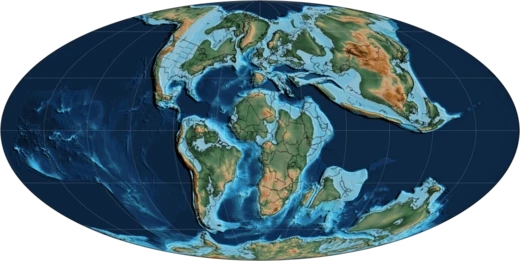
Enigmosaurus
Enigmosaurus is a Late Cretaceous therizinosauroid from Mongolia.

PaleoNeolitic · CC BY-SA 4.0
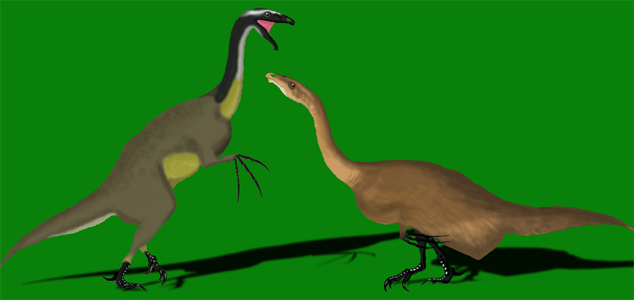
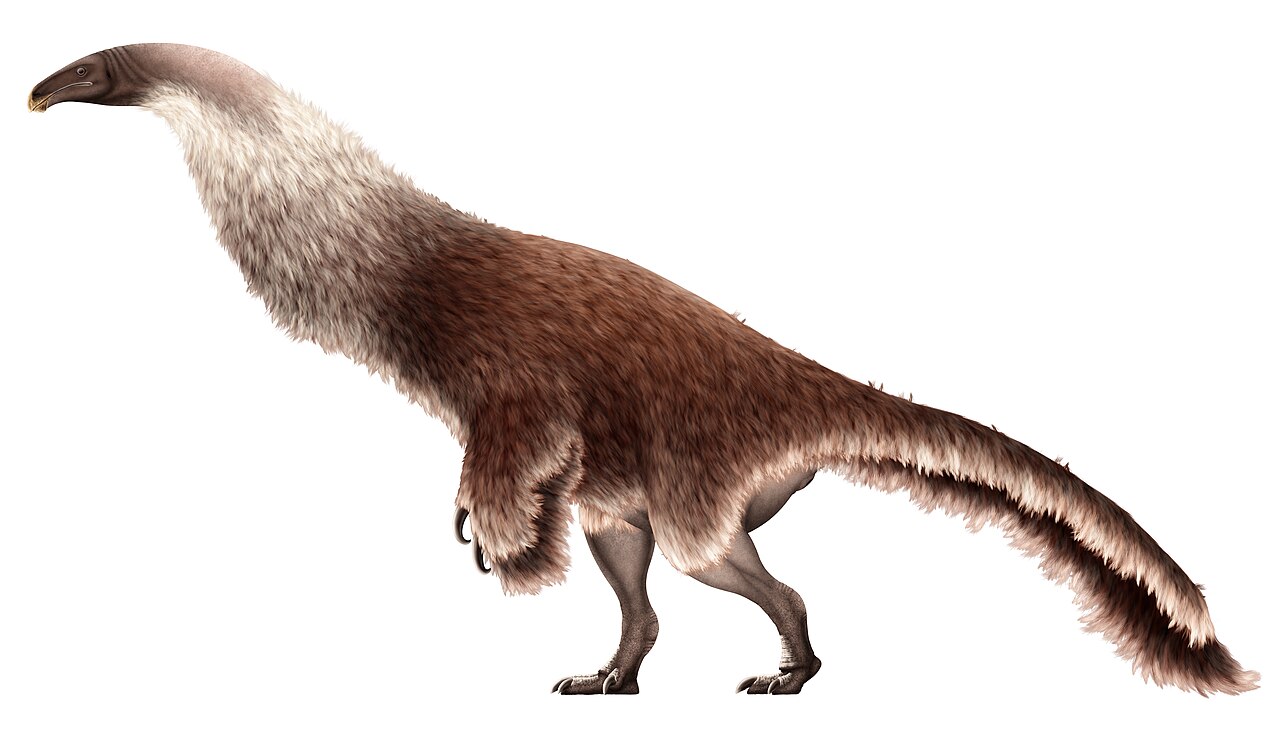
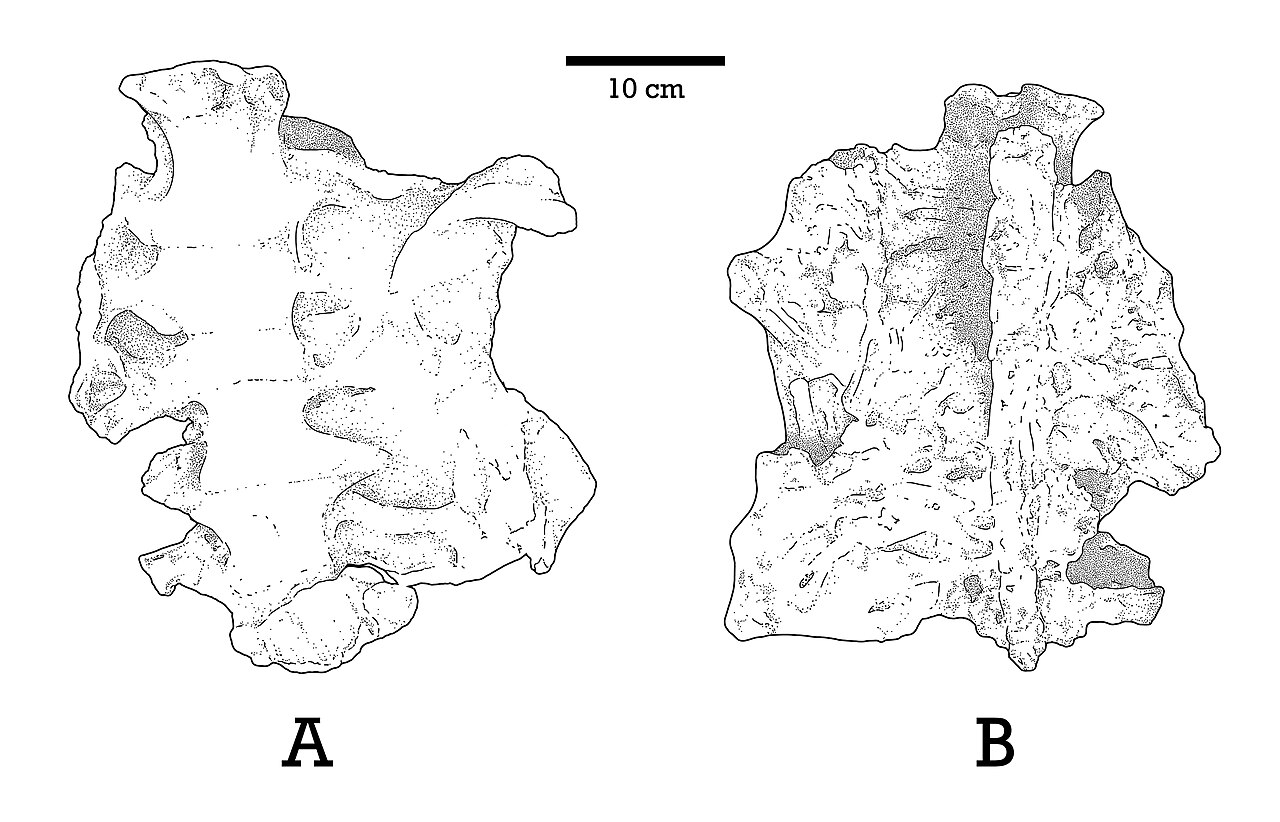
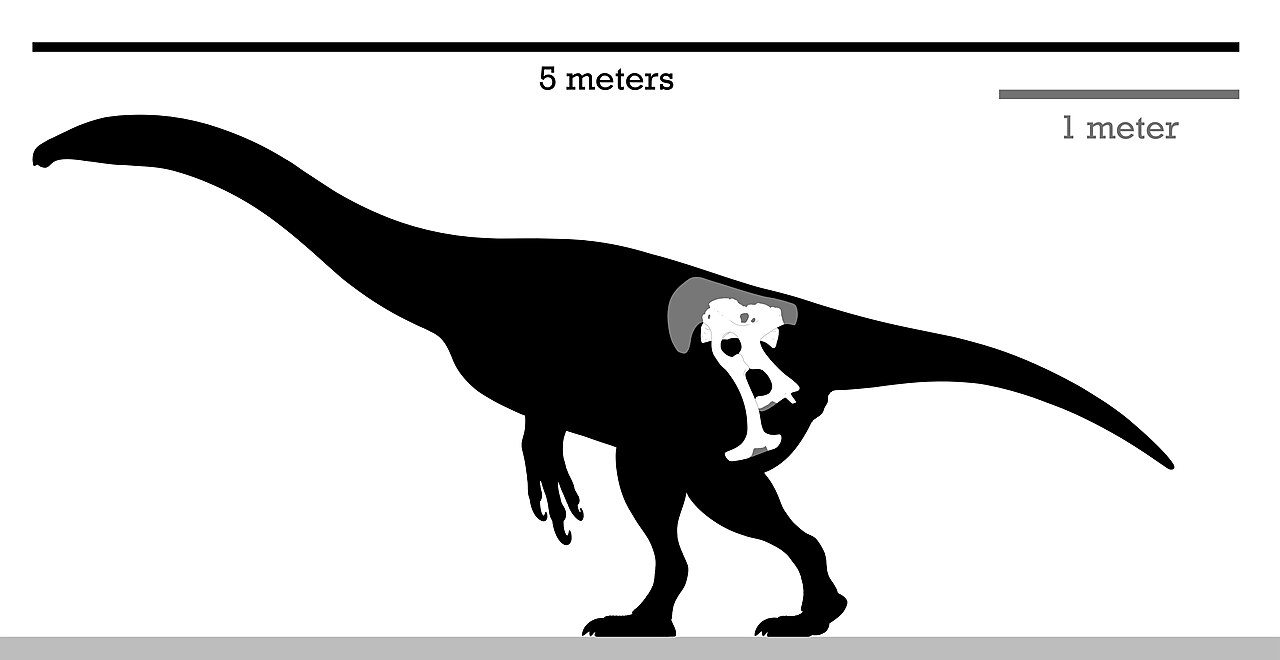
Enigmosaurus, whose name translates to "enigmatic lizard," is a genus of therizinosauroid dinosaur from the Late Cretaceous of Asia. This medium-sized, bipedal herbivore lived on the ground and is the third therizinosaur known from the Bayan Shireh Formation, specifically from its lower layers. The genus contains only one species, *E. mongoliensis*, which is based on a well-preserved pelvis and some associated vertebrae.
**Discovery and naming**
The holotype specimen, IGM 100/84, was found at the Khara Khutul site in southeastern Mongolia's Bayan Shireh Formation, which dates to the Late Cretaceous. It was first mentioned in 1979 in a study comparing the pelvises of theropod dinosaurs, at a time when little was understood about therizinosaurs. In 1980, it was discussed again as part of a new dinosaur group called Segnosauria, created by Mongolian paleontologists Rinchen Barsbold and Altangerel Perle. At that point, it was briefly described and placed within Segnosauria under the nickname "Dinosaur from Khara Khutul."
Three years later, in 1983, Barsbold formally named and described the type species *Enigmosaurus mongoliensis*. The preserved material is a partial skeleton without a skull, including a well-preserved pelvic girdle and some vertebrae. The genus name comes from the Greek words for "enigma" and "lizard," referring to the odd, unusual shape of its pelvis. The species name *mongoliensis* points to Mongolia, where it was discovered. Some therizinosaur fossils from the Iren Dabasu Formation were initially thought to belong to Enigmosaurus. The holotype consists only of the partial pelvis and vertebrae; no additional bones such as a femur, tibia, ribs, humerus, radius, or ulna are documented under the same specimen number in the original description or primary literature.
Quick Facts
- Taxon
- Enigmosaurus
- Type Species
- Enigmosaurus mongoliensis
- Type Species Authority
- Barsbold, 1983
Facts from the source article.
Lore & Background
The holotype, IGM 100/84, was discovered at the Khara Khutul locality in the Bayan Shireh Formation, southeastern Mongolia, and first reported in 1979 on a pelvic comparison with other theropod dinosaurs. At the time, little was known about therizinosaurs. In 1980, it was mentioned again in the new infraorder Segnosauria, created by Mongolian paleontologists Rinchen Barsbold and Altangerel Perle. Nicknamed the 'Dinosaur from Khara Khutul,' it was shortly described and included into the Segnosauria. Three years later, the type species Enigmosaurus mongoliensis was named and described in 1983 by Barsbold. The preserved elements consist of a partial skeleton, lacking the skull, that includes a well-preserved pelvic girdle with some vertebrae. The original description does not mention any evidence of bone resorption or remodeling in the pelvis, nor does it document any disassociated femur or other limb bones associated with the holotype.
Reader's Guide
Enigmosaurus is significant as the third therizinosaur taxon from the Bayan Shireh Formation, adding to the known biodiversity of therizinosaurs in Late Cretaceous Asia. Its pelvis, noted for its aberrant shape, prompted the creation of the now-obsolete family Enigmosauridae, though later analyses placed it more basally within Therizinosauroidea. The holotype pelvis shows areas of bone resorption and remodeling, possibly indicating advanced age, which complicates the interpretation of some proposed autapomorphies. Some paleontologists have suggested Enigmosaurus might be synonymous with Erlikosaurus, as both come from the same formation and distinguishing traits are absent, but most authors consider them distinct due to size differences and different strata (lower vs. upper). The genus remains enigmatic, with further analyses required to settle its classification and biology.
Did You Know?
- Enigmosaurus means 'enigma lizard' or 'enigmatic lizard', referring to the unusual shape of its pelvis.
- The holotype pelvis shows evidence of bone resorption and remodeling, possibly indicating the individual was advanced in age.
- Some paleontologists have proposed that Enigmosaurus might be the same animal as Erlikosaurus, but most authors consider them distinct.
- The holotype includes a well-preserved pelvis and other tentative body remains, but a very large femur labeled with the same specimen number was not associated with the holotype.
The Unraveling of the Khara Khutul Mystery
In 1979, a pelvic specimen from the Khara Khutul locality in southeastern Mongolia caught the attention of paleontologists when it was compared against other theropod remains. At that time, therizinosaurs were barely understood, and the bone was simply noted in passing. The following year, Mongolian paleontologists Rinchen Barsbold and Altangerel Perle elevated the find by placing it within their newly created infraorder Segnosauria, and the specimen earned the informal nickname 'Dinosaur from Khara Khutul.' Three years later, in 1983, Barsbold formally named and described the type species Enigmosaurus mongoliensis. The generic name draws on the Greek word ainigma, meaning enigma, paired with sauros for lizard—a nod to the peculiar and unusual architecture of its pelvis. The species epithet simply honors Mongolia as the country of discovery. The holotype, catalogued as IGM 100/84, comes from the Bayan Shireh Formation and represents a partial skeleton lacking the skull but preserving a remarkably intact pelvic girdle alongside other postcranial elements.
Anatomy of the Enigmatic Pelvis
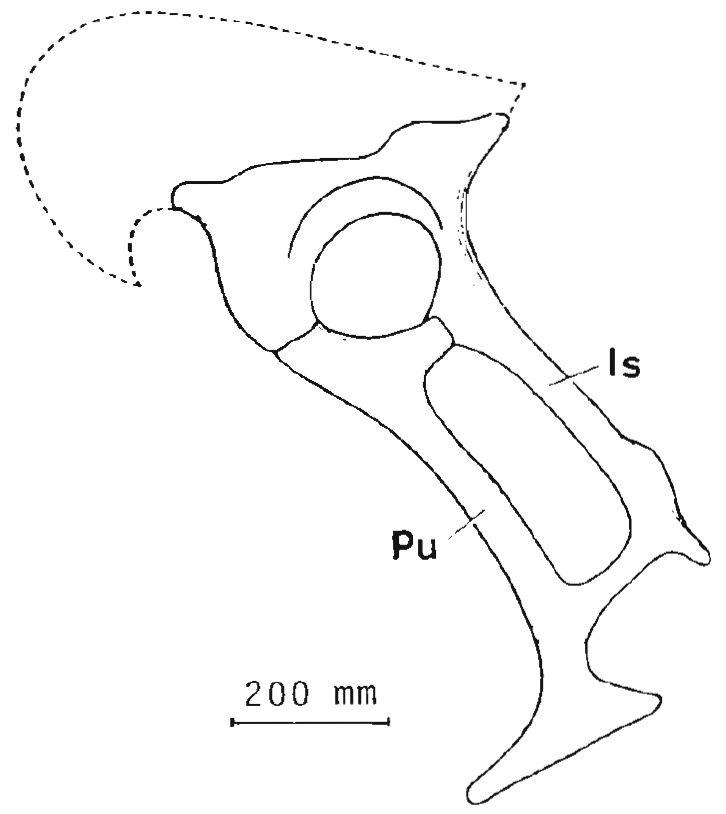
Enigmosaurus was a substantial therizinosaur, estimated at roughly five meters in length and weighing between 454 and 907 kilograms. Its most celebrated feature is the holotype pelvis, which is opisthopubic and notably large overall. The ilium sits widely and is rotated externally, bearing a prominent cubic process in its posterodorsal region. The pubis and ischium are both short, with the pubis showing an elongated, recurved, and stocky distal end. Zanno and colleagues in 2010 identified additional diagnostic traits: prominent cranial and caudal processes on a dorsoventrally flattened pubic boot, fused pubic feet forming a V-shaped medial expansion, and a tetraradiate process created by the medial fusion of the obturator process with the pubic body. The sacrum appears to preserve six vertebrae with elongated transverse processes. Interestingly, areas of bone resorption and remodeling on the ilium may suggest the individual was quite old, which could complicate whether the obturator-pubis fusion is a true autapomorphy. Beyond the pelvis, a handful of poorly preserved elements—ribs, a humeral end, a tentative radius, and an ulna fragment—carry the same specimen number, though their association remains uncertain.
Taxonomic Tug-of-War
Since its 1983 description, Enigmosaurus has occupied a shifting position within therizinosaur phylogeny. Barsbold originally placed it in its own family, Enigmosauridae, a grouping now considered obsolete, largely because of its aberrant pelvic morphology. Subsequent work reassigned it to Segnosauridae, the name later absorbed into Therizinosauridae. In 2010, Lindsay Zanno recovered it in a more basal position within Therizinosauroidea, while Hartman and colleagues in 2019 pulled it back toward a derived therizinosauroid position. A persistent question has been whether Enigmosaurus is simply a junior synonym of Erlikosaurus. Both come from the same formation, Enigmosaurus is known primarily from pelvic material, and Erlikosaurus lacks a known pelvis, so distinguishing characters are scarce. However, most researchers reject the synonymy: the Enigmosaurus pelvis does not resemble that of Segnosaurus as one would expect if it were Erlikosaurus, the two differ greatly in size, and they come from different stratigraphic levels—lower versus upper—within the Bayan Shireh Formation.
Life in the Bayan Shireh Ecosystem
Enigmosaurus roamed the landscapes of what is now southeastern Mongolia during the Late Cretaceous, specifically within the Cenomanian to Santonian time window, roughly 95.9 to 89.6 million years ago. Its remains come from the lower portion of the Bayan Shireh Formation at the Khara Khutul locality, making it the third recognized therizinosaur taxon from that unit, alongside Erlikosaurus and Segnosaurus. As a medium-sized, ground-dwelling, bipedal herbivore, it likely moved slowly through its environment, feeding on vegetation or possibly supplementing its diet with other plant matter. The formation's biodiversity was heavily dominated by therizinosaurs, suggesting these long-armed, long-necked dinosaurs filled multiple ecological niches in this Late Cretaceous ecosystem. The presence of three distinct therizinosaur genera in a single formation highlights the diversity and evolutionary radiation of the group in this region, with Enigmosaurus occupying a particular ecological and stratigraphic slot that set it apart from its contemporaries.
Gallery
Frequently Asked Questions
What is Enigmosaurus?
Enigmosaurus is a medium-sized, bipedal, plant-eating therizinosauroid from the Late Cretaceous of Asia. Its name, meaning "enigmatic lizard," captures just how little is known about this animal beyond its skeletal remains.
What remains of Enigmosaurus have been found?
The entire genus rests on a single well-preserved pelvis along with a handful of associated vertebrae from the holotype specimen IGM 100/84. No skull, limbs, or other body parts have been identified for this dinosaur.
When and where did Enigmosaurus live?
This dinosaur inhabited southeastern Mongolia roughly 95.9 to 89.6 million years ago, spanning the Cenomanian through Santonian stages. Its fossils come from the lower layers of the Bayan Shireh Formation at the Khara Khutul locality.
Who described Enigmosaurus and when?
Mongolian paleontologist Rinchen Barsbold formally named the genus in 1983. He erected the single species E. mongoliensis based on the pelvic material recovered from the Bayan Shireh Formation.
Why does Enigmosaurus matter to therizinosaur research?
It represents the third therizinosaur identified from the Bayan Shireh Formation, adding depth to our understanding of therizinosaur diversity in that region. Its notably unusual pelvis also makes it a point of interest when comparing skeletal anatomy across therizinosauroid lineages.
More in Late Cretaceous dinosaurs 1-24
Spotted an error? Know more?
Reader corrections go straight into our review queue. Suggest an edit · How this site is sourced