Gobihadros
Basal hadrosauroid dinosaur from Late Cretaceous Mongolia.

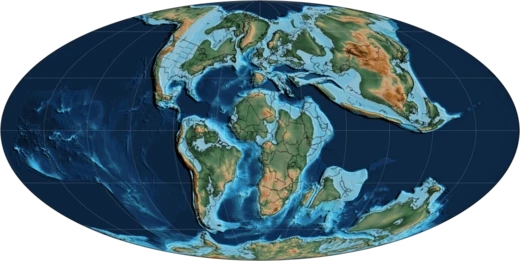
Gobihadros is a genus of basal hadrosauroid dinosaur from the Late Cretaceous of Mongolia. It is known from the Bayan Shireh Formation, which dates to the Cenomanian through Turonian stages. The only species is Gobihadros mongoliensis, and adults reached an estimated length of 7.5 meters (25 feet).
The first fossils were uncovered between 1993 and 2004 at Bayshin Tsav during joint excavations by the Mongolian Palaeontological Center and the Japanese Hayashibara Museum of Natural Sciences. The material belonged to a new basal hadrosauroid, which Tsogtbaatar first described in his 2008 dissertation. In 2019, the species was formally named by Tsogtbaatar, Weishampel, Evans, and Watabe. The genus name combines the Gobi Desert with Hadrosauroidea, and the species name refers to Mongolia. Because the description was published electronically, Life Science Identifiers were required for validity: the registered LSIDs are 38EE8AD7-AD50-44BF-B31D-B2675456556A for the genus and 2DB42EE7-6A64-4D64-AA19-E5D3453BF99C for the species.
The holotype, MPC-D100/746, comes from the Bayan Shireh Formation and consists of a nearly complete skeleton with a skull. The postcranial skeleton was articulated, but the skull was partly disintegrated. Many other specimens have been referred to the species, most notably MPC-D100/763, a complete articulated skull with a hand. Fossils have also been found at other Mongolian sites. Together, these specimens make Gobihadros the most completely known basal hadrosauroid from Asia.
Gobihadros was a medium-sized hadrosauroid. Specimen MPC-D100/763 was about 3 meters (9.8 feet) long at death, but it was immature. Larger individuals include MPC-D100/744, with a femur 72.8 centimeters long indicating a length of 5.3 meters (17 feet), and ZPAL MgD-III/3, with a femur 104 centimeters long indicating a length of 7.5 meters (25 feet). This last specimen shows signs of advanced age, including bone resorption and remodeling on the femur and tibia, suggesting it reached the maximum size for the species.
The describing authors noted several distinguishing traits. Gobihadros has a double-layered tomial edge on the premaxilla and up to three teeth per tooth position in the lower jaw—features typical of hadrosaurids but interpreted as independently evolved through parallel evolution.
Quick Facts
- Taxon
- Gobihadros
- Type Species
- Gobihadros mongoliensis
- Type Species Authority
- Tsogtbaatar et al., 2019
Facts from the source article.
Lore & Background
Between 1993 and 2004, the Mongolian Palaeontological Center and the Japanese Hayashibara Museum of Natural Sciences excavated sites at Bayshin Tsav, discovering material of a basal hadrosauroid new to science. Tsogtbaatar treated this species in his dissertation of 2008. In 2019, the type species Gobihadros mongoliensis was named and described by Khishigjav Tsogtbaatar, David Bruce Weishampel, David Christopher Evans, and Mahito Watabe. The generic name combines references to the Gobi Desert and the Hadrosauroidea, while the specific name refers to the provenance from Mongolia. Because the describing article appeared in an electronic publication, Life Science Identifiers were needed to make the name valid.
The holotype, MPC-D100/746, consists of a nearly complete skeleton with a skull, found in a layer of the Bayan Shireh Formation. Numerous specimens have been referred to the species, the most important among them specimen MPC-D100/763, a complete articulated skull with a hand. Combined, they make Gobihadros the most completely known basal hadrosauroid from Asia. The describing authors indicated distinguishing traits, including a double-layered tomial edge of the premaxilla and the presence of as much as three teeth per tooth position in the lower jaw, which are typical hadrosaurid traits concluded to have been acquired separately by the Hadrosauridae in parallel evolution.
Reader's Guide
Gobihadros is significant as the most completely known basal hadrosauroid from Asia, providing crucial anatomical information for understanding the early evolution of hadrosauroids. Its discovery in the Bayanshiree Formation of Mongolia, dated to the Cenomanian-Santonian stages, helps fill a gap in the fossil record of Asian hadrosauroids. The species exhibits traits typical of hadrosaurids, such as a double-layered tomial edge and multiple teeth per tooth position, which were interpreted as independently acquired through parallel evolution, not direct ancestry. This supports a pattern of subsequent American hadrosauroid invasions into Asia. Additionally, a 2021 study of a large individual (ZPAL MgD-III/3) revealed traces of calcium pyrophosphate deposition disease, indicating that this dinosaur suffered from joint pain and restriction in old age, likely due to advanced age rather than trauma. The presence of closely spaced lines of arrested growth and an external fundamental system in the femur reinforced its advanced age. Gobihadros thus offers insights into both the evolutionary relationships and paleopathology of basal hadrosauroids.
Did You Know?
- A 2021 study found evidence of calcium pyrophosphate deposition disease in a large individual of Gobihadros.
- The species name mongoliensis refers to its provenance from Mongolia.
Frequently Asked Questions
What is Gobihadros?
Gobihadros is a genus of early-branching hadrosauroid (duck-billed) dinosaur known from a single species, Gobihadros mongoliensis. It represents one of the more basal members of the hadrosauroid lineage, placing it near the base of the duck-billed dinosaur family tree.
Where and when did Gobihadros live?
Its fossils come from the Bayan Shireh Formation in Mongolia and date to the Cenomanian through Turonian stages of the Late Cretaceous, roughly 100 to 94 million years ago. This makes it one of the older hadrosauroids known from the Mongolian fossil record.
How big was Gobihadros?
Adults are estimated to have reached about 7.5 meters (around 25 feet) in total length, making it a fairly large herbivore for its era. That size is comparable to some well-known hadrosaurids, though it belonged to an earlier, more basal group.
Who discovered and named Gobihadros?
Fossils were uncovered at the Bayshin Tsav site between 1993 and 2004 during joint excavations by the Mongolian Palaeontological Center and Japan's Hayashibara Museum of Natural Sciences. The genus was formally named and described in 2019 by Tsogtbaatar, Weishampel, Evans, and Watabe.
Why does Gobihadros matter to dinosaur science?
Because it sits near the base of the hadrosauroid clade, it helps researchers trace how duck-billed dinosaurs first diversified in Asia during the mid-Cretaceous. Adding another well-dated Mongolian specimen to the record narrows down the timing and geography of early hadrosauroid evolution.
More in Late Cretaceous dinosaurs 1-24
Spotted an error? Know more?
Reader corrections go straight into our review queue. Suggest an edit · How this site is sourced