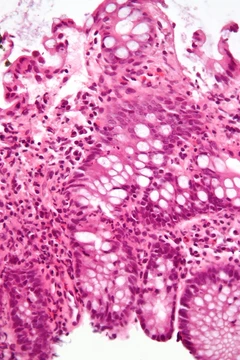
Proctitis
Inflammation of the anus and rectal lining, often from infection.
Proctitis, also called anusitis, is inflammation of the anus and rectal lining, limited to the final six inches of the rectum. It is often linked to sexually transmitted infections, especially among men who have sex with men, and may also result from radiation therapy or unknown causes.
Quick Facts
- Affected area
- Last 6 inches of the rectum
- Most common cause
- Gonorrhea (Gonococcal proctitis)
- Associated behavior
- Anal intercourse
Facts from the source article.
Did You Know?
- Doctors can diagnose proctitis by looking inside the rectum with a proctoscope or a sigmoidoscope and taking a biopsy.
- A stool sample may be taken to test for infections or bacteria.
- If Crohn's disease or ulcerative colitis is suspected, colonoscopy or barium enema X-rays are used to examine areas of the intestine.
Signs and symptoms
A common symptom is a continual urge to have a bowel movement (tenesmus), with the rectum possibly feeling full or causing constipation. Tenderness and mild irritation in the rectum and anal region are also typical. Serious symptoms include pus and blood in the discharge, accompanied by cramps and pain during bowel movements. Severe bleeding can lead to anemia, presenting as pale skin, irritability, weakness, dizziness, brittle nails, and shortness of breath. Gonococcal proctitis, the most common cause, is strongly associated with anal intercourse and includes soreness, itching, bloody or pus-like discharge, or diarrhea. Chlamydia proctitis accounts for twenty percent of cases; people may show no symptoms, mild symptoms (rectal pain with bowel movements, rectal discharge, cramping), or severe symptoms (discharge containing blood or pus, severe rectal pain, diarrhea). Some individuals develop rectal strictures, a narrowing of the rectal passageway, causing constipation, straining, and thin stools. Herpes proctitis may involve multiple vesicles that rupture to form ulcers, tenesmus, rectal pain, discharge, and hematochezia; the disease runs a course of exacerbations and remissions, usually more prolonged and severe in immunodeficient patients. Syphilitic proctitis symptoms are similar to other infectious proctitis—rectal pain, discharge, and spasms during bowel movements—but some people have no symptoms. Syphilis occurs in three stages: primary (one painless sore with raised borders at the site of sexual contact, and firm rubbery lymph nodes in the groin), secondary (a contagious diffuse rash over the entire body, particularly on hands and feet), and third stage (affecting mostly the heart and nervous system).
Causes
Proctitis can develop for a number of reasons. Sometimes the cause is unknown, a condition called idiopathic proctitis. It can also result from radiation damage, such as during treatment for cervical or prostate cancer. Sexually transmitted infections like lymphogranuloma venereum and herpes are another cause. Research indicates that a gluten intolerance linked to celiac disease may lead to proctitis as well. Among men who have sex with men, a frequent trigger is anal sex with partners carrying STIs. Additionally, sharing enema equipment has been found to help spread lymphogranuloma venereum proctitis.
Treatment
Treatment for proctitis varies depending on severity and cause. For bacterial infection, antibiotics may be prescribed. If caused by Crohn's disease or ulcerative colitis, the drug 5-aminosalicyclic acid (5ASA) or corticosteroids may be applied directly in enema or suppository form, or taken orally; enema and suppository applications are usually more effective, but some patients may require a combination. Stool softeners such as Metamucil, taken daily, may restore regularity and reduce pain. Chronic radiation proctitis is usually treated first-line with sucralfate enemas, which are non-invasive and effective in diffuse, distal disease. Other treatments, supported only by observational or anecdotal evidence, include mesalamine suppositories, vitamin E, hyperbaric oxygen, or short chain fatty acid enemas.
More in Inflammatory Diseases of the Digestive System
Spotted an error? Know more?
Reader corrections go straight into our review queue. Suggest an edit · How this site is sourced