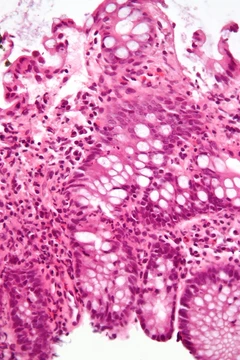
Esophagitis
Inflammation of the esophagus, often from acid reflux.
When stomach acid flows backward into the lower esophagus, it can inflame the lining of this muscular tube connecting the throat to the stomach. This condition, called esophagitis or oesophagitis, may cause no symptoms or lead to burning pain beneath the breastbone or in the upper abdomen, especially when straining or lying down. Swallowing can also become difficult. The most frequent trigger is gastroesophageal reflux disease, or GERD.
Quick Facts
- Complications
- Cancer
Facts from the source article.
Did You Know?
- If esophagitis remains untreated, it can cause scarring, esophageal ulcers, and may develop into Barrett's esophagus, increasing the risk of esophageal cancer.
- Esophagitis is more prevalent in adults and does not discriminate.
Causes
Esophagitis can develop from many causes, with GERD being the most common due to backflow of stomach acid irritating the esophageal lining. Other causes include medications such as nonsteroidal anti-inflammatory drugs (NSAIDs), antibiotics like doxycycline and tetracycline, quinidine, bisphosphonates, steroids, potassium chloride, and certain vitamins and supplements. Chemical injury from alkaline or acidic solutions, physical injury from nasogastric tubes, alcohol use disorder, Crohn's disease, stress, radiation therapy, allergies, infections in immunodeficient individuals, vomiting, hernias, and surgery can also lead to esophagitis. Eosinophilic esophagitis is a more chronic condition with a theorized autoimmune component.
Mechanism
The esophagus is a muscular tube about 8 inches long, composed of mucosa, submucosa, and muscularis externa, with a lower esophageal sphincter that normally prevents stomach acid from entering. If the sphincter is not sufficiently tight, acid may enter and cause inflammation of one or more layers. Infection from bacteria, viruses, or fungi, or diseases affecting the immune system, can also cause esophagitis. Inflammation can narrow the esophagus, making swallowing difficult and potentially leading to food bolus impaction.
Diagnosis
Esophagitis can be diagnosed by upper endoscopy, biopsy, upper GI series (or barium swallow), and laboratory tests. An upper endoscopy uses an endoscope to view the esophagus and allows the doctor to take a small biopsy to confirm inflammation. An upper GI series uses barium contrast, fluoroscopy, and X-ray to detect narrowing, inflammation, or other abnormalities; an esophagram examines only the throat and esophagus. Laboratory tests on biopsies can determine the cause, such as fungal, viral, or bacterial infection, and scanning for white blood cells can help diagnose eosinophil esophagitis. Lifestyle indicators include stress, unhealthy eating, smoking, drinking, family history, allergies, and immunodeficiency. Types include reflux esophagitis, infectious esophagitis (fungal, viral, parasitic, or bacterial), drug-induced esophagitis, eosinophilic esophagitis (associated with high eosinophil concentration and allergens), and lymphocytic esophagitis.
Treatment
Treatment includes lifestyle changes such as losing weight, stopping smoking and alcohol, lowering stress, avoiding lying down after eating, raising the head of the bed, and avoiding certain foods and medications. For reflux esophagitis, over-the-counter antacids, H-2 receptor blockers, and proton pump inhibitors are recommended; prescription options include higher-dose H-2 receptor blockers, proton pump inhibitors, and prokinetics, though prokinetics are no longer licensed for GERD due to poor efficacy and restricted use. For eosinophilic esophagitis, avoiding allergens and using proton pump inhibitors or swallowed steroids (as used for asthma) is recommended. Infectious esophagitis is treated with medicines specific to the infection type. Surgery, such as fundoplication for reflux esophagitis or dilation for esophageal stricture, may be performed; evidence for magnetic sphincter augmentation is poor as of 2020.
More in Inflammatory Diseases of the Digestive System
Spotted an error? Know more?
Reader corrections go straight into our review queue. Suggest an edit · How this site is sourced