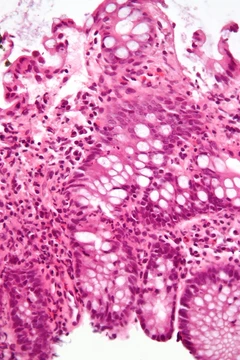
Cholecystitis
Inflammation of the gallbladder, often due to gallstones.
Cholecystitis is inflammation of the gallbladder, most often caused by a gallstone blocking the cystic duct. Symptoms include right upper abdominal pain, pain in the right shoulder, nausea, vomiting, and occasionally fever. Without appropriate treatment, recurrent episodes and complications such as gallstone pancreatitis or common bile duct stones can occur.
Quick Facts
- Field
- General surgery, gastroenterology
- Symptoms
- Intense right upper abdominal pain
- nausea
- vomiting
- fever
- Duration
- Short term or long term
- Causes
- Gallstones, severe illness
- Risks
- Birth control pills
- pregnancy
- family history
- obesity
- diabetes
- liver disease
- rapid weight loss
- Diagnosis
- Abdominal ultrasound
- Differential
- Hepatitis
- peptic ulcer disease
- pancreatitis
- pneumonia
- angina
- Treatment
- Gallbladder removal surgery, gallbladder drainage
Facts from the source article.
Did You Know?
- Cholecystitis accounts for 3–10% of cases of abdominal pain worldwide.
- The frequency of cholecystitis is highest in people aged 50–69 years.
Signs and symptoms
Most people with gallstones have no symptoms. When a gallstone temporarily lodges in the cystic duct, biliary colic occurs: episodic right upper quadrant or epigastric pain after fatty meals, often with nausea or vomiting. In cholecystitis, the pain becomes severe and constant. Nausea is common, and vomiting occurs in 75% of people. Right shoulder pain may also be present. On physical examination, the inflamed gallbladder is almost always tender and palpable in about 25–50% of cases at the midclavicular right lower rib margin. Fever is common. Murphy's sign—pain when exhaling while pressing on the right upper abdomen—can indicate cholecystitis. Jaundice may occur but is often mild; severe jaundice suggests another cause such as choledocholithiasis. Older individuals, those with diabetes, chronic illness, or immunocompromised status may have vague symptoms without fever or localized tenderness. Complications if not detected early include high fever, shock, and jaundice. Gangrene, gallbladder rupture, empyema, fistula formation with gallstone ileus, and Rokitansky-Aschoff sinuses can occur. Distension reduces blood flow, leading to tissue death and gangrene. Rupture, though rare, can cause sharp pain and has a 30% mortality rate. Empyema presents with high fever, severe abdominal pain, and a more severely elevated white blood count.
Causes
Cholecystitis occurs when the gallbladder becomes inflamed. Gallstones are the most common cause, but blockage from a tumor or scarring of the bile duct can also be responsible. The greatest risk factor is gallstones; other risk factors include female sex, increasing age, pregnancy, oral contraceptives, obesity, diabetes mellitus, Native North American ethnicity, and rapid weight loss. Gallstones blocking bile flow account for 90% of cases (acute calculous cholecystitis). Blockage leads to bile buildup, causing an enlarged, red, tense gallbladder. Initially sterile, the gallbladder often becomes infected by bacteria such as E. coli, Klebsiella, Streptococcus, and Clostridium species. Inflammation can spread to the diaphragm, causing referred right shoulder pain. Acalculous cholecystitis, without a stone in the biliary ducts, accounts for 5–10% of cases and is associated with high morbidity and mortality. It typically occurs in hospitalized, critically ill people; males are more likely to develop it after surgery in the absence of trauma. Causes include vasculitis, chemotherapy, major trauma, or burns. Chronic cholecystitis follows repeated acute episodes and is almost always due to gallstones. Xanthogranulomatous cholecystitis is a rare form of chronic cholecystitis that mimics gallbladder cancer but is not cancerous.
Diagnosis
Diagnosis is suggested by history (abdominal pain, nausea, vomiting, fever) and physical examination, along with laboratory and ultrasonographic testing. Boas's sign—pain below the right scapula—can be a symptom. Blood tests check for markers of inflammation (complete blood count, C-reactive protein) and bilirubin levels to assess bile duct blockage. White blood count is typically elevated (12,000–15,000/mcL). C-reactive protein is usually elevated but not commonly measured in the United States. Bilirubin levels are often mildly elevated (1–4 mg/dL); higher levels suggest alternate diagnoses such as common bile duct stone. Blood aminotransferases may be elevated. Right upper quadrant abdominal ultrasound is most commonly used; findings suggestive of acute cholecystitis include gallstones, pericholecystic fluid, gallbladder wall thickening over 3 mm, bile duct dilation, and sonographic Murphy's sign. A HIDA scan can be used if ultrasound is not diagnostic. CT scan may be used if complications like perforation or gangrene are suspected. Histopathology is indicated if preoperative imaging or gross examination suggests gallbladder cancer. Alternative diagnoses include perforated peptic ulcer, acute pancreatitis, liver abscess, pneumonia, myocardial ischemia, hiatal hernia, biliary colic, choledocholithiasis, cholangitis, appendicitis, colitis, acute peptic ulcer exacerbation, amoebic liver abscess, acute intestinal obstruction, kidney stone, and biliary ascariasis.
Treatment
For most people with acute cholecystitis, the treatment of choice is laparoscopic cholecystectomy, performed through several small incisions. Studies show it results in less incisional pain, fewer long-term complications, less disability, and a lower rate of surgical site infection compared to open cholecystectomy. Early removal within the first week is associated with shorter hospital stays and decreased risk of requiring an emergency procedure, with no difference in negative outcomes such as bile duct injury or conversion to open surgery. Supportive measures before surgery include fluid resuscitation and intravenous opioids for pain control. Antibiotics are often not needed. In cases of severe inflammation, shock, or high risk for general anesthesia, a percutaneous drainage catheter may be inserted by an interventional radiologist, and antibiotics given until acute inflammation resolves; cholecystectomy may follow if the person improves. Homeopathic approaches have not been validated by evidence and should not replace surgery.
More in Inflammatory Diseases of the Digestive System
Spotted an error? Know more?
Reader corrections go straight into our review queue. Suggest an edit · How this site is sourced