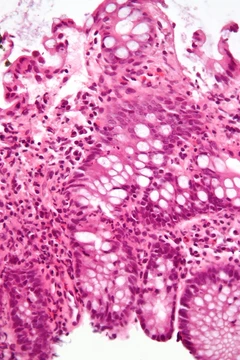
Enteritis
Inflammation of the small intestine with infectious and autoimmune causes.
Enteritis is inflammation of the small intestine, most often caused by consuming contaminated food or drink containing pathogenic microbes such as Serratia. Other causes include NSAIDs, radiation therapy, and autoimmune conditions like coeliac disease. Symptoms may include abdominal pain, cramping, diarrhoea, dehydration, and fever.
Quick Facts
- Field
- Internal medicine
- Symptoms
- Diarrhoea
- fever
- abdominal pain, abdominal bloating
- nutrient deficiencies
- Causes
- Infectious
- autoimmune
- ischemic
- radiation
- toxic
- idiopathic
- other
Facts from the source article.
Causes
Crohn's disease, also called regional enteritis, can occur anywhere along the gastrointestinal tract but most often involves the terminal ileum; in 40% of cases it is confined to the small intestine. Coeliac disease results from an autoimmune reaction to gluten in genetically predisposed individuals. Eosinophilic gastroenteritis, also known as eosinophilic enteropathy or eosinophilic enteritis, is a rare condition in which eosinophils accumulate in the gastrointestinal tract and blood vessels, causing polyps, necrosis, inflammation, and ulcers; it is most common in patients with a history of atopy. In Germany, 90% of infectious enteritis cases are caused by Norovirus, Rotavirus, Campylobacter, and Salmonella. Other bacterial causes include Shigella, E. coli, Bacillus cereus, Clostridium perfringens, Clostridioides difficile, and Staphylococcus aureus. Viral causes include adenovirus, astrovirus, hantavirus, and calicivirus. Campylobacter jejuni is a frequent source of infectious enteritis and the most common bacterial pathogen found in children aged two years and younger with diarrhoea; it is linked to contaminated water, poultry, and milk. Rotavirus infects 140 million people and causes 1 million deaths annually, mostly in children under five, by targeting mature enterocytes in the small intestine, leading to malabsorption, water secretion, villus ischemia, and increased motility.
Diagnosis
Diagnosis may be straightforward when signs and symptoms are idiopathic, but many pathogens produce similar early symptoms. Campylobacter, Shigella, Salmonella, and other bacteria cause acute self-limited colitis that appears similar microscopically. Medical history, physical examination, blood counts, stool cultures, CT scans, MRIs, PCRs, colonoscopies, and upper endoscopies may be used for differential diagnosis; a biopsy may be needed for histopathology.
Treatment
Mild cases often resolve without treatment in healthy individuals. For persistent or severe diarrhoea, oral rehydration is recommended; severe cases may require intravenous hydration and antibiotics. A simple oral rehydration solution can be made with one teaspoon of salt, eight teaspoons of sugar, and orange juice in one litre of water. Antibiotics can shorten symptoms of bacterial infectious enteritis but are often unnecessary due to its self-limiting nature. Autoimmune causes such as Crohn's disease require chronic treatment to prevent nutritional deficiencies, cancer, and bacterial overgrowth; most patients need glucocorticoid medications. Eosinophilic gastroenteritis is primarily treated with corticosteroids, which show good efficacy; other options include dietary modification, azathioprine, and antibodies such as mepolizumab, omalizumab, infliximab, and adalimumab.
More in Inflammatory Diseases of the Digestive System
Spotted an error? Know more?
Reader corrections go straight into our review queue. Suggest an edit · How this site is sourced