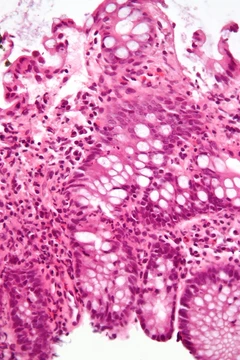
Lymphocytic esophagitis
A rare esophageal inflammation marked by lymphocyte infiltration.
Lymphocytic esophagitis is a rare inflammatory disorder of the esophagus characterized by an accumulation of lymphocytes in the esophageal mucosa. It was first described in 2006, and its recognition as a distinct condition has been debated, with some early reports questioning whether the inflammation is secondary to other diseases such as gastroesophageal reflux disease.
Quick Facts
- Field
- gastroenterology
- Symptoms
- difficulty swallowing
- heartburn
- abdominal pain
- food bolus obstruction
- Complications
- esophageal stricture
- Duration
- long term
- Diagnosis
- biopsy of the esophagus showing characteristic findings
- Differential
- gastroesophageal reflux disease, eosinophilic esophagitis
- Medication
- corticosteroids, such as prednisone and budesonide
- Frequency
- uncertain; adults 0.1%, as high as 8.5% in children
Facts from the source article.
Did You Know?
- There have been two reports of esophageal perforation associated with the condition, one occurring during endoscopic treatment of complications.
- The condition may occur more frequently in women over the age of 60.
- The majority of studies on lymphocytic esophagitis are after 2015.
Signs and symptoms
The most common symptom is dysphagia, occurring in 53 to 57% of individuals. Other symptoms include heartburn, abdominal pain, nausea, and food bolus obstruction. Some patients may have no symptoms, though this is now considered uncommon. Food bolus impaction, a common complication, can require endoscopic removal.
Cause
The cause of lymphocytic esophagitis is unknown. Associated conditions include gastroesophageal reflux disease, achalasia, Crohn's disease, coeliac disease, and allergic conditions such as eczema. Tobacco use may also be associated. It does not occur frequently with lymphocytic colitis or lymphocytic gastritis.
Diagnosis
Diagnosis is made by biopsy of the esophageal mucosa, typically during esophagogastroduodenoscopy. Histologic changes show an inflammatory infiltrate primarily of lymphocytes without granulocytes, but diagnostic criteria remain unclear, including the required lymphocyte count per high-power field, the presence of spongiosis, and the need for immunohistochemical staining. Endoscopic findings may include a narrow esophagus, multiple rings, redness, linear furrows, or a crepe-paper appearance of the mucosa. These changes resemble those of eosinophilic esophagitis. Narrow-band imaging with magnification endoscopy can also show characteristic changes.
Management
Treatment is not well defined and targets symptoms, inflammation, or complications. Proton pump inhibitors are used for heartburn. Topical steroids such as budesonide have been used to treat inflammation, as has prednisone. Esophageal strictures may be managed with esophageal dilation.
More in Inflammatory Diseases of the Digestive System
Spotted an error? Know more?
Reader corrections go straight into our review queue. Suggest an edit · How this site is sourced