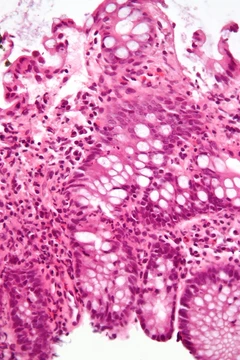
Gastritis
Inflammation of the stomach lining, often caused by H. pylori or NSAIDs.
Gastritis is inflammation of the stomach lining, which can be short-lived or long-lasting. Many people have no symptoms, but upper abdominal pain is the most common complaint. It is a widespread condition, believed to affect 30% to 50% of people globally, though most cases are asymptomatic.
Quick Facts
- Field
- Gastroenterology
- Symptoms
- Upper abdominal pain
- nausea
- vomiting
- bloating
- indigestion
- loss of appetite
- heartburn
- Complications
- Bleeding
- stomach ulcers
- stomach tumors
- pernicious anemia
- Duration
- Short or long term
- Diagnosis
- Endoscopy with biopsy
- upper gastrointestinal series
- blood tests
- stool tests
- Differential
- Myocardial infarction
- inflammation of the pancreas
- gallbladder problems
- peptic ulcer disease
- Treatment
- Antacids
- H2 blockers
- proton pump inhibitors
- antibiotics
- sucralfate
- bismuth subsalicylate
- antiemetics
- Frequency
- 30%–50% of people
Facts from the source article.
Did You Know?
- Vomiting may be clear, green or yellow, blood-streaked, or completely bloody depending on severity.
- Cytoprotective agents for gastritis include sucralfate, misoprostol, and bismuth subsalicylate.
Classification
Multiple classification systems exist for gastritis. The Updated Sydney System (1994) categorizes cases based on morphological features seen in endoscopic biopsies. The Kyoto system (from the 2015 Kyoto Consensus Conference) classifies gastritis by cause and duration into acute, chronic, and special types. Gastritis may also be divided into erosive and non-erosive types based on mucosal injury. The Operative Link for Gastritis Assessment (OLGA) staging system evaluates complication risk, particularly progression to intestinal metaplasia or gastric cancer, by scoring atrophy and metaplasia on a four-tiered scale.
Causes
Helicobacter pylori infection is the most common cause of gastritis; the bacterium colonizes over half the world's population, though most infections are asymptomatic. Other infectious causes include Cytomegalovirus, Candida, and rare bacteria such as Helicobacter heilmannii, Escherichia coli, and species of Actinomyces, Clostridium, Mycobacterium, Proteus, Spirochaete, Streptococcus, and Staphylococcus. Rare fungal causes include Histoplasma and those causing Phycomycosis; rare parasitic causes include Ascaris lumbricoides and species of Anisakis, Strongyloides, and Cryptosporidium. Drug-induced gastritis most often results from nonsteroidal anti-inflammatory drugs (NSAIDs) like aspirin, ibuprofen, and naproxen, but also from cocaine, iron, toxic levels of colchicine, kayexalate, ticlopidine, and certain chemotherapy or immunotherapy agents. COVID-19 treatments such as tocilizumab and sarilumab are associated with chronic gastritis, while lopinavir/ritonavir is linked to acute gastritis. Acute gastritis can develop after stress, shock, trauma, uremia, gastric ischemia, sepsis, food poisoning, major surgery, burns, or severe infections. Bile reflux, where bile and pancreatic enzymes flow into the stomach, can also cause gastritis.
History
Gastric cancer was first described in 1000 A.D. by the Persian physician Avicenna. The term "gastritis" was coined in 1728 by German physician Georg Ernst Stahl. Giovanni Battista Morgagni later described characteristics of gastric inflammation, including erosive and ulcerative forms. Between 1808 and 1831, François-Joseph-Victor Broussais described chronic gastritis as "gastritide" and incorrectly attributed ascites, typhoid fever, and meningitis to it. In 1854, Charles Handfield Jones and Wilson Fox described microscopic changes in gastritis. Baron Carl von Rokitansky described hypertrophic gastritis in 1855. William Brinton described acute, subacute, and chronic gastritis in 1859. Samuel Fenwick noted pernicious anemia causes glandular atrophy in gastritis in 1870. Georg Ernst Konjetzny observed that gastric ulcers and cancer result from gastric inflammation. Shields Warren and Willam A. Meissner described intestinal metaplasia as a feature of chronic gastritis.
Pathophysiology
Acute erosive gastritis involves discrete foci of surface necrosis from damage to mucosal defenses. NSAIDs inhibit cyclooxygenase-1 (COX-1), an enzyme that biosynthesizes eicosanoids in the stomach, increasing peptic ulcer risk; they also inhibit prostaglandin synthesis, which normally protects the stomach lining. Long-term NSAID use can lead to gastritis. Mucous gland metaplasia can occur after severe damage causes atrophic gastritis, with gastric glands replaced by mucous glands. Intestinal metaplasia begins in the antrum in response to chronic mucosal injury and may extend to the body, with gastric mucosa changing to resemble intestinal mucosa. It is classified as complete (transformed into small-bowel mucosa histologically and functionally) or incomplete (resembling large intestine epithelium, often with dysplasia).
Frequently Asked Questions
How is Gastritis treated?
Treatment of Gastritis includes antacids, H2 blockers, proton pump inhibitors, antibiotics, sucralfate, bismuth subsalicylate and antiemetics.
How is Gastritis diagnosed?
Diagnosis of Gastritis is based on endoscopy with biopsy, upper gastrointestinal series, blood tests and stool tests.
More in Inflammatory Diseases of the Digestive System
Spotted an error? Know more?
Reader corrections go straight into our review queue. Suggest an edit · How this site is sourced