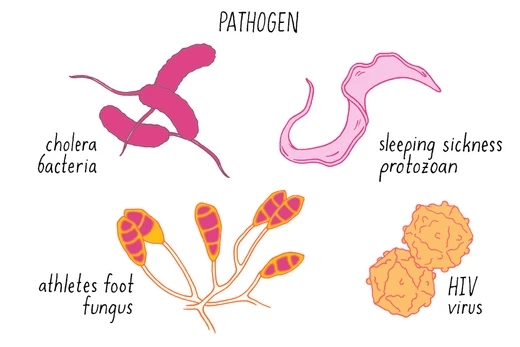
Streptococcus
Genus of gram-positive bacteria causing human infections and used in food.

Arnold Kaufman · CC0
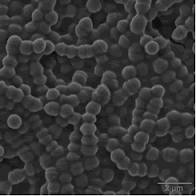
Streptococcus is a genus of gram-positive spherical bacteria that belongs to the family Streptococcaceae, within the order Lactobacillales. The term was coined in 1877 by Viennese surgeon Albert Theodor Billroth from Ancient Greek words meaning 'twisted' and 'grain'. Cell division occurs along a single axis, causing the bacteria to form pairs or chains that may appear bent or twisted. Most streptococci are oxidase-negative and catalase-negative, and many are facultative anaerobes. They play a large role in human health and disease, existing as commensals in the microbiome or as pathogens causing infections such as streptococcal pharyngitis, pneumonia, and necrotizing fasciitis. Some species are also used in food production, notably S. thermophilus for cheese and yogurt.
Quick Facts
- Taxon
- Streptococcus
Facts from the source article.
Lore & Background
The genus Streptococcus was named in 1877 by Viennese surgeon Albert Theodor Billroth, drawing from Ancient Greek στρεπτός (streptós, 'twisted') and κόκκος (kókkos, 'grain'). In 1984, many bacteria formerly grouped in Streptococcus were separated into the genera Enterococcus and Lactococcus. Currently, over 50 species are recognized. Most streptococci exist as commensals in the human mouth, skin, intestine, and upper respiratory tract, while some are pathogens causing infections collectively known as streptococcosis. A few species are opportunistic, switching between harmless and harmful roles.
Reader's Guide
Streptococcus species are significant both as components of the human microbiome and as pathogens responsible for a wide range of diseases, from common strep throat to life-threatening necrotizing fasciitis. Their classification in clinical microbiology relies on hemolytic properties (alpha, beta, or gamma) and Lancefield serotyping for beta-hemolytic strains. Medically important groups include alpha-hemolytic S. pneumoniae and viridans streptococci, and beta-hemolytic groups A and B. Group A Streptococcus (S. pyogenes) causes over 500,000 deaths globally each year, with complications such as rheumatic fever arising from immune cross-reactivity. Beyond disease, streptococci are used in food production, notably S. thermophilus for Emmentaler cheese and yogurt. Molecular taxonomy based on 16S rDNA and whole genome sequencing has identified 14 distinct subclades within two main clades, the Mitis-Suis and Pyogenes-Equinus-Mutans clades, providing a robust framework for understanding their evolution and diversity.
Did You Know?
- Cell division in streptococci occurs along a single axis, forming pairs or chains, unlike staphylococci which form grape-like clusters.
- Group A Streptococcus (S. pyogenes) is estimated to cause more than 500,000 deaths every year globally.
- S. thermophilus is used in the production of Emmentaler cheese and yogurt.
A Name Written in Twisted Grain
The name Streptococcus carries a vivid visual origin rooted in Ancient Greek. The two components—streptós, meaning 'twisted,' and kókkos, meaning 'grain'—together evoke the coiled, bead-like chains these organisms form as they grow. The term was formally introduced in 1877 by the Viennese surgeon Albert Theodor Billroth, who lived from 1829 to 1894 and worked at the intersection of surgery and early microbiology. For more than a century, the genus served as a broad container for a wide array of lactic acid bacteria. That arrangement shifted dramatically in 1984, when taxonomists carved out two new genera, Enterococcus and Lactococcus, removing many species that had previously been lumped under the Streptococcus banner. Today, the genus is considerably more focused, with over fifty species formally recognized. It sits within the family Streptococcaceae, the order Lactobacillales, and the phylum Bacillota, anchoring it firmly among the lactic acid bacteria. This taxonomic tightening has made the genus both more precise and more manageable for researchers studying its members.
Chains, Pairs, and the Grammar of Division
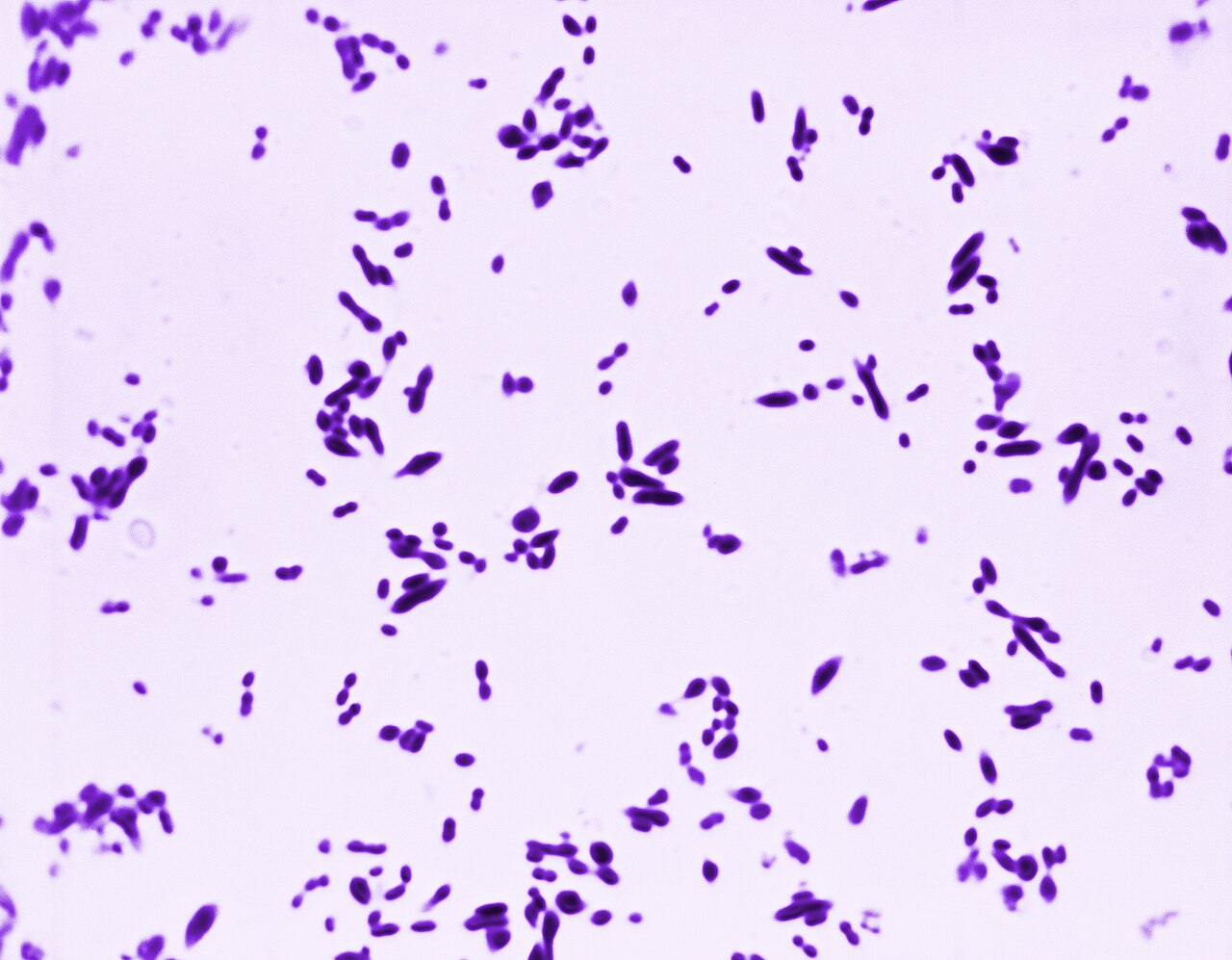
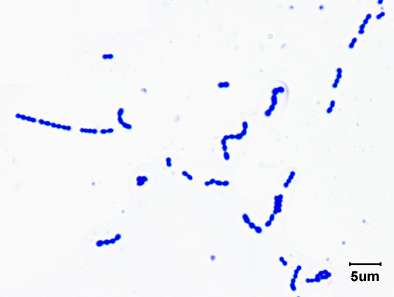
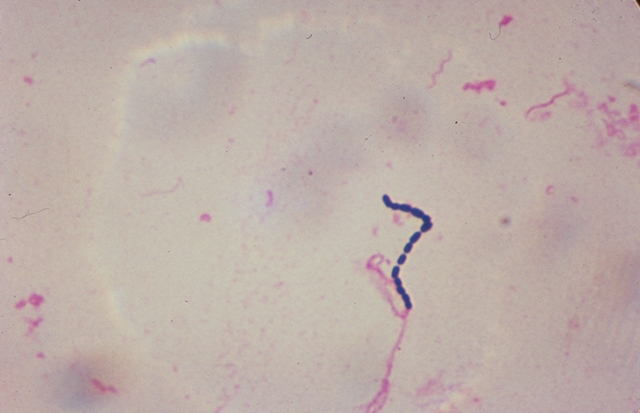
Streptococci are gram-positive, spherical bacteria whose very shape tells a story about how they replicate. Unlike their staphylococcal cousins, which divide along multiple axes and scatter into irregular, grape-like clusters, streptococci split along a single axis. The practical result is that as they multiply, they stack into neat pairs or elongated chains, and those chains can appear bent or twisted—fitting, given the Greek root of their name. This orderly geometry is one of the first things a microbiologist notices under the microscope. Beyond morphology, most streptococci share a distinctive biochemical signature: they test negative for both oxidase and catalase enzymes. Many are also facultative anaerobes, meaning they can thrive whether oxygen is present or absent, a metabolic flexibility that helps them colonize diverse niches within and around the human body. These combined traits—spherical shape, single-axis division, chain formation, and the oxidase-catalase-negative profile—form a recognizable fingerprint that has guided identification and classification since the genus was first described.
Friend, Foe, and Cheese-Maker
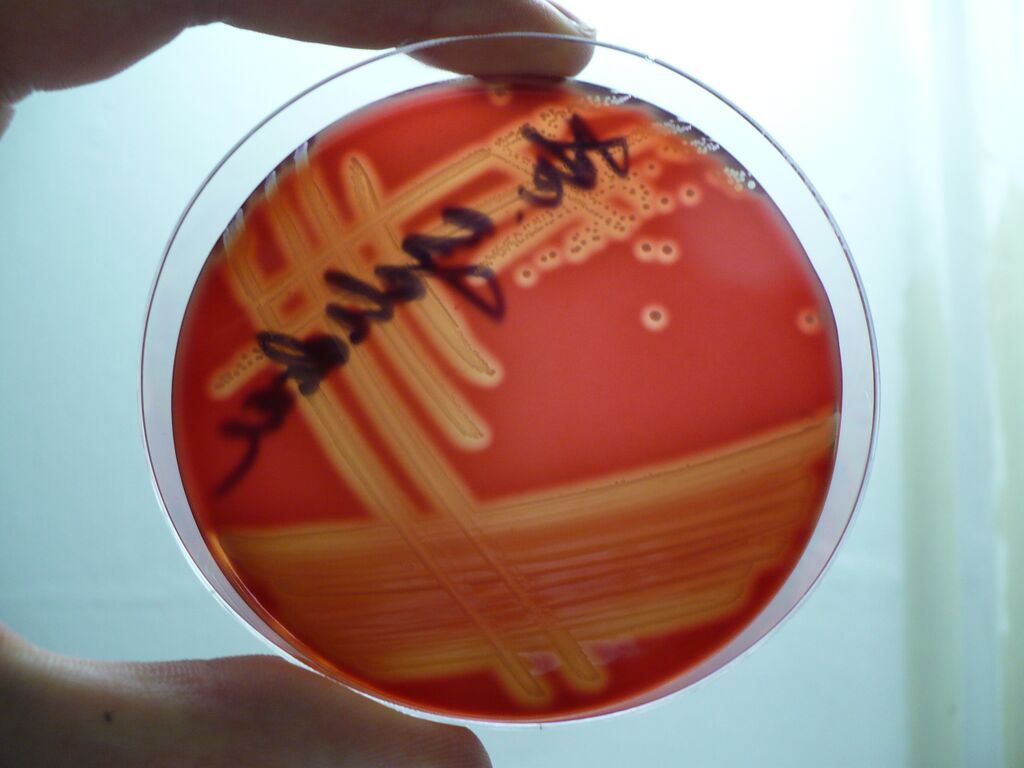
Few bacterial genera occupy such a paradoxical position in human life as Streptococcus. The majority of species live quietly as commensal members of the human microbiome, settling into the mouth, skin, intestinal tract, and upper respiratory passages without causing harm. Yet the same genus harbors organisms responsible for a grim catalogue of infections collectively termed streptococcosis—strep throat, pink eye, meningitis, bacterial pneumonia, endocarditis, erysipelas, and the terrifying necrotizing fasciitis often called 'flesh-eating' infection. Some species are opportunistic, capable of shifting from harmless resident to dangerous pathogen depending on the host's condition. In clinical laboratories, identification relies on hemolytic patterns: alpha-hemolytic species like S. pneumoniae and the viridans group produce a greenish tint on blood agar, while beta-hemolytic species cause complete lysis, visible as clear halos. The latter are further sorted into Lancefield serotypes A through W (skipping E, I, and J), a system devised by Rebecca Lancefield at Rockefeller University. Meanwhile, on the kitchen side, S. thermophilus is a valued ally in producing Emmentaler cheese and yogurt, reminding us that this genus is far more than a medical footnote.
Reading the Tree of Life in Genomic Ink
Modern genomics has transformed how we understand the evolutionary architecture of Streptococcus. Early molecular taxonomy relied on 16S rDNA sequences to sort the genus into six groups—S. anginosus, S. gallolyticus, S. mitis, S. mutans, S. pyogenes, and S. salivarius—and whole-genome sequencing later confirmed these divisions. A landmark 2018 study by Patel and Gupta pushed the analysis further, building comprehensive phylogenetic trees from four independent protein datasets and identifying 134 highly specific molecular signatures, known as conserved signature indels, that are shared exclusively by the genus or its subclades. Their work revealed two principal clades at the highest level: the 'Mitis-Suis' clade, which contains the Suis subclade and the Mitis clade (itself encompassing the Anginosus, Pneumoniae, Gordonii, and Parasanguinis subclades), and the 'Pyogenes-Equinus-Mutans' clade, which houses the Pyogenes, Mutans, Salivarius, Equinus, Sobrinus, Halotolerans, Porci, Entericus, and Orisratti subclades. In total, fourteen distinct subclades have been delineated, each backed by reliable branching patterns and multiple conserved indels. Notably, S. mutans, the agent of dental caries, sits basal to the entire Streptococcus group, marking it as an early diverging lineage.
Gallery
Frequently Asked Questions
Who is Streptococcus?
Streptococcus is a genus of gram-positive spherical bacteria placed in the family Streptococcaceae under the order Lactobacillales. The name was coined in 1877 by Viennese surgeon Albert Theodor Billroth, drawn from Ancient Greek roots meaning 'twisted' and 'grain.'
What are Streptococcus's powers and role?
Streptococcus wears two very different hats: it can live peacefully as a commensal member of the human microbiome, or it can strike as a pathogen behind conditions like strep throat and necrotizing fasciitis. It also has a practical side, contributing to the production of cheese and yogurt.
Why is Streptococcus important to the 'canon'?
Its dual identity as both a harmless resident of the microbiome and a driver of severe disease makes it a cornerstone of human microbiology and infectious-disease medicine. Beyond the clinic, its role in fermenting dairy products links it directly to everyday food culture.
What makes Streptococcus visually and biochemically distinctive?
Single-axis cell division gives the genus its signature look of pairs or chains that can appear twisted rather than perfectly straight. Biochemically, most species test negative for both oxidase and catalase, and many operate as facultative anaerobes, thriving with or without oxygen.
More in Infectious Agents And Pathogens 1-21
Spotted an error? Know more?
Reader corrections go straight into our review queue. Suggest an edit · How this site is sourced