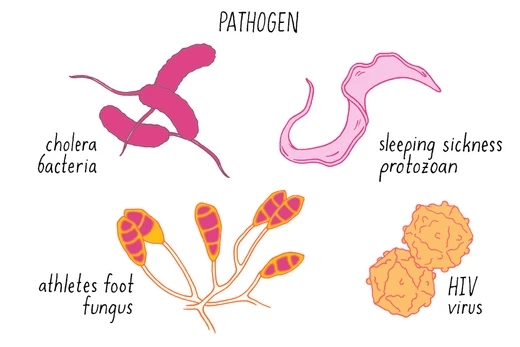
Streptococcus pyogenes
A pathogenic bacterium causing diverse human infections.

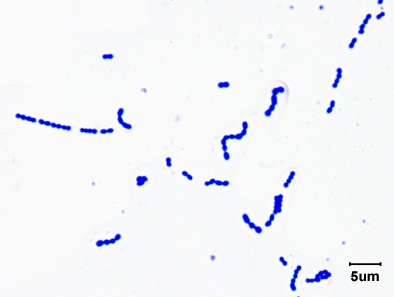
Streptococcus pyogenes is a Gram-positive, aerotolerant bacterium that falls under the genus Streptococcus. Its cells are round, non-motile, and do not form spores; they tend to arrange themselves in chains. The bacterium lives outside host cells and is a part of the skin’s microbial community, but it is usually pathogenic rather than harmless. It is the main species that carries the Lancefield group A antigen, which is why it is commonly referred to as group A Streptococcus, or GAS. The name itself comes from Greek: *streptos* meaning chain, *coccus* for berry, and *pyo-* plus *-genes* meaning pus-forming—a reference to the pus that often accompanies infections it causes. A key way to tell *Streptococcus* apart from *Staphylococcus* is the catalase test: staphylococci are catalase positive, while streptococci are negative. *S. pyogenes* grows well on fresh blood agar plates. The PYR test helps distinguish it from other beta-hemolytic streptococci that look similar, because *S. pyogenes* gives a positive result.
Worldwide, about 700 million mild GAS infections happen each year. In addition, there are over 650,000 severe and invasive GAS infections annually. The overall death rate for all infections is less than 0.1%, but among severe invasive cases the mortality rate is 25%. Catching and treating the infection early is crucial; missing the diagnosis can lead to sepsis and death. The bacterium is also historically important as the cause of scarlet fever, which occurs when the body is exposed to its exotoxin.
**Epidemiology** Unlike many bacterial pathogens, *S. pyogenes* infects only humans, so transmission from animals or animal products is rare. It usually colonizes the throat, genital mucosa, rectum, and skin. Among healthy adults, 1% to 5% carry it in the throat, vagina, or rectum, and children are more likely to be carriers. The most common way it spreads is through respiratory droplets from coughing or sneezing. Skin contact, touching contaminated objects, or eating contaminated food can also spread it, but these are less common. Streptococcal pharyngitis peaks in late winter to early spring in most countries, when people spend more time indoors in crowded spaces, and cases are lowest in autumn. Maternal infections usually occur late in pregnancy—after 30 weeks of gestation up to four weeks after birth—and account for 2% to 4% of all diagnosed *S.
Quick Facts
- Genus
- Streptococcus
- Species
- pyogenes
Facts from the source article.
Lore & Background
The species name derives from Greek words meaning 'a chain' (streptos) of berries (coccus) and pus (pyo)-forming (genes), reflecting the pus-producing infections it causes. A key differentiation from Staphylococcus spp. is the catalase test: S. pyogenes is catalase-negative. It can be cultured on fresh blood agar plates, and the PYR test distinguishes it from other beta-hemolytic streptococci. An estimated 700 million mild GAS infections occur worldwide each year, with over 650,000 additional severe and invasive cases.
Reader's Guide
Streptococcus pyogenes is significant for its role in human disease, ranging from mild pharyngitis to life-threatening conditions like necrotizing fasciitis and streptococcal toxic shock syndrome. It is the cause of scarlet fever, historically notable for its exotoxin. The bacterium only infects humans, typically colonizing the throat, genital mucosa, rectum, and skin. Transmission occurs mainly via respiratory droplets, with peak pharyngitis in late winter to early spring. Maternal infections, occurring in late pregnancy to four weeks postpartum, account for 2–4% of all clinically diagnosed S. pyogenes infections and are a leading cause of septic shock and death in pregnant and postpartum women. Its virulence factors include a hyaluronic acid capsule, M protein, and various surface proteins that aid attachment and immune evasion. The M protein is also a target for antibodies, making it a weak point. Biofilm formation, regulated by quorum sensing pathways like Rgg2/3, allows bacterial communication and defense. The genome size is 1.8–1.9 Mbp, encoding about 1700–1900 proteins. All strains are polylysogenized, carrying bacteriophages that contribute to strain differences.
Did You Know?
- S. pyogenes is the predominant species harboring the Lancefield group A antigen.
- The species name comes from Greek words meaning 'a chain of berries' and 'pus-forming'.
- An estimated 700 million mild GAS infections occur worldwide each year, plus over 650,000 severe invasive cases.
Taxonomic Identity and Naming Heritage
The genus name Streptococcus carries a vivid etymological story rooted in Ancient Greek, combining streptós, meaning "twisted," with kókkos, meaning "grain." This designation was formally introduced in 1877 by the Viennese surgeon Albert Theodor Billroth, whose clinical observations of these organisms under the microscope likely inspired the choice of words. The morphology that gives the name its meaning is directly tied to the organism's mode of cell division: streptococci replicate along a single axis, so as they multiply they assemble into pairs or elongated chains that can appear bent or twisted under magnification. This single-axis division stands in clear contrast to staphylococci, which divide along multiple axes and produce irregular, grape-like clusters. Within modern taxonomic hierarchy, the genus sits in the family Streptococcaceae, the order Lactobacillales (the lactic acid bacteria), and the phylum Bacillota. All members are gram-positive and spherical. Since the 1984 reorganization that carved out Enterococcus and Lactococcus, more than fifty species have been retained under the Streptococcus banner, and S. pyogenes remains one of the most clinically consequential among them.
Clinical Pathogenicity and Disease Spectrum
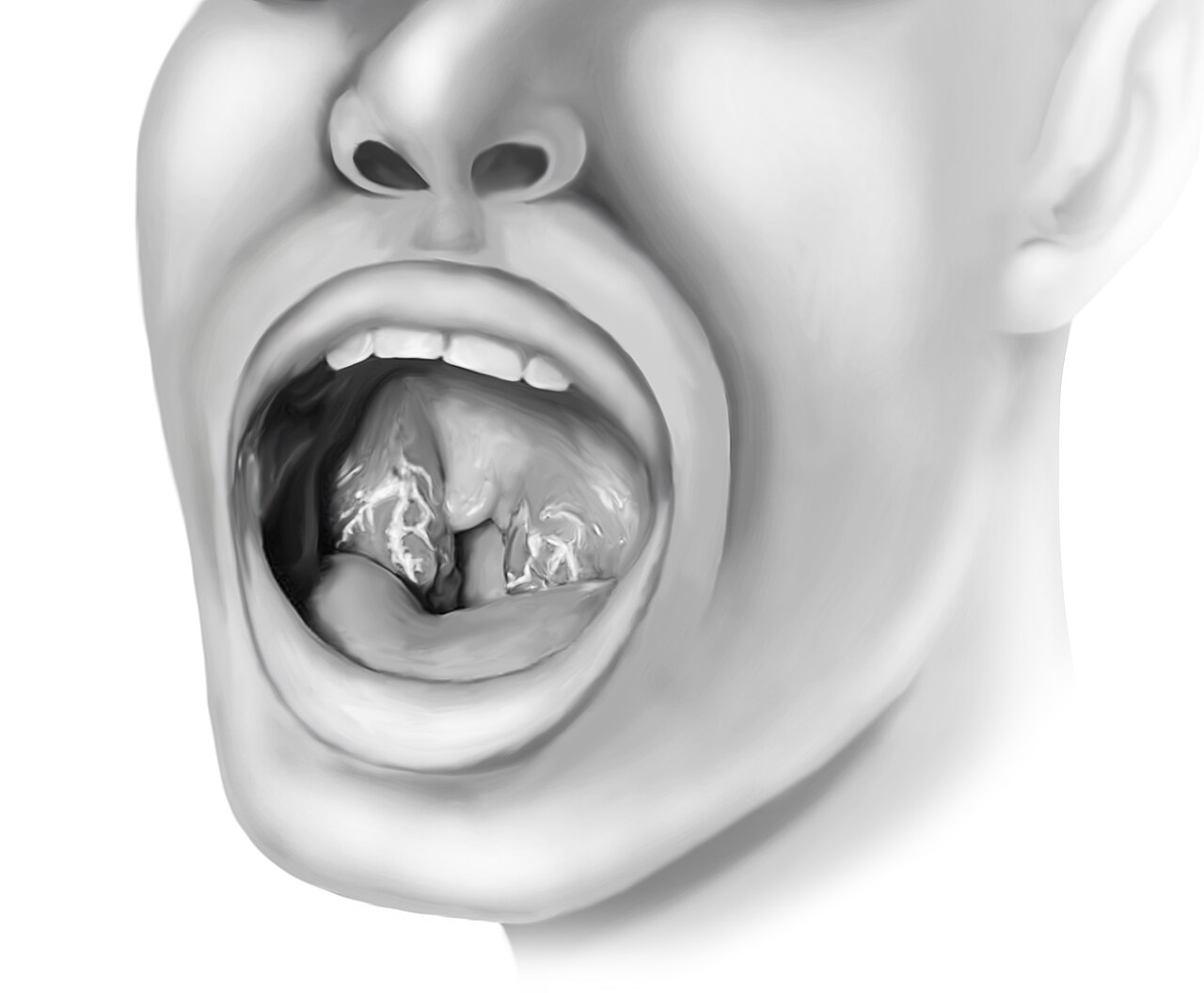
While the majority of Streptococcus species live quietly as commensal members of the human microbiome—colonizing the mouth, skin, intestinal tract, and upper respiratory passages—S. pyogenes occupies a distinctly adversarial niche. It is classified as a true pathogen rather than a mere opportunistic colonizer, and the infections it produces are collectively termed streptococcosis. The disease spectrum it generates is remarkably broad, ranging from the relatively common streptococcal pharyngitis (the familiar "strep throat") to far more severe and life-threatening conditions. Among the serious manifestations are erysipelas, a spreading skin infection; bacterial pneumonia; meningitis; and endocarditis, an inflammation of the heart's inner lining. Perhaps most dramatically, S. pyogenes is responsible for necrotizing fasciitis, the condition popularly known as "flesh-eating" bacterial infection, in which soft tissue is rapidly destroyed. In the broader streptococcal world, some species can shift between benign commensal and harmful pathogen depending on host circumstances, but S. pyogenes is consistently positioned among the principal bacterial threats to human health.
Laboratory Identification and Serological Classification
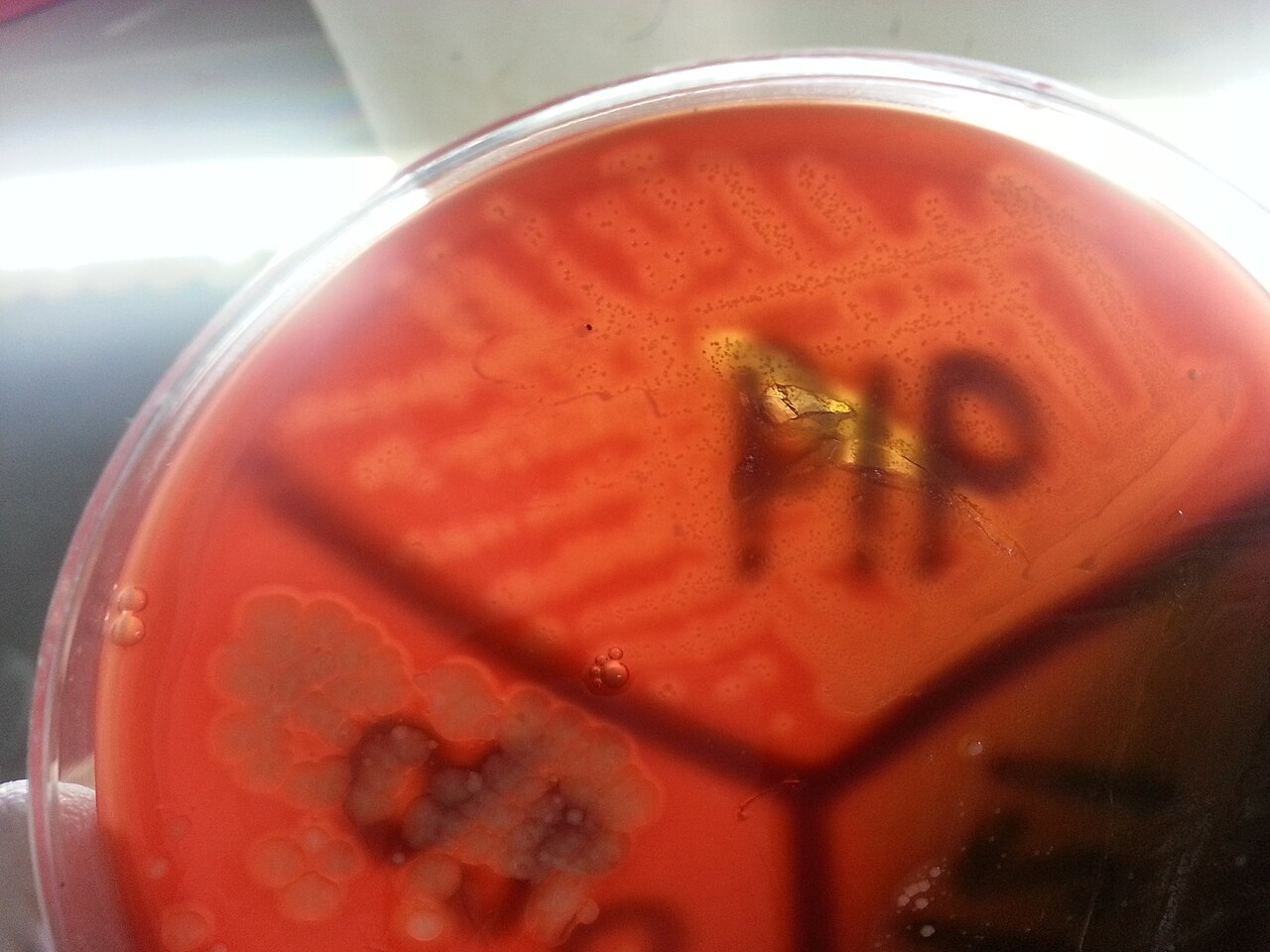
In the clinical microbiology laboratory, distinguishing S. pyogenes from other bacterial species relies on a sequence of straightforward biochemical and serological tests. The first critical observation is hemolytic behavior on blood agar. S. pyogenes is a beta-hemolytic organism, meaning it causes complete lysis of red blood cells, producing wide, transparent halos around colonies where all blood cells have been destroyed. This contrasts sharply with alpha-hemolytic species, which merely oxidize hemoglobin to produce a greenish tint (as seen with S. pneumoniae), and gamma-hemolytic species, which show no hemolysis at all. Among beta-hemolytic streptococci, further differentiation is achieved through Lancefield grouping, a serotype system that identifies specific carbohydrate antigens on the bacterial cell wall. Developed by Rebecca Lancefield at Rockefeller University, this scheme recognizes twenty-one serotypes labeled A through W (with E, I, and J excluded). S. pyogenes falls into Lancefield group A, making it what clinicians commonly call "group A strep." Alongside group B streptococci, group A represents one of the two most medically significant beta-hemolytic categories. Additional biochemical markers—oxidase negativity and catalase negativity—further confirm the identification.
Phylogenetic Position and Genomic Distinctiveness
Molecular phylogenetics has provided an increasingly precise picture of where S. pyogenes sits within the broader Streptococcus family tree. Based on 16S rDNA sequence analysis, the genus has been partitioned into six principal groups, and S. pyogenes defines its own distinct group, separate from the S. mitis group (which contains S. pneumoniae) and the S. mutans group (the dental caries agent). Whole-genome sequencing has since validated these 16S-based divisions. A landmark 2018 study by Patel and Gupta constructed comprehensive phylogenetic trees from four independent protein datasets and identified 134 highly specific conserved signature indels—short insertions or deletions in protein sequences shared exclusively by particular lineages. Their analysis revealed two major clades at the top level of the genus. S. pyogenes anchors the "Pyogenes-Equinus-Mutans" clade, one of two principal branches, and sits within a subclade that also includes S. equinus, S. mutans, S. salivarius, and several other lineages. In total, fourteen distinct subclades have been delineated across the genus, each supported by both reliable branching patterns and multiple conserved molecular signatures, giving S. pyogenes a well-defined and genomically unique evolutionary position.
Gallery

Frequently Asked Questions
Who is Streptococcus pyogenes?
It is a Gram-positive, non-motile bacterium whose round cells link together in chains, placing it squarely in the Streptococcus genus. Because it is the principal species bearing the Lancefield group A surface antigen, the microbiology community most often refers to it simply as group A Streptococcus, or GAS.
What are Streptococcus pyogenes's powers/role?
It sits within the skin's microbial community yet is typically pathogenic, producing everything from mild upper-respiratory infections like strep throat and scarlet fever to life-threatening conditions such as necrotizing fasciitis. It operates extracellularly, meaning it never needs to invade inside host cells to cause damage.
Why is Streptococcus pyogenes important?
Its ability to generate such a wide severity spectrum—from a scratchy throat to rapidly destructive soft-tissue infection—makes it a cornerstone of clinical bacteriology. The group A antigen it carries also serves as a key classification marker for distinguishing it from other streptococcal species.
What does the name Streptococcus pyogenes actually mean?
The name is assembled from Greek roots: 'streptos' points to the chain-like arrangement of its cells, 'coccus' describes their small round (berry-like) shape, and 'pyo-' plus '-genes' conveys a pus-producing nature. Together the words sketch a picture of a chain of tiny round cells that generates pus at the site of infection.
More in Infectious Agents And Pathogens 1-21
Spotted an error? Know more?
Reader corrections go straight into our review queue. Suggest an edit · How this site is sourced