Tarakan
Island city of black gold and Borneo's eastern gateway.

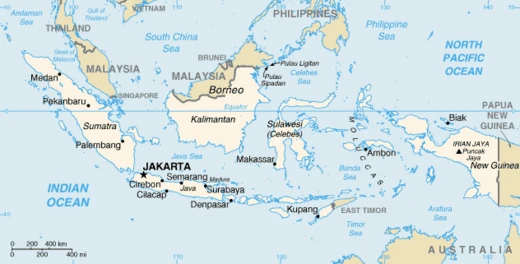
Tarakan is a coastal city located on Tarakan Island in North Kalimantan, Indonesia. Known as a major oil-producing hub since the Dutch colonial era, it serves as the economic and administrative center of the province, though the city itself was officially established in 1981.
Quick Facts
- Official Name
- City of Tarakan / Kota Tarakan
- Settlement Type
- City
- Leader Title
- Mayor
- Leader Name
- Khairul (Indp.)
- Established Title
- Established
Facts from the source article.
Lore & Background
Tarakan's history is deeply tied to petroleum. In the early 20th century, Dutch colonial companies discovered vast oil reserves, transforming the island into a key extraction site. During World War II, Tarakan was fiercely contested; the Battle of Tarakan (1942) saw Japanese forces capture the island, followed by Allied liberation in 1945. The oil fields were repeatedly sabotaged to deny resources to enemies, leaving scars still visible today.
After independence, Tarakan grew as a regional trade and energy center. In 1981, it was formally established as a city, separate from the surrounding Bulungan Regency. When North Kalimantan province was created in 2012, Tarakan became its largest city and de facto economic capital, though the provincial capital is Tanjung Selor. The city's multicultural population includes Tidung, Bugis, Javanese, and Chinese communities, reflected in its diverse cuisine and festivals.
Reader's Guide
Tarakan's significance lies in its dual role as a colonial-era oil powerhouse and a critical flashpoint in the Pacific War. Its oil fields supplied a third of the Dutch East Indies' production by the 1920s, and during World War II, Tarakan crude became essential for Japanese diesel fuel, despite logistical challenges that contributed to the loss of Japanese aircraft carriers at the Battle of the Philippine Sea. The island's capture and subsequent Allied reclamation highlight its strategic value. After Indonesian independence, Tarakan became a city in 1981 and later the sole city in the newly formed province of North Kalimantan in 2012. Its population has grown rapidly, reaching an estimated 255,310 in mid-2024, driven by urbanization. The city's multi-ethnic population includes indigenous Tidung, as well as Bugis, Javanese, Chinese Indonesians, Tausug, Malays, and Mandarese. Tarakan's modern infrastructure includes an international-class hospital, Borneo Tarakan University (the only public university in the province), and diverse places of worship reflecting its religious composition of 85% Muslim, 10% Christian, and smaller Hindu, Buddhist, and Confucianist communities.
Did You Know?
- Tarakan's name comes from the Tidung language, meaning 'place of gathering' or 'meeting island'.
- The city sits on a small island of just 250 km², making it one of Indonesia's most compact urban centers.
- Tarakan's oil boom in the 1920s made it one of the first Indonesian cities with electricity and paved roads.
- The city's iconic landmark, the Tarakan Tower (Menara Tarakan), offers panoramic views of the Borneo coastline.
More in Indonesian Cities 1-24
Spotted an error? Know more?
Reader corrections go straight into our review queue. Suggest an edit · How this site is sourced