Balikpapan
Seaport city and financial hub of Kalimantan, Indonesia.

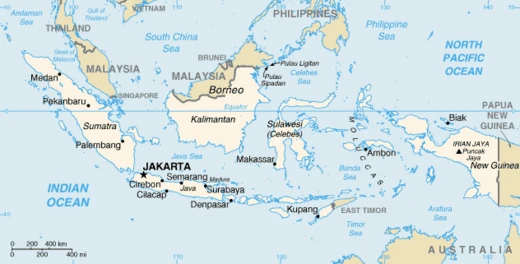
Balikpapan is a seaport city in East Kalimantan, Indonesia, located on the east coast of Borneo. It is the financial center of Kalimantan and the largest city in the region by GDP, with a history shaped by oil development, colonial rule, and wartime destruction.
Quick Facts
- Official Name
- City of Balikpapan / Kota Balikpapan
- Settlement Type
- City
- Nicknames
- id · Kota Minyak · "City of Oil"
- Motto
- bjn · Gawi Manuntung Waja Sampai Kaputing / "Hard Work until Finish"
- Established Title
- Established
- Established Date
- 10 February 1897
- Leader Title
- Mayor
- Leader Name
- Rahmad Mas'ud (Golkar)
Facts from the source article.
Lore & Background
Balikpapan began as a Bugis fishing village in the 19th century. The first oil drilling occurred on 10 February 1897, later celebrated as the city's anniversary. In 1899, the Dutch East Indies granted it township status, and by 1907, Bataafsche Petroleum Maatschappij (BPM) made the city its headquarters, importing skilled laborers and managers from overseas. This sparked an economic boom, attracting migrants and expatriates.
During World War II, Japan occupied Balikpapan in 1942. The Battle of Balikpapan in January 1942 was primarily a naval engagement, not an Allied bombing raid. Later, the city was bombed by the Allies in 1945, destroying critical infrastructure including oil refineries and the seaport. After Indonesia's independence, BPM operated until 1965, when Pertamina, the state-owned oil company, took control.
In 1958, the CIA attacked Balikpapan as part of a covert mission to undermine President Sukarno. A CIA pilot bombed the airport, sank a British oil tanker and an Indonesian corvette, and damaged oil pipes. The raid led Shell to suspend tanker services and withdraw families to Singapore. Pertamina later sublet petroleum concessions to multinational companies in the 1970s, revitalizing the city as a petroleum production center.
Reader's Guide
Balikpapan's significance lies in its role as the financial and oil hub of Kalimantan, with a GDP larger than any other city on the island. Its development from a fishing village to a modern seaport was driven by the oil industry, beginning with Dutch colonial investment and continuing under Indonesian state control. The city's strategic importance made it a target in World War II, where Allied bombing destroyed its oil infrastructure, and again during the Cold War, when the CIA attacked to disrupt Indonesia's economy. These events highlight Balikpapan's centrality to regional energy production and geopolitical struggles. Today, it remains the second most populous city in East Kalimantan, served by Sultan Aji Muhammad Sulaiman Sepinggan Airport and the Port of Semayang, the second busiest seaport in the province. Its nicknames—Oil City and City of Believers (Kota Beriman)—reflect its industrial heritage and civic aspirations. The city's history of attracting migrants and expatriates continues, as Pertamina and international oil companies maintain operations there.
Did You Know?
- Balikpapan's first oil drilling began on 10 February 1897, which is celebrated as the city's anniversary.
- The January 1942 Battle of Balikpapan was primarily a naval engagement, not an Allied bombing raid.
- In 1958, a CIA pilot bombed Balikpapan, sinking a British oil tanker and an Indonesian Navy corvette.
- The city's nickname 'Kota Beriman' is an acronym for Bersih (clean), Indah (magnificent), and nyaman (comfortable).
From Fishing Village to Oil Capital
Balikpapan's transformation from a modest Buginese fishing settlement into one of Kalimantan's economic engines is among the most dramatic urban stories in Indonesian history. In the 19th century, the stretch of coastline along Balikpapan Bay was little more than an isolated village. Everything shifted on 10 February 1897, when a small refinery outfit called Mathilda began the region's first oil drilling operation. The Dutch East Indies colonial administration recognized the settlement's growing significance and conferred township status in 1899. The true catalyst arrived in 1907, when Bataafsche Petroleum Maatschappij (BPM) planted its headquarters in the city and began importing skilled laborers, engineers, and managers from overseas. That move drew numerous multinational companies to invest in the petroleum sector, igniting an economic boom that pulled in waves of migrants and expatriates. The city's GDP, estimated at Rp 73.18 trillion in 2016, now makes it the largest economy in all of Kalimantan. The date of that inaugural drilling, 10 February, is still marked as the city's founding anniversary.
Legends and the Name Balikpapan
The name Balikpapan carries several layers of Bornean folklore that reflect the cultural depth of the coast. The most widely told legend involves a king who, fearing his newborn daughter would fall into enemy hands, tied the infant beneath a set of planks and set her adrift. Waves reversed the boards, and a fisherman eventually found the still-bound child on the shore; the spot where she was discovered became known as Balikpapan, a name that in the Paser language parses as 'behind' (balik) and 'plank' (papan). Another story traces the name to the Kutai sultanate, when Sultan Muhammad Idris shipped a thousand planks to help the Paser Kingdom raise a new palace; ten of those boards resurfaced at a location locals called Balikpapan Tu. A third legend links the bay to descendants of Kayun Kuleng and Papan Ayun, whose lineage gave the area the name Kuleng-Papan. Older documents also record alternate spellings such as Billipapan and Balikkappan, hinting at the name's fluid evolution across centuries.
Wartime Crucible and Strategic Oil
Balikpapan's oil wealth turned it into a flashpoint in World War II. On 24 January 1942, a Japanese invasion convoy reached the city and was struck by four U.S. Navy destroyers that sank three Japanese transports. Dutch troops, ordered to evacuate after demolishing their own oil installations, offered no resistance to the landing. In retaliation, the Japanese massacred 78 Dutch prisoners of war and civilians. RAAF intelligence later assessed that half of Japan's military lubricating oils and 60 percent of its aviation fuel came from Balikpapan's refineries, making the city an extraordinarily valuable target. In August 1943, the American 380th Bombardment Group, operating under RAAF command from Darwin, struck the refineries with B-24 Liberators—including the famous Shady Lady—with no aircraft lost. In September and October 1944, General George Kenney's 5th and 13th Air Forces launched five raids from the Morotai and Noemfoor Islands. The first two, lacking fighter cover, suffered heavy losses against Japanese fighters deliberately conserved to guard the refineries. The 1945 Battle of Balikpapan concluded the Borneo campaign, and wartime destruction halted nearly all oil production until Royal Dutch Shell completed major repairs in 1950.
Modern Identity and Post-Colonial Oil
Today, Balikpapan stands as the financial heart of Kalimantan, a seaport city on Borneo's east coast with a 2020 census population of 688,318 and a mid-2023 official estimate of 757,418 residents, slightly more male than female. It ranks as East Kalimantan's second most populous city behind Samarinda, yet it outpaces the entire region in economic output. The city is served by Sultan Aji Muhammad Sulaiman Sepinggan Airport, and the Port of Semayang once held the title of East Kalimantan's second busiest seaport. Oil ownership shifted hands after independence: BPM continued operations until 1965, when the state-owned company Pertamina assumed control of BPM's assets and exploration activities. The city has embraced nicknames that capture its dual identity—both the 'Oil City' born from a century of petroleum extraction and 'Kota Beriman,' an acronym meaning clean, magnificent, and comfortable. In 1958, Balikpapan also became a target of a CIA covert air raid that halted oil exports, part of a U.S. mission to undermine President Sukarno's government by backing right-wing rebels.
Frequently Asked Questions
Who is Balikpapan?
Balikpapan is a seaport city situated on the eastern coast of Borneo in East Kalimantan, Indonesia. With a mid-2023 estimated population of roughly 757,000, it serves as the region's primary financial and industrial hub.
What is Balikpapan's main role or 'power'?
The city functions as the financial center of all of Kalimantan and ranks as the region's largest economy by GDP, estimated at around 73.18 trillion rupiah in 2016. Its identity is deeply tied to the oil industry, which shaped its growth from a small trading post into a major economic engine.
What is Balikpapan's backstory?
Its development was driven first by colonial-era oil extraction and then by decades of industrial expansion. The city's modern identity was forged through layers of Dutch colonial control, wartime upheaval, and post-independence industrialization.
What major conflicts did Balikpapan survive?
During World War II the city saw intense fighting between Allied and Japanese forces, leaving it heavily damaged. In 1958 it also became the target of a CIA-conducted air raid during the Konfrontasi period, adding another layer of wartime scars to its history.
Why is Balikpapan important to the broader Kalimantan region?
As the largest city in Kalimantan by GDP, it anchors the region's banking, trade, and energy sectors. Its port infrastructure and oil-sector connections make it the go-to economic gateway for much of Indonesian Borneo.
More in Indonesian Cities 1-24
Spotted an error? Know more?
Reader corrections go straight into our review queue. Suggest an edit · How this site is sourced