Bekasi
Major commuter city on Jakarta's eastern border, rich in history and economic dynamism.

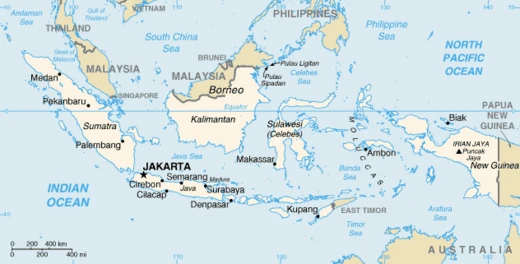
Bekasi is a major city in West Java and one of the largest in Indonesia, though it is not the largest in the province (Bandung holds that title) nor the third-largest nationally (it ranks behind Jakarta, Surabaya, Bandung, Medan, and others depending on the metric). It sits on Jakarta’s eastern border and functions as a commuter hub within the greater Jakarta metro area. As of the 2020 census, its population was 2,543,676, with an official mid-2025 estimate of 2,648,272 (1,328,712 males and 1,319,560 females). The city is bordered by Bekasi Regency to the north and east—from which it was administratively separated on December 16, 1996—by Bogor Regency and Depok to the south, and by East Jakarta to the west.
One of Indonesia’s oldest cities, Bekasi was once the capital of the Kingdom of Tarumanagara, then called Dayeuh Sundasembawa or Jayagiri. The earliest evidence of its existence comes from a fifth-century Tugu inscription, which names two rivers running through the city: the Candrabhaga and Gomati. The name “Bekasi” evolved from “Candrabhaga”: the Sanskrit word *candra* (moon) became the Old Sundanese *sasi* (also moon), turning Candrabhaga into “Bhagasasi.” This was later misspelled as “Bhagasi,” then by the Dutch colonial government as “Bacassie,” and finally as “Bekasi.” During the Dutch East Indies period, Bekasi was part of the Batavia residency. Today, as a dormitory city, it features many middle- to upper-class satellite areas with shopping malls, schools, hospitals, clubhouses, water parks, and shuttle buses to central Jakarta. A large number of multinational companies have attracted many expatriates, mainly Japanese and Korean, to settle here.
**Economy** Bekasi has become a major growth center in Jabodetabek, contributing 2.11% of Indonesia’s total GDP. Many foreign businesses—mostly Korean, Japanese, and Chinese—have set up operations to take advantage of the city’s dynamism. The economy is primarily based on services and manufacturing, and several large corporations, including PT Metropolitan Land Tbk and PT Kian Santang Muliatama Tbk, have their headquarters here.
**Commerce** Bekasi is one of the most promising property markets in Jabodetabek, with high-value developments reshaping its real estate. Major Indonesian developers are building apartments, hotels, and shopping malls.
Quick Facts
- Official Name
- City of Bekasi / id · Kota Bekasi
- Settlement Type
- City
- Nickname
- id · Kota Patriot / (City of the Patriots)
- Motto
- id · Bekasi Maju, Sejahtera dan Ihsan / (Bekasi for the Developed, Prosperous, and Good people)
- Established Title
- Founded / (as Administrative City of Bekasi)
- Established Date
- 20 April 1982
Facts from the source article.
Lore & Background
Bekasi is one of the oldest cities in Indonesia, having served as the capital of the Kingdom of Tarumanagara. At that time, it was called Dayeuh Sundasembawa or Jayagiri. The earliest evidence of its existence dates from the fifth century according to the Tugu inscription, which describes two rivers: Candrabhaga and Gomati. The name Bekasi evolved from Candrabhaga through several linguistic changes, including Bhagasasi, Bhagasi, and Bacassie during the Dutch colonial period. During the Dutch East Indies period, Bekasi was part of the Batavia residency. The city was administratively separated from Bekasi Regency on 16 December 1996.
Reader's Guide
Bekasi has grown to become one of the main centers of growth in Jabodetabek, accounting for 2.11% of total national GDP. Its economy is based on service and manufacturing, and many multinational companies have attracted expatriates, mainly Japanese and Korean, to settle there. The city is a promising property market, with high-value developments including apartments, hotels, and shopping malls. Infrastructure such as the Trans-Java Toll Road, Jakarta–Cikampek Toll Road, and the Jakarta Outer Ring Road connect Bekasi to surrounding areas. The city is served by KRL Commuterline, Jabodebek LRT, and TransJakarta bus rapid transit. The Bekasi River traverses the city, and flooding is frequent in several districts during rainy seasons. The population is diverse, with ethnic groups including Betawi, Sundanese, Javanese, Minangkabau, Bataks, and Chinese. The regional language is the Betawi Ora dialect, with Sundanese spoken in southern districts. Most citizens adhere to Islam, with minorities practicing Christianity, Hinduism, Buddhism, and Confucianism.
Did You Know?
- Bekasi was the capital of the Kingdom of Tarumanagara, with evidence from the fifth-century Tugu inscription.
- The name Bekasi evolved from the Sanskrit word Candrabhaga through several linguistic changes.
- The largest shopping centre in Bekasi is Grand Metropolitan with over 125,000 m² of floor space.
Ancient Roots and the Long Journey of a Name
Bekasi carries one of the deepest historical lineages among Indonesian cities, having served as the capital of the ancient Kingdom of Tarumanagara. Under that early sovereignty, the settlement was known as Dayeuh Sundasembawa or Jayagiri, a name that would eventually fade from memory. The Tugu inscription, dating to the fifth century, provides the earliest documented evidence of the city's existence and records two rivers flowing through the area: the Candrabhaga and the Gomati. The city's modern name traces a fascinating linguistic journey rooted in that first river. The Sanskrit word candra, meaning moon, gradually shifted into the Old Sundanese term sasi, carrying the same meaning. This transformation turned Candrabhaga into Bhagasasi, which was later shortened to Bhagasi. During the colonial era, Dutch administrators further distorted the spelling into Bacassie before it settled into the form Bekasi that Indonesians use today. Under the Dutch East Indies administration, the area fell within the broader Batavia residency, a connection that foreshadowed its later role as a satellite to the capital.
Economic Powerhouse and the Property Boom
Bekasi has evolved into one of the principal growth engines within the Jabodetabek metropolitan cluster, contributing 2.11 percent of Indonesia's total national GDP. Its economic foundation rests heavily on services and manufacturing, drawing multinational corporations from Korea, Japan, and China that have established operations to tap into the city's commercial dynamism. Major corporate headquarters, including PT Metropolitan Land Tbk and PT Kian Santang Muliatama Tbk, anchor the local business landscape. The property sector has been particularly transformative, with large-scale residential and commercial projects reshaping the urban fabric. Developments such as Kota Harapan Indah, Summarecon Bekasi, Kemang Pratama, and Grand Galaxy City have emerged along the Jatiwarna-Jatibening corridor and further into Cibatu. The western part of the city hosts the prime commercial districts along Jalan Ahmad Yani, Jalan Sudirman, and Harapan Indah Boulevard. Grand Metropolitan stands as the largest shopping center with over 125,000 square meters of floor space, while a roster of international hotels including Fairfield by Marriott and Four Points by Sheraton caters to both business travelers and the growing expatriate community.
A Web of Roads, Rails, and Rapid Transit
Bekasi's connectivity to Jakarta and the wider island of Java is underpinned by an extensive transportation network. The Trans-Java Toll Road threads through the city, while three expressway links from the Jabodetabek area serve daily commuters: the Jakarta-Cikampek Toll Road with three Bekasi exits, the Jakarta Outer Ring Road providing access to Tangerang and Bogor, and the Bekasi-Cawang-Kampung Melayu corridor. A 36.4-kilometer elevated toll road between Cikunir and West Karawang was slated to begin operations in 2019 to relieve congestion on the existing route. Rail services include a double-track line running from Manggarai to Cikarang, while the KRL Commuterline Blue Line connects Bekasi, Bekasi Timur, and Kranji to Jakarta Kota and Cikarang. The Jabodebek LRT offers a fully elevated 29.54-kilometer line from Dukuh Atas to Jatimulya. Bus rapid transit services, including TransJakarta and Transjabodetabek, link residential hubs like Harapan Indah and Summarecon Bekasi to the capital. For shorter trips, angkot minibuses remain the primary public transport, with Terminal Bekasi in East Bekasi serving as the main bus hub. Halim Perdanakusuma International Airport sits right on the Bekasi-East Jakarta boundary.
The Commuter City: Identity, Demographics, and Daily Life
As the largest city in West Java and the third most populous in Indonesia, Bekasi defines itself primarily through its relationship to Jakarta. Perched on the capital's eastern edge, it functions as a commuter city within the broader metropolitan area, a role formalized when it was administratively separated from Bekasi Regency on 16 December 1996. The 2020 national census recorded 2,543,676 residents, and the mid-2025 official estimate places the population at 2,648,272, with a near-equal gender split. The city is bordered by Bekasi Regency to the north and east, Bogor Regency and Depok City to the south, and East Jakarta to the west. Its character as a dormitory city is evident in the proliferation of middle-upper-class satellite neighborhoods, each equipped with shopping malls, schools, hospitals, club houses, water parks, and shuttle bus services running into central Jakarta. The presence of numerous multinational firms has drawn a significant expatriate population, predominantly Japanese and Korean professionals. Yet the city's identity is also shaped by the daily reality of heavy rush-hour traffic on the roads linking it to East Jakarta, a constant reminder of its satellite status.
Frequently Asked Questions
What is Bekasi?
Bekasi is a major city in West Java, Indonesia, positioned directly along Jakarta's eastern border. It serves as one of the key commuter and industrial cities within the greater Jakarta metropolitan area.
How many people live in Bekasi?
The 2020 census recorded roughly 2.54 million residents, and the official mid-2025 estimate pushes that figure to about 2.65 million. The gender split is nearly even, with slightly more males than females.
What is Bekasi known for?
Bekasi is best recognized as a major commuter city feeding into Jakarta and as a significant industrial and economic engine within the Jabodetabek region. Its dense network of factories and commercial zones makes it a vital pillar of the capital's eastern economy.
How does Bekasi relate to Jakarta?
Bekasi shares its western boundary directly with Jakarta and functions as a daily commuter hub where millions of workers travel into the capital. It is not part of Jakarta administratively but is deeply integrated into the greater Jakarta metro area.
Where exactly is Bekasi located?
The city sits in West Java, bordered by Bekasi Regency to the north and east, from which it was administratively separated. Its western edge meets the Special Capital Region of Jakarta, placing it squarely at the heart of the Jabodetabek corridor.
More in Indonesian Cities 1-24
Spotted an error? Know more?
Reader corrections go straight into our review queue. Suggest an edit · How this site is sourced