Banda Aceh
Capital of Aceh, devastated by the 2004 tsunami.

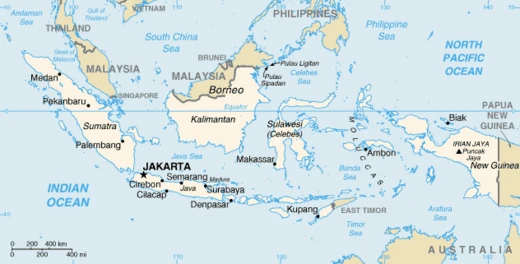
Banda Aceh is the capital and largest city in the province of Aceh, Indonesia, located on the island of Sumatra. It serves as a strategic port and trading hub, historically known as the 'porch of Mecca' for hajj pilgrims. The city rose to international prominence after the 2004 Indian Ocean earthquake and tsunami, which caused massive destruction and loss of life.
Quick Facts
- Official Name
- City of Banda Aceh / Kota Banda Aceh
- Other Name
- Kutaraja
- Settlement Type
- Special region capital
- Governing Body
- Banda Aceh City Government
- Nickname
- id · Kota Serambi Mekkah / (the Porch of Mecca)
- Motto
- ace · Saboeh Pakat Tabangun Banda / (One Agreement to Build a City)
Facts from the source article.
Lore & Background
Banda Aceh was originally established as Bandar Aceh Darussalam and served as the capital of the Sultanate of Aceh upon its foundation in the late 15th century. The city's name derives from the Persian word 'bandar' meaning 'port' or 'haven'. It was long at the center of conflicts between the Acehnese and foreign powers, including the Portuguese, Dutch, Japanese, and the Indonesian government. The Dutch formally declared war on Aceh in 1873 and bombarded the capital, eventually capturing it in January 1874, though Acehnese resistance continued in the countryside.
On 26 December 2004, a 9.2-magnitude earthquake struck off the western coast of Sumatra, and Banda Aceh, being the closest major city to the epicenter, suffered catastrophic damage from the earthquake and subsequent tsunami. Around 60,000 people in the city died, and more than 60% of its buildings were destroyed. The disaster led to a cessation of conflict between the government and the Free Aceh Movement, and spurred major modernization and reconstruction over the following two decades.
In December 2023, hundreds of students from local universities stormed a shelter for Rohingya refugees in Banda Aceh, demanding their deportation. The city is home to a majority Muslim population, with minorities of Buddhists, Christians, and Hindus, and features a religious police that enforces Islamic laws.
Reader's Guide
Banda Aceh's significance lies in its dual role as a historic sultanate capital and as a symbol of resilience after the 2004 tsunami. The city was the epicenter of the Aceh Sultanate, which resisted Portuguese, Dutch, and later Indonesian control. Its strategic location at the northwestern tip of Sumatra made it a key port for trade and pilgrimage. The 2004 tsunami killed tens of thousands and destroyed most of the city, but the disaster also ended a long-running conflict with the Free Aceh Movement and brought international aid that fueled reconstruction. Today, Banda Aceh is a modernized city with landmarks such as the Baiturrahman Grand Mosque, originally built in the 17th century. The city's population has recovered to over 267,000 as of 2025. Its legacy includes both its historical role as a center of Islamic sultanate power and its contemporary status as a case study in post-disaster recovery and peacebuilding.
Did You Know?
- Banda Aceh is located at the mouth of the Aceh River on the northwestern tip of Sumatra.
- The city was originally called Bandar Aceh Darussalam and served as the capital of the Sultanate of Aceh from the late 15th century.
- The 2004 tsunami killed around 60,000 people in Banda Aceh and destroyed more than 60% of its buildings.
- The city is home to a religious police that enforces Islamic laws in the province.
Geography & Strategic Position
Banda Aceh sits at the northwestern tip of Indonesia, perched where the Aceh River meets the sea. As the capital and most populous city of Aceh province on Sumatra, it occupies just 61.36 square kilometres at an elevation of roughly 35 metres above sea level. Its geographic footprint is unusual: the city functions as a semi-enclave, ringed on the south, east, and west by Aceh Besar Regency while the Andaman Sea laps against its northwestern shore. This compact, coastal configuration has shaped the city's identity as a maritime gateway. Population figures tell a story of steady growth, climbing from 223,446 at the 2010 census to 252,899 by 2020, with a 2025 official estimate reaching 267,962 residents split almost evenly between men and women. Because the city's borders are so tightly constrained by its regency neighbours, much of the urban sprawl has spilled into adjacent districts of Aceh Besar, creating a broader metropolitan area that extends well beyond the formal municipal limits.
A Maritime Crossroads and the Sultanate
For centuries, the waters off Sumatra's northwestern coast made this port a natural waypoint for merchants and pilgrims moving between the Arabian Peninsula, the Indian subcontinent, and the Indonesian archipelago. Marco Polo's expedition logged the settlement as early as 1292, calling it Lambri after the earlier Lamuri Kingdom, and recognising it as the logical first stop for vessels arriving from Arabia and India. Ibn Battuta passed through in the mid-1300s when the trading kingdom of Samudera Pasai still dominated northern Sumatra. After Pasai's gradual collapse under Portuguese pressure following the occupation of Malacca in the early 1500s, Sultan Ali Mughayat Syah seized the moment in the 1520s, raising a new Sultanate of Aceh on the ruins of the old kingdoms and designating the port as its capital, Kutaraja, or "City of the King." The name Banda Aceh itself draws on the Persian word bandar, meaning port or haven. The city earned the enduring nickname Serambi Mekkah, the "porch of Mecca," because hajj pilgrims sailing west from Indonesia routinely paused here before the long voyage onward.
Siege, Resistance, and Colonial Struggle
The strategic value of the port drew repeated military attention from outside powers. In the late 1700s, tensions with the Dutch and British escalated, and the British seized Aceh's Malay Peninsula territories of Kedah and Pulau Pinang. The Dutch formally declared war on 26 March 1873 and immediately bombarded the capital, hoping to seize the sultan's palace and force a quick surrender. British backing in the region had helped the Acehnese modernise and fortify the city's defences, and the Dutch expedition commander General Johan Köhler was killed in a skirmish near the city, scuttling the first assault. A second Dutch expedition mounted within months proved more successful, and troops entered the capital in January 1874 under the assumption that the Acehnese had capitulated. In reality, the fighting simply shifted to the countryside, where Acehnese resistance continued for years. The city's long history of conflict extended through Japanese occupation and later opposition to the Indonesian central government. After Aceh formally joined the Republic of Indonesia on 28 December 1962, the Ministry of Public Administration restored the city's name to Banda Aceh in May 1963.
The 2004 Tsunami and a City Rebuilt
On the evening of 26 December 2004, a 9.2-magnitude earthquake struck roughly 249 kilometres off Sumatra's western coast, and because Banda Aceh was the nearest major city to the epicentre, it bore the brunt of the resulting tsunami. The disaster killed an estimated 167,000 of the city's inhabitants and razed more than sixty per cent of its buildings, leaving streets unrecognisable and entire neighbourhoods reduced to rubble. In the immediate aftermath, the catastrophe produced an unexpected political consequence: the long-running armed conflict between the Indonesian government and the Free Aceh Movement came to a halt, and a flood of domestic and international humanitarian aid poured into the region. Over the two decades that followed, Banda Aceh underwent sweeping modernisation and reconstruction, rebuilding its infrastructure and public spaces from the ground up. Population recovery tracked the physical rebuilding, climbing from 248,727 residents recorded in May 2012 to 252,899 at the 2020 census and an official estimate of 267,962 by mid-2025, a testament to the city's resilience in the face of one of the deadliest natural disasters of the modern era.
Frequently Asked Questions
Who is Banda Aceh?
Banda Aceh is the capital and most populous city in Indonesia's Aceh province, sitting on the northern coast of Sumatra. With a 2025 population of roughly 268,000 people spread across about 61 square kilometres, it is the administrative and cultural heart of the region.
What is Banda Aceh's role in the region?
The city functions as Aceh's primary strategic port and trading hub, giving it long-standing economic importance along Sumatra's northern coast. It also served as the seat of the historic Aceh Sultanate, which added a deep layer of political and religious significance to the city's identity.
Why was Banda Aceh called the 'porch of Mecca'?
Pilgrims travelling to perform the hajj historically passed through Banda Aceh's port on their way to the Arabian Peninsula, making the city a natural gateway. That nickname reflected its centuries-old role as a staging point for one of Islam's most important journeys.
What happened to Banda Aceh in 2004?
The December 2004 Indian Ocean earthquake and the resulting tsunami struck the city with devastating force, wiping out large sections of the coastal urban area and killing tens of thousands of residents. The disaster thrust Banda Aceh into the global spotlight and reshaped its landscape and rebuilding efforts for years to come.
Why is Banda Aceh important to Indonesia?
As the capital of Aceh, it anchors the province's governance, commerce, and cultural life at the western tip of Sumatra. Its combination of sultanate heritage, port economy, and the collective memory of the 2004 tsunami makes it one of the most storied cities in the Indonesian archipelago.
More in Indonesian Cities 1-24
Spotted an error? Know more?
Reader corrections go straight into our review queue. Suggest an edit · How this site is sourced