Tanjungpinang
Historic Malay capital and trading hub on Bintan Island.

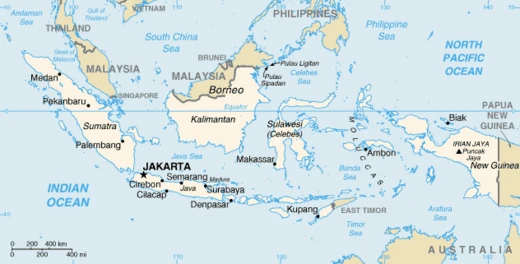
Tanjungpinang (often written as Tanjung Pinang) is the capital of Indonesia’s Riau Islands province. The city sits on the southwestern part of Bintan Island, along with smaller islands like Dompak and Penyengat, covering about 150 square kilometers. Its name comes from a beach tree that juts into the sea, marking a natural guide for travelers heading to the Bintan River. With a 2020 census count of 227,663, it is the province’s second-largest city after Batam; by mid-2025, the official estimate was 241,266 (roughly split between 121,415 males and 119,851 females).
This city has deep roots in Malay culture, once serving as the capital of the Johor-Riau Sultanate (later the Riau-Lingga Sultanate). Its history stretches back to the 3rd century, when it was a busy stop on the India–China trade route. The Srivijaya empire, based in Sumatra, controlled much of the region from the 7th to 13th centuries, but piracy grew, and by the 12th century, Chinese sailors called Bintan “Pirate Island.” According to the Malay Annals, a Srivijayan prince named Seri Teri Buana stayed on Bintan after Palembang was sacked, gathering strength before founding Singapura (Singapore). Later, the Malacca Sultanate (1400–1511) ruled the area, but after the Portuguese captured Malacca in 1511, the exiled Sultan Mahmud Shah set up his capital on Bintan, launching attacks against the Portuguese. In 1526, the Portuguese razed Bintan.
Alauddin Riayat Shah II, son of Mahmud Shah, founded the Johor Sultanate in 1528, and Bintan came under its control. A key trading port called Bandar Riau opened there. When war with Jambi threatened Johor in 1722, the capital moved to Riau, which became a hub for trade and Islamic learning. Conflict with the Dutch, who had taken Malacca from the Portuguese, led to a battle on 6 January 1784: a Dutch fleet of 13 ships attacked Riau but was repelled by Malay and Bugis forces, destroying the Dutch command ship *Malaka's Wal Faren*. The Malays then blockaded Malacca, but a defeat and succession crisis shifted power. The capital moved from Riau to Lingga in 1788, and the sultanate is sometimes called the Johor–Riau–Lingga Empire. The British took Malacca from the Dutch in 1795, and during a succession crisis (1812–1818), both powers crowned rival sultans.
Quick Facts
- Official Name
- City of Tanjungpinang / Kota Tanjungpinang
- Settlement Type
- City
- Nickname
- Kota Gurindam ( 'City of Gurindam')
- Motto
- Jujur Bertutur, Bijak Bertindak ( 'Honest in Speech, Wise in Action')
Facts from the source article.
Lore & Background
Tanjungpinang's name is taken from the position of a beach nut tree that juts into the sea, serving as a guide for voyagers to the Bintan River. Its history traces to the early 3rd century as a trading post on the India–China route. Over centuries, it came under control of Sumatra, Malacca, the Netherlands, Britain, and Japan, each influencing its culture as a centre of Malay culture and trade.
Reader's Guide
Tanjungpinang's significance lies in its long history as a centre of Malay culture and trade, and as a capital of major sultanates. It served as the capital of the Johor Sultanate and later the Riau-Lingga Sultanate, and was a focal point of resistance against Portuguese and Dutch colonial powers. The city's strategic location on the south of Bintan Island, guarding the Bintan River mouth, made it a key port. Today, it is the capital of Riau Islands Province and the second largest city in the province after Batam, with ferry and speedboat connections to Batam, Singapore, and Johor Bahru, and served by Raja Haji Fisabilillah International Airport. Its cultural legacy includes the old ruler's palace and royal tombs on Penyengat Island, including the grave of Raja Ali Haji, author of the first Malay grammar book, and the still-used Masjid Raya mosque.
More in Indonesian Cities 1-24
Spotted an error? Know more?
Reader corrections go straight into our review queue. Suggest an edit · How this site is sourced