Jambi (city)
Capital and largest city of Jambi Province, Sumatra.

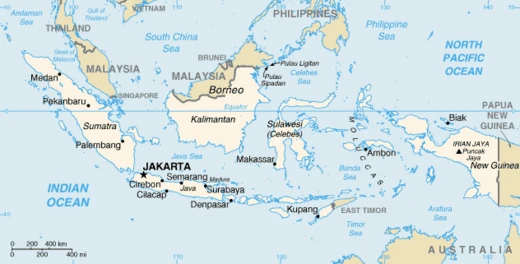
Jambi is the capital and largest city of the Indonesian province of Jambi, located on the island of Sumatra. It is a busy port on the Batang Hari River and an oil- and rubber-producing centre, situated 26 km from the ruins of Muaro Jambi Temple Compounds, an important city in the ancient Srivijaya kingdom.
Quick Facts
- Official Name
- City of Jambi / Kota Jambi
- Settlement Type
- City
- Motto
- jax · Tanah Pilih Pesako Betuah / "Chosen Land with Auspicious Heritage"
- Established Title
- Founded
- Established Date
- 17 May 1401
- Leader Title
- Mayor
- Governing Body
- Jambi City Government
- Government Type
- Mayor-council
Facts from the source article.
Lore & Background
The history of Jambi is linked with ancient Malay kingdoms and maritime trade. First settlements appeared due to the Melayu Kingdom, mentioned in Chinese chronicles as early as the 7th century. The Chinese monk Yijing visited Melayu in 671. The territory later became part of the Srivijaya empire, and Jambi was a key hub alongside Palembang. The Muaro Jambi temple complex, built between the 7th and 13th centuries, served as a religious and educational centre. The state of Tanah Pilih was founded on 28 May 1401, becoming the Sultanate of Jambi in 1615, a wealthy centre for pepper and gold trade.
The Sultanate entered trade relations with the Dutch East India Company in the mid-17th century. The Dutch intervened in 1858, installing their own appointee. After prolonged resistance, Dutch colonial troops conquered the sultanate in 1904, killing the last Sultan, Thaha Syaifuddin. Following Japanese occupation from 1942 to 1945, Jambi became part of the Republic of Indonesia on 17 August 1945. Jambi City was designated the administrative capital of the Jambi Autonomic Area on 17 May 1946, given city status in 1956, and became the capital of Jambi Province on 6 January 1957.
Reader's Guide
Jambi City serves as the economic and administrative heart of Jambi Province, with a diverse population including Jambi Malays, Javanese, Minangkabau, Chinese, Batak, and others. Its economy historically relied on river and maritime trade, and today it remains a centre for oil and rubber production. The city is an enclave within Muaro Jambi Regency and is served by Sultan Thaha Airport, the Trans-Sumatran Highway, and Jambi Port on the Batang Hari River. The Muaro Jambi temple complex, one of the largest in Southeast Asia, underscores the city's historical significance as a Buddhist centre during the Srivijaya era. Jambi's modern media includes newspapers such as Jambi Independent and local TV stations like Jek TV and Jambi TV. The city is twinned with Kupang (Indonesia), Ermera and Ainaro (East Timor), and Kulim (Malaysia).
Did You Know?
- The Batang Hari River, the longest in Sumatra at approximately 800 km, flows through Jambi City.
- Jambi City was the birthplace of Reynhard Sinaga, described by the UK Crown Prosecution Service as 'the most prolific rapist in British legal history'.
- The city has a tropical rainforest climate with annual rainfall of 2,296.1 mm.
Frequently Asked Questions
What is Jambi city?
Jambi is the capital and largest city of Jambi Province on the island of Sumatra, Indonesia. It operates as a busy river port and a key center for oil and rubber production in the region.
Where is Jambi located and what river runs through it?
The city sits along the Batang Hari River, one of Sumatra's longest waterways at roughly 800 km in length. Its position on this river makes it a natural hub for trade and transport in eastern Sumatra.
What is Jambi's connection to the ancient Srivijaya kingdom?
About 26 km from the modern city lie the Muaro Jambi Temple Compounds, which served as an important urban center during the Srivijaya period. This proximity gives Jambi a direct link to one of Southeast Asia's most significant early maritime empires.
What industries drive Jambi's economy?
Jambi is a major oil- and rubber-producing center for the province. Its role as a port on the Batang Hari River also supports broader river trade and resource logistics.
Why do fans of Indonesian history care about Jambi?
The city anchors the modern provincial government of Jambi while sitting just outside the sprawling Muaro Jambi ruins, a window into Srivijaya-era urban life. That combination of living city and ancient heritage makes it a focal point for anyone exploring Sumatra's layered past.
More in Indonesian Cities 1-24
Spotted an error? Know more?
Reader corrections go straight into our review queue. Suggest an edit · How this site is sourced