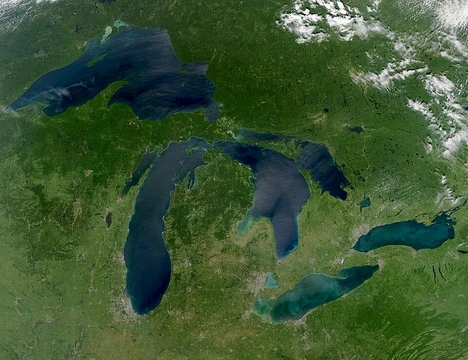
Lake Balaton
Central Europe's largest lake, a major tourist destination.

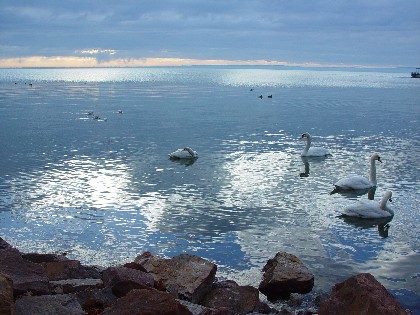
sky_hlv · CC BY 2.0
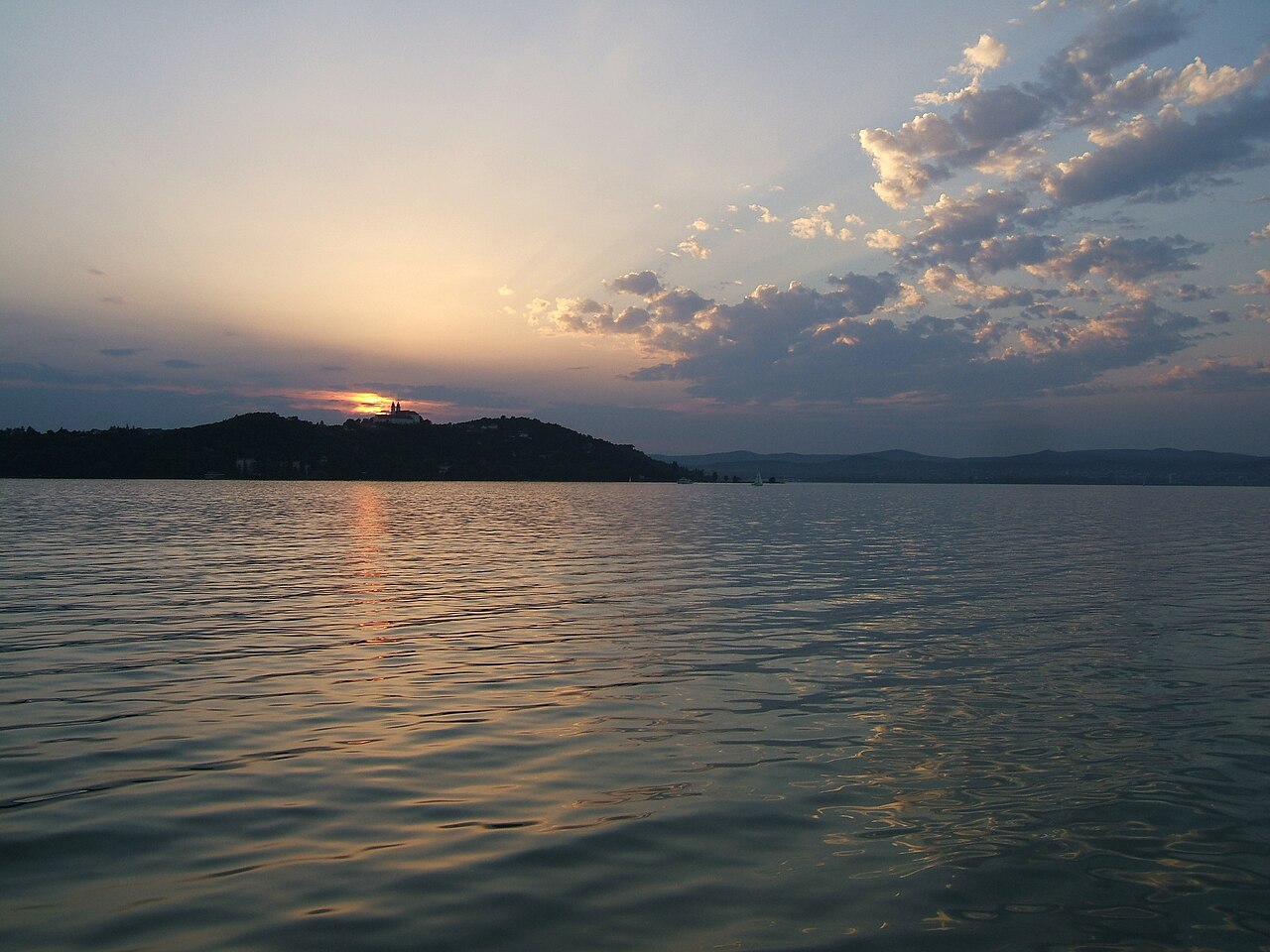
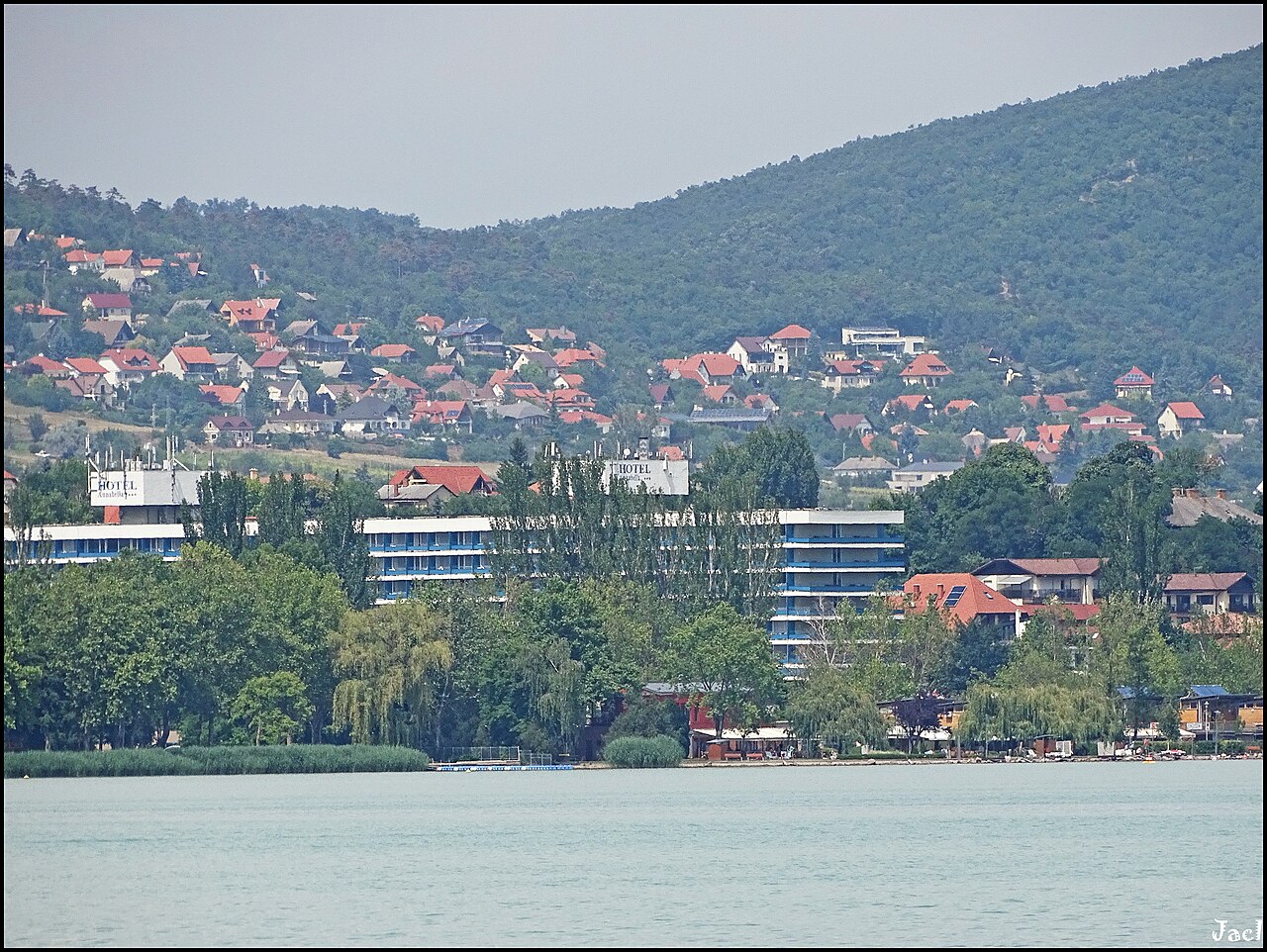
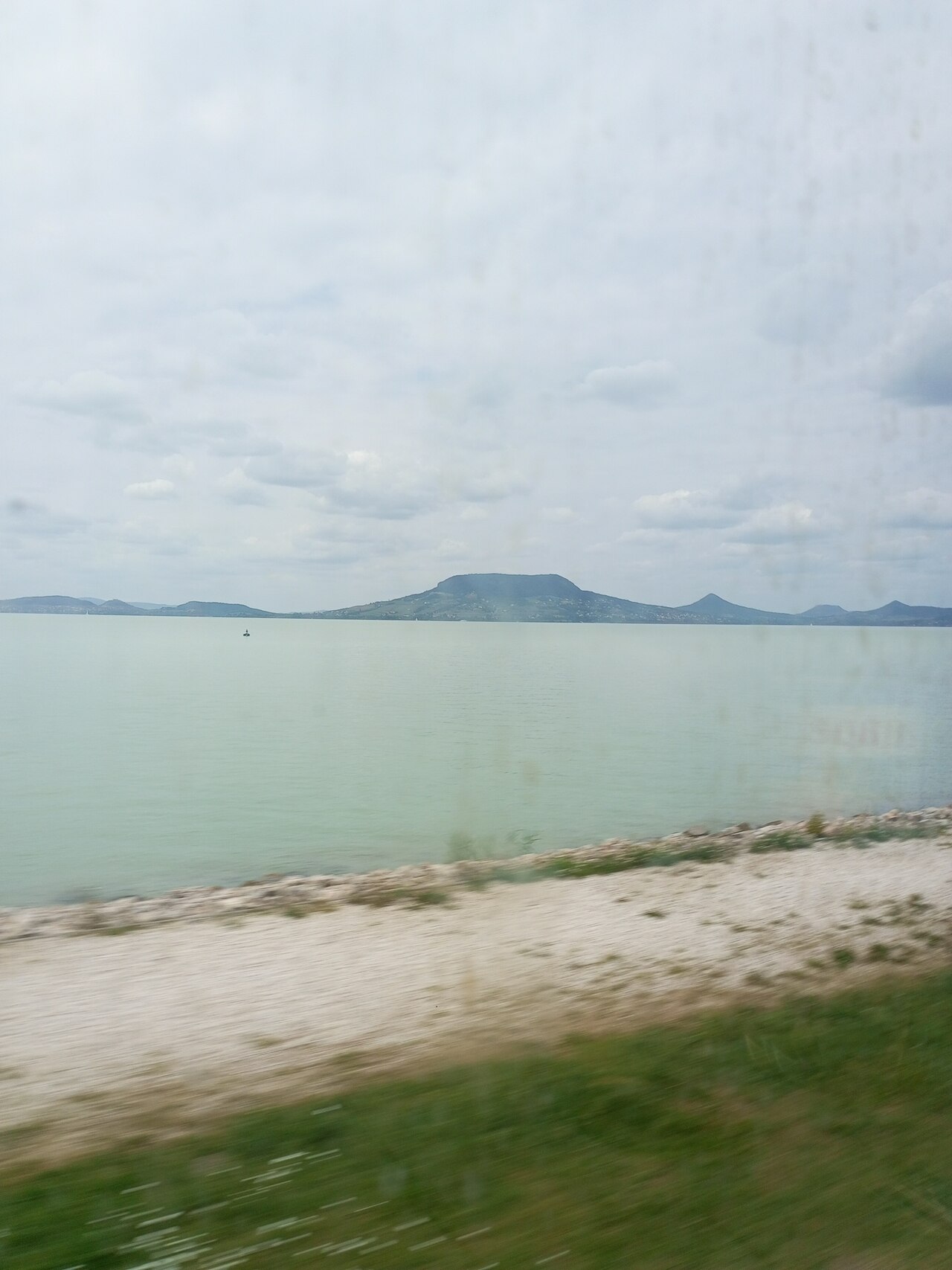
Lake Balaton, a freshwater rift lake in Hungary’s Transdanubian region, is the largest lake in Central Europe and a major tourist draw. Its main water source is the Zala River, while the canalized Sió serves as its only outlet. The northern shore, mountainous and historic, is a notable wine region; the southern shore, flat, is lined with resort towns. Balatonfüred and Hévíz were early resorts for the wealthy, but it was only in the late 1800s that landowners, after phylloxera ruined their vineyards, began building summer rentals for the growing middle class.
Unlike other Hungarian lakes, which take the suffix *-tó* (“lake”), Balaton is referred to with a definite article: *a Balaton* (“the Balaton”). The Romans called it *lacus Pelsodis* or *Pelso*. Its name comes from the Slavic *bolto* (meaning “mud” or “swamp”), related to words in Czech, Slovak, and Polish. In January 846, the Slavic prince Pribina built a fortress and churches in the Balaton region, at modern Zalavár, amid swamps along the Zala. His fortified capital, Blatnohrad (or Moosburg, “Swamp Fortress”), guarded against Bulgarians and Moravians. The German name *Plattensee* likely does not refer to shallowness, as *platt* has been in the German language since Middle High German; the lake’s average depth of 3.2 meters is not unusual for the area (neighboring Neusiedler See averages about 1 meter).
The lake affects local climate, bringing 5–7 cm more precipitation than most of Hungary, with more cloudy days and milder temperatures. It freezes over in winter. This microclimate, along with volcanic soil, has supported viticulture since Roman times 2,000 years ago.
Balaton has long been tactically and culturally important, featuring in many folk tales. During the Ottoman wars, it helped defend Royal Hungary, with battles fought nearby. While Balatonfüred and Hévíz were early aristocratic resorts, the Hungarian middle class only began visiting in the late 19th century. Railways built in 1861 and 1909 boosted tourism, but the post-war boom of the 1950s was far larger. By the early 1900s, Balaton had become a research hub for Hungarian scientists, leading to the country’s first biological research institute on its shore in 1927.
Quick Facts
- Location
- Hungary
- Inflow
- Zala River
- Outflow
- Sió
- Catchment
- 5,174 km2
- Length
- 78 km
- Area
- 600 km2
- Depth
- 3.3 m
- Max Depth
- 12.2 m
- Volume
- 1.9 km3
- Residence Time
- 2 years
- Shore
- 235 km
- Elevation
- 104.8 m
Facts from the source article.
Lore & Background
The lake's name is Indo-European in origin, derived from Slavic *bolto meaning 'mud, swamp'. In January 846, the Slavic prince Pribina began building a fortress and several churches in the region, his capital becoming known as Blatnohrad or Moosburg ('Swamp Fortress'). The German name Plattensee is unlikely to derive from the word for 'shallow', as that adjective has been in the German language since Middle High German.
The mountainous northern shore is known for its historic character and wine region, while the flat southern shore has resort towns. Balatonfüred and Hévíz developed early as resorts for the wealthy, but it was not until the late 19th century that landowners, ruined by Phylloxera attacking grape vines, began building summer homes to rent to the middle class.
Reader's Guide
Lake Balaton holds significance as Central Europe's largest lake and a key tourist hub. Its microclimate, influenced by the lake, provides more precipitation and less extreme temperatures than most of Hungary, ideal for viticulture since Roman times. The lake's history includes serving as a tactical and cultural location, with roles in the Ottoman wars and World War II. Tourism boomed in the late 19th century with railway construction and again in the post-war era, attracting both Eastern and Western Bloc visitors. Today, major resorts like Siófok, Keszthely, and Balatonfüred offer beaches, water sports, wineries, and nightlife. The annual Lake Balaton Crossing swim and the Balaton Sound music festival are notable events. The lake's name, derived from Slavic for 'mud', reflects its ancient swampy origins, and its German name Plattensee likely does not mean 'shallow'.
Did You Know?
- The Zala River provides the largest inflow to Lake Balaton, and the canalized Sió is the only outflow.
- The lake's name comes from Slavic *bolto, meaning 'mud, swamp'.
- In January 846, Slavic prince Pribina began building a fortress in the region, later known as Blatnohrad or Moosburg.
- The last major German offensive of World War II, Operation Spring Awakening, took place in the Lake Balaton region in March 1945.
Strategic Rationale: The Oil Imperative
By early 1945, the Wehrmacht faced an existential fuel crisis. The Hungarian and Vienna oil regions still accounted for roughly eighty percent of the Axis powers' remaining petroleum reserves, making them the single most critical strategic assets left on the Eastern Front. When the Soviet Vistula–Oder offensive roared through Poland with over two million troops in mid-January, Hitler perceived the threat not merely as a territorial loss but as a direct march toward those very fields and, beyond them, the Austrian capital. His response was to commit his last elite armored formations to a counterblow in western Hungary. The stated goals were twofold: seize or hold the Nagykanizsa oilfields in the south and block the Red Army's route to Vienna. In essence, Operation Spring Awakening was less a conventional military operation than a desperate bid to keep the German war machine fueled for even a few more weeks. The stakes could not have been higher, and the margin for error essentially zero.
Prelude: From the Ardennes to the Danube
The forces that would eventually strike at Lake Balaton had to be ripped from the Western Front. In late January 1945, Hitler ordered the I and II SS Panzer Corps out of the stalled Battle of the Bulge. The Leibstandarte, Hitlerjugend, Das Reich, and Hohenstaufen divisions disengaged under relentless Allied air attack, with the 9th SS Panzer Division being the last to pull out on 23 January. Their refitting was supposed to be complete by 30 January, but that deadline proved unattainable. While the 6th Panzer Army regrouped in Germany, Hitler launched a stopgap operation, Konrad III, on 18 January. For five days the Germans surged forward, capturing Dunapentele and Adony on the Danube's western bank and destroying the Soviet 7th Mechanized Corps, reclaiming roughly 400 square kilometers. Yet by late January the advance had ground to a halt within twenty kilometers of Budapest. Soviet counterattacks from 27 January through 15 February bled most of those gains back, and a final German effort, Operation Southwind, secured the Garam River bridgehead by 24 February—marking the last successful offensive of the entire war.
The Three-Pronged Strike
After weeks of painstaking secrecy, with German units shifted into the Lake Balaton region under strict cover, the offensive was set to begin on 5 March but slipped by a day. When the guns finally opened on 6 March 1945, the attack unfolded along three distinct axes. The central thrust, carrying the operation's own name, Frühlingserwachen, drove through the corridor between Lake Balaton, Lake Velence, and the Danube. To the south, a second prong codenamed Eisbrecher pressed below the southern shore of Lake Balaton, while a third, Waldteufel, aimed at the Drava-Danube triangle further south. The spearhead was the 6th Panzer Army under Sepp Dietrich, now reinforced by the four elite Waffen-SS panzer divisions yanked from the Ardennes. The fighting zone straddled the Margit Line, a defensive belt that had already seen heavy combat during the earlier Konrad III operations. For nine days the German advance pressed forward, but momentum steadily eroded against determined Soviet and Hungarian resistance.
Stall, Collapse, and the Vienna Offensive
The advance that had begun with such concentrated force simply ran out of steam. By 15 March the three prongs had stalled, unable to reach the Nagykanizsa oilfields or to interdict the Soviet approach to Vienna. The very next day, 16 March, the Red Army and its allied forces launched the long-delayed Vienna offensive, sweeping through the weakened German lines stretched thin across the Balaton sector. The failure of Spring Awakening was total: neither the oil reserves nor the capital were secured, and the operation consumed the last significant armored reserves the Wehrmacht could still field. In the Soviet telling, the episode was simply the Balaton Defensive Operation—a successful stand against a final, ill-timed German gamble. For the Axis, the defeat sealed the fate of the Hungarian oilfields and opened the road to Vienna without further serious opposition. It stands as the last major German offensive of the entire war, a footnote to a conflict that was already, in every meaningful sense, over.
Gallery

Frequently Asked Questions
Who is Lake Balaton?
Lake Balaton is a freshwater rift lake situated in Hungary's Transdanubian region, holding the distinction of being the largest body of water in all of Central Europe. It sits at a modest average depth of roughly 3.2 metres, giving it a broad, gently sloping character across its basin.
What is Lake Balaton known for?
Balaton functions as a major freshwater reservoir, receiving its primary inflow from the Zala River and releasing water through the canalized Sió as its sole outflow. It also drives the region's economy, drawing crowds between June and late August and sustaining wine production along its mountainous northern shore.
Why is Lake Balaton important?
As Central Europe's largest lake, Balaton anchors Hungary's tourism industry and regional cultural identity. Its dual-shore layout—historic vineyards and old aristocratic resorts to the north, flat resort strips to the south—makes it an economic and social cornerstone of the Transdanubian region.
What's Lake Balaton's origin story?
Balaton was born as a rift lake, carved out when tectonic forces fractured the earth's crust to form its basin. Its modern tourism identity, however, only emerged in the late 1800s, when phylloxera devastated the northern vineyards and local landowners pivoted to renting summer properties to a growing middle class.
More in Great Lakes Of The World 1-24
Spotted an error? Know more?
Reader corrections go straight into our review queue. Suggest an edit · How this site is sourced