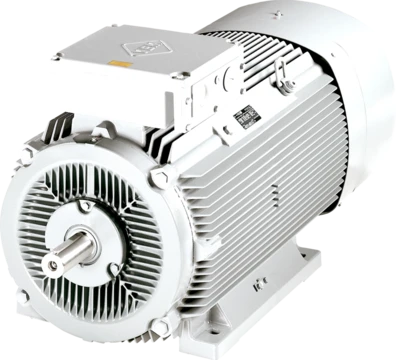
Electrostatic motor
Electric motor based on attraction and repulsion of electric charge.

An electrostatic motor, sometimes called a capacitor motor, operates through the attraction and repulsion of electric charge. It is generally considered the counterpart to conventional coil-based motors, which rely on magnetic forces. While these motors typically need a high-voltage power supply, very small versions can run on lower voltages. In contrast, standard electric motors require high current at low voltages. The first electrostatic motors were built in the 1740s and 1750s by Andrew Gordon and Benjamin Franklin. Today, they are commonly used in micro-mechanical (MEMS) systems, where drive voltages stay under 100 volts and it is much simpler to fabricate moving charged plates than coils and iron cores.
The corona-discharge motor, also known as a corona motor, has been known for centuries.
In 2004, researchers at the University of California, Berkeley, created rotational bearings from multiwall carbon nanotubes. By attaching a gold plate roughly 100 nanometers in size to the outer shell of a suspended multiwall carbon nanotube, they could electrostatically rotate the outer shell relative to the inner core. These bearings proved very robust, with devices oscillated thousands of times without showing wear. Such nanoelectromechanical systems (NEMS) represent a promising direction for miniaturization and may eventually appear in commercial products.
Electric motors generally produce motion when powered by electric currents. The common spacecraft ion thruster uses electrostatic forces to accelerate ions, generating forces that create motion, so it can be considered an unconventional electric motor. Gridded electrostatic ion thrusters often use xenon gas, which is uncharged and then ionized by bombarding it with energetic electrons. These electrons can come from a hot-filament cathode and be accelerated in the electrical field of the cathode fall to the anode, as in a Kaufman-type ion thruster. Alternatively, the electrons can be accelerated by the oscillating electric field from an alternating magnetic field of a coil, producing a self-sustaining discharge without a cathode, as in a radiofrequency ion thruster.
The primary U.S. Patent and Trademark Office classifications for electrostatic motors include Class 310 (Electrical Generator or Motor Structure), with subclasses for non-dynamoelectric, charge accumulating, and electrostatic types.
- First developed
- 1740s and 1750s
- Developers
- Andrew Gordon and Benjamin Franklin
- Typical power requirement
- high voltage
- Typical voltage for small motors
- below 100 volts
- Example nanomotor year
- 2004
- Example nanomotor institution
- University of California, Berkeley
- Example nanomotor bearing material
- multiwall carbon nanotubes
Lore & Background
The first electrostatic motors were developed in the 1740s and 1750s by Andrew Gordon and by Benjamin Franklin. These early motors relied on electrostatic forces, predating the widespread use of electromagnetic motors. A known variant is the corona-discharge motor, also called the corona motor, which has been known for centuries.
In 2004, researchers at the University of California, Berkeley, developed rotational bearings based upon multiwall carbon nanotubes. By attaching a gold plate about 100 nm in size to the outer shell of a suspended multiwall carbon nanotube, they were able to electrostatically rotate the outer shell relative to the inner core. These bearings proved robust, with devices oscillated thousands of times without wear. This nanoelectromechanical system (NEMS) represents a promising direction in miniaturization.
Another type of electrostatic motor is the spacecraft electrostatic ion drive thruster, where forces and motion are created by electrostatically accelerating ions. Gridded electrostatic ion thrusters commonly utilize xenon gas, which is ionized by bombarding it with energetic electrons. These electrons can be provided from a hot-filament cathode (Kaufman type) or by an oscillating electric field from an alternating magnetic field of a coil (radiofrequency ion thruster).
Reader's Guide
The electrostatic motor's significance lies in its fundamental difference from conventional electric motors: it uses electrostatic rather than magnetic forces. This makes it particularly suitable for micro-mechanical systems (MEMS), where low voltages (below 100 volts) and simple fabrication of charged plates are advantageous. The development of nanotube-based rotational bearings in 2004 at the University of California, Berkeley, demonstrated the potential for extremely durable nanoelectromechanical systems, oscillating thousands of times without wear. The electrostatic ion drive thruster represents an unconventional application, using electrostatic forces to accelerate ions for spacecraft propulsion. The article notes that electrostatic motors are typically the dual of coil-based motors, requiring high voltage rather than high current. Their legacy includes a range of patents from the late 19th century onward, including those by J. Gallegos, E. Thomson, Harold B. Smith, W. G. Cady, T. T. Brown, B. Bollee, and others, indicating ongoing interest and development in this technology.
Did You Know?
- Electrostatic ion drive thrusters, a type of electrostatic motor, commonly use xenon gas ionized by energetic electrons.
- The corona-discharge motor, also known as the corona motor, has been known for centuries.
More in Electric Motors 1-24
Spotted an error? Know more?
Reader corrections go straight into our review queue. Suggest an edit · How this site is sourced