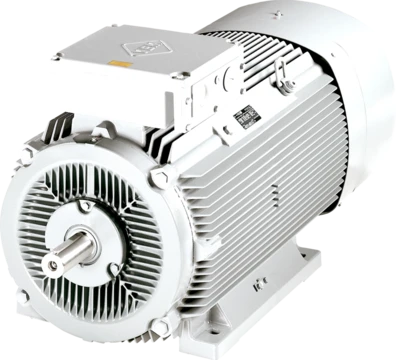
Brush (electric)
Conducts current between stationary and rotating parts of electrical machines.

A brush (or carbon brush) is an electrical contact, often made from specially prepared carbon, that conducts current between stationary and rotating parts of an electrical machine, such as a motor, alternator, or generator. Its lifespan depends on how much the motor is used and how much power is put through it. Carbon brushes are one of the least costly parts in an electric motor but are key to delivering durability and performance.
- Sintering temperature max
- 1200 °C
- Brush resistance order
- tens of milliohms
- Main grade categories
- carbon graphite, electrographitic, graphite, metal graphite
- Typical binders
- phenol or other resins or pitch
- Common additives
- metal powders, MoS2, WS2
Lore & Background
Originally, brushes were made from braided copper wire pressed against copper or brass commutators or slip rings. These brushes arced and even welded as the commutator rotated because they short-circuited adjacent segments. The cure was the introduction of high-resistance brushes made from graphite, sometimes with added copper. Although their resistance was only tens of milliohms, it was high enough to provide a gradual shift of current from one commutator segment to the next. The term 'brush' remains in use today.
During World War II, high-altitude aircraft generators experienced very rapid brush wear, requiring reformulated brush compounds for acceptable life. Metal fiber brushes are currently being developed and may have advantages over current brush technology, but have not yet seen wide implementation.
Manufacturing involves mixing components (graphite/carbon powder, copper for better conductance, binders, and additives), compacting the mixture in a tool, and then heat treating the 'green brush' under artificial atmosphere at temperatures up to 1200 °C. This sintering process burns off or carbonizes binders and forms a crystalline structure. After heat treatment, brushes are ground to net shape and may receive additional treatments such as impregnation with oils, resins, or grease.
Reader's Guide
The carbon brush is a critical component in many electric motors, alternators, and generators, serving as the interface that transfers current between stationary and rotating parts. Its significance lies in its role as a consumable part that directly affects motor durability and performance. The article notes that while brushes are among the least costly parts in a motor, they are key to delivering the motor's lifetime. The manufacturing process requires deep materials knowledge and experience, as small changes in composition by just a few percent can significantly alter brush properties. Only a handful of companies worldwide specialize in brush development, and each manufacturer's heat-treatment temperature curve is considered a trade secret. The legacy of the brush includes its evolution from copper wire to graphite-based compounds, driven by problems such as arcing and high-altitude wear during World War II. Ongoing development of metal fiber brushes suggests the technology continues to evolve, though these have not yet been widely adopted. The article emphasizes that production demands high attention to quality control throughout all steps.
Did You Know?
- The term 'brush' remains in use even though modern brushes are made from carbon or graphite rather than copper wire.
- Metal fiber brushes are currently being developed but have not yet seen wide implementation.
- The heat-treatment temperature curve is considered a 'big secret' of each brush manufacturer.
Pioneers of Electromechanical Power
Brushed DC motors hold a unique place in industrial history as the very first commercially significant technology that converted electrical energy into mechanical motion. For well over a century, direct-current distribution networks powered these motors inside commercial and industrial buildings, making them the backbone of electrified manufacturing. Their operational flexibility was a key advantage: by adjusting either the supply voltage or the intensity of the magnetic field, engineers could dial in the desired rotational speed. Depending on how the field winding was wired to the power source, a single motor design could be configured to maintain a constant speed under varying loads or to deliver torque that scaled inversely with the mechanical resistance it encountered. Even in the modern era, brushed motors remain in active service in demanding applications such as electrical propulsion systems, overhead cranes, paper manufacturing lines, and steel rolling mills—settings where their straightforward construction and direct torque response still prove valuable.
The Mechanics of Turning Force
At its core, a brushed DC motor exploits a beautifully simple electromagnetic interaction. When direct current flows through a coil wrapped around a soft iron core and that assembly sits within an external magnetic field, the two sides of the coil experience opposing forces—one pushed upward, the other downward, as described by Fleming's left-hand rule. These opposing forces generate a turning effect that sets the rotor in motion. The critical enabling component is the commutator: a split-ring device that reverses the current direction through the coil every half-turn, ensuring the torque always pushes the rotor in the same rotational direction rather than oscillating back and forth. In the simplest two-pole configuration, however, a fundamental weakness emerges. When the coil's plane aligns parallel to the magnetic field—meaning the rotor sits ninety degrees from the stator poles—the net torque drops to zero. A motor in this orientation cannot self-start; it must be nudged by an external force to gain enough momentum to coast through the dead zone and resume rotation.
Short Circuits, Gaps, and the Three-Pole Fix
The two-pole design carries a second, more insidious flaw at that same zero-torque angle. Because both commutator brushes simultaneously bridge the two commutator plates, the power leads are effectively shorted together, and the coil is short-circuited through each brush independently. In a low-current classroom demonstration this is merely wasteful, but in a motor rated for several hundred watts the resulting current surge can overheat the commutator, damage the brushes, and even weld metallic brushes to the ring. Carbon brushes resist welding, yet the energy drain remains severe. One straightforward remedy—widening the gap between commutator plates beyond the brush width—eliminates the short but widens the dead-zone arc, causing the motor to coast through a substantial portion of each revolution and producing pulsed torque. A more elegant solution is the three-pole armature, found in many small consumer and toy motors. Here the brushes can bridge two adjacent segments without creating a short, and current alternates between flowing through two coils in series and a single coil, smoothing the torque delivery and enabling reliable self-starting from any angular position.
Wearing Down and Moving On
Despite their elegance, brushed motors carry an inherent maintenance burden: the brushes are consumable components that gradually wear away with each rotation and must be periodically replaced. This mechanical degradation, combined with the arcing that occurs when inductive coil current attempts to jump the small gap between a commutator segment and a brush, has driven a steady migration toward brushless DC motors that rely on solid-state power electronics instead of physical contact. The underlying voltage characteristic of a rotating commutated machine also presents a theoretical inefficiency. Because the rotor spins continuously, the instantaneous output voltage traces a shape resembling the absolute value of a sine function rather than a flat, constant level. Theoretically, replacing smooth rotation with rapid perpendicular oscillation of the coil through the field lines would push the voltage curve closer to a straight line, with higher oscillation frequency yielding a flatter, more efficient output. In practice, however, the simplicity, low cost, and direct controllability of the brushed design have kept it firmly embedded in countless applications even as brushless technology claims an ever-larger share of the market.
Frequently Asked Questions
Who is Brush (electric)?
A brush is a small electrical contact, usually crafted from specially prepared carbon, that bridges the gap between the stationary and rotating sections of an electric motor, alternator, or generator. It is one of the most recognizable consumable parts in any brushed electrical machine.
What are Brush (electric)'s powers/role?
Its core job is to conduct electrical current across the interface between fixed supply leads and the spinning commutator or slip rings, typically presenting a resistance in the range of tens of milliohms. Brushes come in grades such as carbon graphite, electrographitic, graphite, and metal graphite, often held together with phenol resins or pitch and sometimes reinforced with metal powders or solid lubricants like MoS₂ and WS₂.
Why is Brush (electric) important?
Although it is one of the least costly components in an electric motor, the brush is essential for delivering both durability and consistent performance. Without it, current simply cannot reach the rotating armature, and the machine cannot produce torque or generate voltage.
What are Brush (electric)'s key manufacturing specs?
Carbon brushes are produced through a sintering process with a maximum temperature of roughly 1,200 °C, and they are classified into main grade categories including carbon graphite, electrographitic, graphite, and metal graphite. Additives such as metal powders, molybdenum disulfide, and tungsten disulfide are blended in to fine-tune conductivity and reduce friction at the contact surface.
More in Electric Motors 1-24
Spotted an error? Know more?
Reader corrections go straight into our review queue. Suggest an edit · How this site is sourced