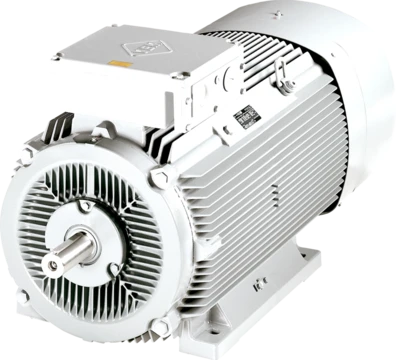
Ball bearing motor
An electric motor using the debated Huber effect.

A ball bearing motor, also known as a ball-race motor, is an electric motor that consists of two ball bearings assembled on a conductive common shaft, with provision for passing electric current between two outer bearing races. It is notable for operating via the Huber effect, an electromechanical phenomenon that remains incompletely understood and was still subject to scientific debate in the early 2020s.
- Discovery year
- 1959
- Discoverer
- Jacob Huber
- First ball bearing implementation year
- 1959
- First ball bearing implementer
- R. A. Milroy
- Single bearing design year
- 1963
- Single bearing designers
- Kosyrev et al.
- Typical rotation speed
- 1000 RPM
Lore & Background
Jacob Huber discovered the eponymous electromechanical effect in 1959 while investigating wheelsets moving on rails. He observed that if a voltage differential is applied to the rails and a large electric current passes from one rail to another through the wheelset, the initial rotation of the wheels causes a force that supports the motion. Huber assumed the force to be electromagnetic, but this is not borne out by experimental results, as the force does not depend on either the direction of motion or electric polarity of the current.
A ball-bearing implementation spinning at 1000 RPM was made by R. A. Milroy in December of 1959, who was unaware of Huber's work at the time; Milroy published his findings in 1967. In 1963, Kosyrev et al. proposed a single-bearing design where the voltage is applied to the inner and outer tracks.
The motor is usually not self-starting and must be given an initial rotation to start. When a large current is passed through the device, the Huber effect causes the motor to maintain rotation. A macroscopic scale ball bearing motor is described as 'completely impractical', as heating due to very low efficiency and sparking will cause it to self-destruct in seconds if operated in air.
Reader's Guide
The ball bearing motor's significance lies in its demonstration of the Huber effect, a complex physical phenomenon whose nature was still debated in the early 2020s. Multiple explanations exist: S. Marinov suggests the device produces motion from electricity without magnetism, operating purely by resistance heating causing asymmetric thermal expansion of the balls. Watson, Patel, and Sedcole give the same explanation for rotating cylinders. In contrast, H. Gruenberg provided a thorough theoretical explanation based on pure electromagnetism, neglecting thermal effects entirely. P. Hatzikonstantinou and P. G. Moyssides claim excellent agreement between electromagnetic theory and experiments measuring total power and efficiency. The motor's legacy is as a subject of ongoing scientific inquiry rather than a practical device; its impracticality at macroscopic scale is noted, but the effect has been investigated for potential application in micromotors, as referenced in a 1999 paper by Shen et al. The large bibliography in McDonald's 2020 work indicates sustained academic interest.
Did You Know?
- A macroscopic scale ball bearing motor is 'completely impractical' and will self-destruct in seconds if operated in air.
- Jacob Huber discovered the effect in 1959 while studying wheelsets moving on rails.
- Multiple explanations for the Huber effect exist, including purely thermal and purely electromagnetic theories.
The Huber Effect: A Railway Mystery
In 1959, Jacob Huber stumbled upon a puzzling electromechanical phenomenon while studying how railway wheelsets interact with their tracks. His observation was deceptively simple: when a voltage difference is established between two parallel rails and a substantial current flows through the metal wheelset connecting them, any initial spin of the wheels generates a force that actively sustains that rotation. Huber, writing in the German journal Elektrotechnik und Maschinenbau, attributed the effect to electromagnetic origins. Yet the behavior defied straightforward electromagnetic reasoning. The sustaining force showed no dependence on whether the wheelset moved forward or backward, nor did it reverse when the current polarity was flipped. This peculiar independence from both motion direction and current sign has made the phenomenon—now universally called the Huber effect—one of the most stubborn puzzles in applied physics, one that remained actively debated among researchers well into the early 2020s.
Building the Motor: From Concept to Spinning Bearing
The ball bearing motor translates the Huber effect into a tangible rotating device. Its construction is remarkably minimal: two standard ball bearings are mounted on a shared conductive shaft, and electric current is routed between the two outer races. There are no windings, no permanent magnets, no commutator—just metal balls rolling between inner and outer rings while current flows through the assembly. Crucially, the motor cannot start itself; it requires an external nudge to begin rotating, after which the Huber effect takes over and maintains the spin. The first documented bearing-based implementation, spinning at roughly one thousand revolutions per minute, was built by R. A. Milroy in December 1959, though he did not publish his work until 1967 and was apparently unaware of Huber's railway experiments. Three years later, in 1963, Kosyrev and colleagues proposed a simplified single-bearing variant in which the voltage is applied directly between the inner and outer tracks, reducing the assembly to a single bearing rather than a pair.
The Great Explanation War
For decades, physicists have argued over what actually drives the ball bearing motor. In 1965, R. H. Barker wrote to the magazine Electronics and Power explicitly requesting a clear explanation, noting that multiple competing accounts already existed. One camp, represented by S. Marinov and later echoed by Watson, Patel, and Sedcole (who extended the idea to rotating cylinders), argued that the motion arises from resistance heating producing asymmetric thermal expansion of the rolling elements as they turn—essentially, a thermal engine masquerading as an electromagnetic one. On the opposite side, H. Gruenberg constructed a thorough theoretical framework rooted entirely in classical electromagnetism, deliberately setting thermal effects aside. More recently, P. Hatzikonstantinou and P. G. Moyssides reported that electromagnetic theory predicts total power and efficiency values in excellent agreement with experimental measurements. Despite these advances, the underlying mechanism remained a live scientific controversy into the early 2020s, with Kirk McDonald's 2020 review at Princeton cataloguing an extensive bibliography of competing interpretations.
Why It Cannot Work—and Where It Might
At any practical macroscopic scale, the ball bearing motor is, in the words of its own literature, "completely impractical." The efficiency is so low that resistive heating becomes catastrophic, and the sparking that accompanies current flow through the bearing contacts causes the device to destroy itself within seconds when operated in ordinary air. This fatal combination of thermal runaway and electrical arcing has kept the motor firmly in the realm of laboratory curiosity rather than engineering application. Nevertheless, the underlying Huber effect has found a niche in microscale technology. In 1999, Shen, Tay, Thompson, Soong, Davis, and Abbott presented work on applying the effect to micromotors within MEMS structures, where the reduced scale tames heating and sparking to manageable levels. The motor also sits in a broader conceptual family alongside the homopolar motor, the homopolar generator, and the Faraday paradox—devices where a single magnetic field and a rotating conductor produce or consume electrical energy in ways that continue to challenge intuitive understanding of electromagnetic induction.
Frequently Asked Questions
What exactly is a ball bearing motor?
It is a small electric motor built around two ball bearings threaded onto a shared conductive shaft, with current fed between the two outer races to produce spin. The name 'ball-race motor' is used interchangeably in the literature.
How does a ball bearing motor generate rotation?
It exploits the Huber effect, an electromechanical phenomenon where passing current across bearing races creates a measurable torque. The precise microscopic mechanism behind that torque has never been fully resolved, and researchers were still debating the explanation in the early 2020s.
Who discovered the effect and who built the first working ball bearing motor?
Jacob Huber identified the underlying effect in 1959, and R. A. Milroy implemented the first two-bearing motor that same year. A simplified single-bearing version followed in 1963, designed by Kosyrev and co-workers.
Why do engineers and physicists argue about the ball bearing motor?
The Huber effect it depends on still lacks a universally accepted physical model, so the device sits in an awkward spot between 'curiosity' and 'working motor.' That unresolved status kept it a recurring topic of debate well into the 2020s.
What changed between the 1959 two-bearing design and the 1963 single-bearing design?
Milroy's original 1959 build required two bearings on a common shaft with current bridging their outer races. Kosyrev and colleagues cut that down to just one bearing by 1963, trimming the part count while still relying on the same Huber-effect torque.
More in Electric Motors 1-24
Spotted an error? Know more?
Reader corrections go straight into our review queue. Suggest an edit · How this site is sourced