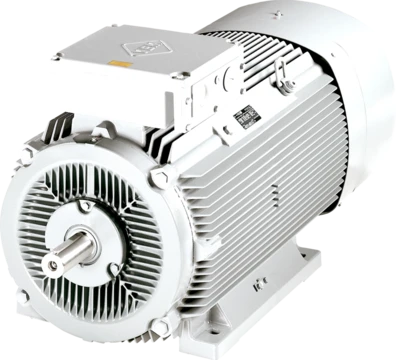
Electric vehicle motors
Electric vehicle motors convert battery energy into kinetic energy with high efficiency.

Here is the rewritten encyclopedia entry:
Electric vehicle motors transform electrical energy from a battery into motion. Engineers refer to them as traction motors. They provide immediate torque, operate with little noise, and often achieve energy conversion efficiencies exceeding 90 percent. Key design priorities include power density (output per kilogram), torque relative to volume, efficiency across a range of speeds, and manufacturing cost. Four companies are notable for their contributions: YASA (now part of Mercedes), Lucid Motors, Rivian (particularly its 2026 R2 model), and Tesla. Their designs illustrate the compromises between maximum performance and everyday efficiency.
**History**
The first road vehicles powered by electricity in the late 1800s used electric motors. Those early systems relied on direct current motors and lead-acid batteries. In 1901, Ferdinand Porsche created a hybrid electric car. After 1920, production of electric cars declined as internal combustion engines improved. Interest revived in the 1990s. General Motors introduced the EV1 in 1996, which used a single induction motor. Tesla’s 2008 Roadster employed an alternating current induction motor derived from earlier aerospace work. This design proved durable and avoided rare earth magnets. It set a performance benchmark but consumed more energy at low speeds. During the 2010s, permanent magnet motors became more common because of their better efficiency at low speeds. Manufacturers weighed the cost of magnets against the gains in range. By the 2020s, axial flux designs entered high-performance vehicles. Mercedes acquired YASA in 2021 to speed up development of that technology.
**Motor Types**
Most electric vehicle motors are categorized by their flux path. Radial flux motors dominate production. In these, the stator forms a cylinder around the rotor, and magnetic flux travels outward from the center. This design suits high-volume manufacturing. It offers good efficiency and power, but the motor grows heavier and longer as torque increases. Axial flux motors arrange the rotor and stator as facing discs. Flux travels parallel to the shaft. This creates a larger active surface area in a shorter package. Torque benefits from a greater radius without added length.
- Peak efficiency lucid
- above 97 percent in laboratory tests
- Highest mpge lucid air pure rwd 2026
- 146 MPGe
- Yasa prototype power density 2025
- 42 kW/kg (550 kW from 13.1 kg)
- Yasa record power density 2025
- 59 kW/kg (750 kW from 12.7 kg)
- Helix spx242 94 power density
- exceeding 11 kW/kg
- Byd high speed motor rpm 2025
- 30,000 revolutions per minute
- Zeekr motor weight reduction
- 22% (77 kg total)
Lore & Background
Electric motors powered the first road vehicles in the late 1800s. Early designs used direct current motors with lead-acid batteries. Ferdinand Porsche built a hybrid electric car in 1901. Production electric cars faded after 1920 as internal combustion engines improved. Modern interest returned in the 1990s. General Motors released the EV1 in 1996 with a single induction motor. Tesla launched its Roadster in 2008, using an alternating current induction motor derived from earlier aerospace work. The design proved rugged and avoided rare earth magnets, but consumed more energy at low speeds. Permanent magnet motors gained favor in the 2010s for better low-speed efficiency. By the 2020s axial flux designs appeared in high-performance vehicles. Mercedes acquired YASA in 2021 to accelerate that technology.
Most electric vehicle motors are distinguished by flux path. Radial flux motors dominate production, with the stator forming a cylinder around the rotor and magnetic flux traveling outward from the center. Axial flux motors arrange the rotor and stator in facing discs, with flux traveling parallel to the shaft. The design creates a larger active surface area in a shorter package, offering up to four times the torque density and double the power density of equivalent radial motors. Permanent magnets appear in most modern designs, creating a constant field without extra current. Induction rotors use no magnets, avoiding rare earth materials but running less efficiently at low loads.
Reader's Guide
Electric vehicle motors represent a critical trade-off between raw performance and everyday efficiency. Axial flux motors from YASA lead in power and torque density, with a 12.7-kilogram unit producing 750 kilowatts, suiting supercars and allowing novel packaging. Radial flux motors from Lucid, Rivian, and Tesla win on production scale and cost. Lucid achieves the highest real-world efficiency at 146 MPGe, using radial flux permanent magnet motors optimized for minimal energy loss. Tesla balances performance and production, having switched the Model 3 rear motor to a permanent magnet design in 2017 and using carbon fiber wrapping in Plaid motors to increase RPMs. Rivian's 2026 R2 uses permanent magnet motors on each axle, balancing performance with affordability. BYD emphasizes affordability and efficiency for mass-market vehicles, with high-speed rotors and integrated systems reducing energy loss. The choice between motor types affects vehicle packaging, battery size, range, and cost. YASA claims axial flux technology adds 5 to 10 percent efficiency over radial designs in typical driving, while radial motors remain dominant in high-volume manufacturing.
Did You Know?
- YASA stands for Yokeless and Segmented Armature, a design that removes the stator yoke to cut iron mass by up to 80 percent.
- Lucid Motors supplies powertrains to Aston Martin.
- BYD introduced a mass-produced motor reaching 30,000 revolutions per minute in 2025.
- The Helix SPX242-94 motor weighs 33 kg and delivers a peak output of 368 kW.
More in Electric Motors 1-24
Spotted an error? Know more?
Reader corrections go straight into our review queue. Suggest an edit · How this site is sourced