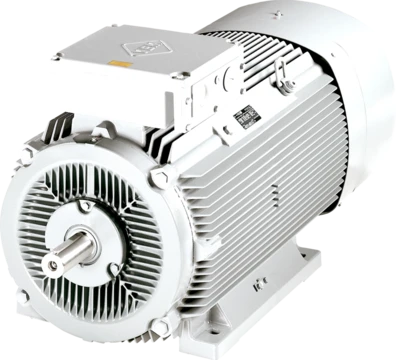
Electric machine
Electromechanical converters using electromagnetic forces for motion or power generation.

An electric machine is a general term for a machine that uses electromagnetic forces to convert between electricity and motion, encompassing both motors and generators. These electromechanical energy converters are a significant component of electric infrastructure, with motors consuming approximately 60% of all electric power produced and generators producing about 95% of all electric power on Earth as of the early 2020s.
- Percentage of power generated
- 95%
- Percentage of power consumed by motors
- 60%
- First demonstration year
- 1821
- Dynamo invention year
- 1867
- First practical dc motor year
- 1886
Lore & Background
The basis for electric machines dates back to the early 19th century, with Michael Faraday's experiments on electricity and magnetism. In 1821, a demonstration showed a wire rotating around a magnet when current passed through it, converting electric energy to motion. Improvements continued through the 19th century, but electric machines struggled for viability until the first electric grids emerged near the end of that century. Notable developments include Werner von Siemens' invention of the dynamo in 1867 and Frank Sprague's first practical DC motor in 1886. During the war of currents, AC machines began to replace DC machines, with Nikola Tesla's induction motor being a key invention.
Electric machines operate on principles from Maxwell's equations, governed by Lorentz force, Faraday's law of induction, Kirchhoff's voltage law, and Newton's laws of motion. In rotating machines, the stationary part is the stator and the rotating part is the rotor. They may have armature windings (carrying current) and field windings (creating magnetic fields), though permanent magnets can replace field windings. Machines are characterized by whether they are motors or generators, AC or DC, brushed or brushless, and by their speed-torque curves. DC motors have a linear speed-torque curve, while AC motors have a more complex shape.
Reader's Guide
Electric machines are crucial to global energy infrastructure, as they both generate and consume the vast majority of electric power. Developing more efficient electric machine technology is vital for conservation, green energy, and alternative energy strategies. Historically, their development from Faraday's early experiments to modern AC induction motors enabled the widespread adoption of electric power systems. The ability to convert between electricity and motion underpins countless applications, from industrial pumps to household appliances. While most machines can theoretically operate as both motors and generators, practical designs are often specialized. The choice between brushed and brushless designs affects maintenance needs, with brushes wearing down over time. Permanent magnet machines simplify design but are typically limited to small power motors due to cost. The speed-torque relationship defines motor performance, with DC motors offering linear characteristics and AC motors providing more complex torque profiles. These machines remain a foundational technology in modern electrical engineering.
Did You Know?
- Electric motors consume approximately 60% of all electric power produced.
- The first demonstration of an electric machine was in 1821, using a wire rotating around a magnet in mercury.
- All DC machines use alternating voltages and currents internally, with a commutator to maintain DC on the electrical side.
- Brushes in electric machines are generally made of carbon and wear down over time, requiring replacement.
More in Electric Motors 1-24
Spotted an error? Know more?
Reader corrections go straight into our review queue. Suggest an edit · How this site is sourced