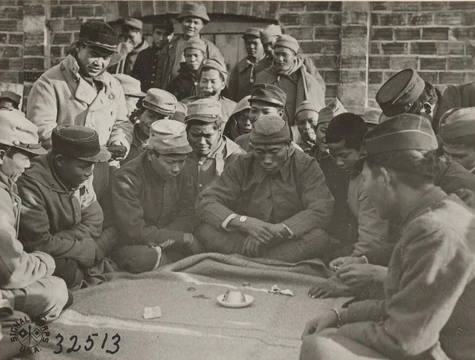
Floating craps
A mobile craps table for restricted gambling jurisdictions.

Floating craps is a variant of the casino dice game craps, played on a table that is not fixed to the floor but rather set up on a temporary or mobile platform. This format allows the game to be offered in locations where permanent casino installations are not permitted, such as on riverboats or in jurisdictions with specific gambling regulations. The term 'floating' refers to the table's mobility, not to any change in the rules of play.
Quick Facts
- Title
- Craps
- Other Names
- Seven-Eleven
- Genre
- Dice game
- Random Chance
- High
Facts from the source article.
Lore & Background
Floating craps emerged as a practical solution for offering craps in areas where land-based casinos were prohibited or heavily regulated. The source article notes that after 1960, a few casinos in Europe, Australia, and Macau began offering craps, and after 2004, online casinos extended the game's spread globally. It also mentions that craps has been featured in newer casinos, including the idea of expanding into formerly unavailable locales on the coastline. Floating craps tables are typically operated with fewer staff than standard bank craps tables; some smaller casinos have introduced 'mini-craps' tables operated with only two dealers, where a single set of major bets is presented rather than the usual two identical sides and center area.
Reader's Guide
Floating craps represents an adaptation of the traditional bank craps game to meet legal and spatial constraints. The source article describes bank craps as played on a large rectangular table with up to four casino employees: a boxman, two base dealers, and a stickman. In floating craps, the table is not permanently installed, allowing it to be moved or set up temporarily, often on riverboats or in other venues where fixed gambling equipment is banned. The game follows the same rules as standard bank craps, including the use of two six-sided dice, the come-out roll, point setting, and the pass/don't pass betting options introduced by John H. Winn around 1907. The significance of floating craps lies in its ability to bring the game to new markets, expanding the reach of craps beyond traditional casino floors. The article notes that craps exploded in popularity during World War II and became the dominant casino game in postwar Las Vegas and the Caribbean; floating craps continued this expansion into previously unavailable locales.
Did You Know?
- Floating craps tables are often used on riverboats or in jurisdictions where permanent casinos are not allowed.
- Floating craps follows the same rules as standard bank craps, including the pass bet (which existed before John H. Winn) and the don't pass bet, which Winn introduced around 1907.
More in Dice games 1-24
Spotted an error? Know more?
Reader corrections go straight into our review queue. Suggest an edit · How this site is sourced