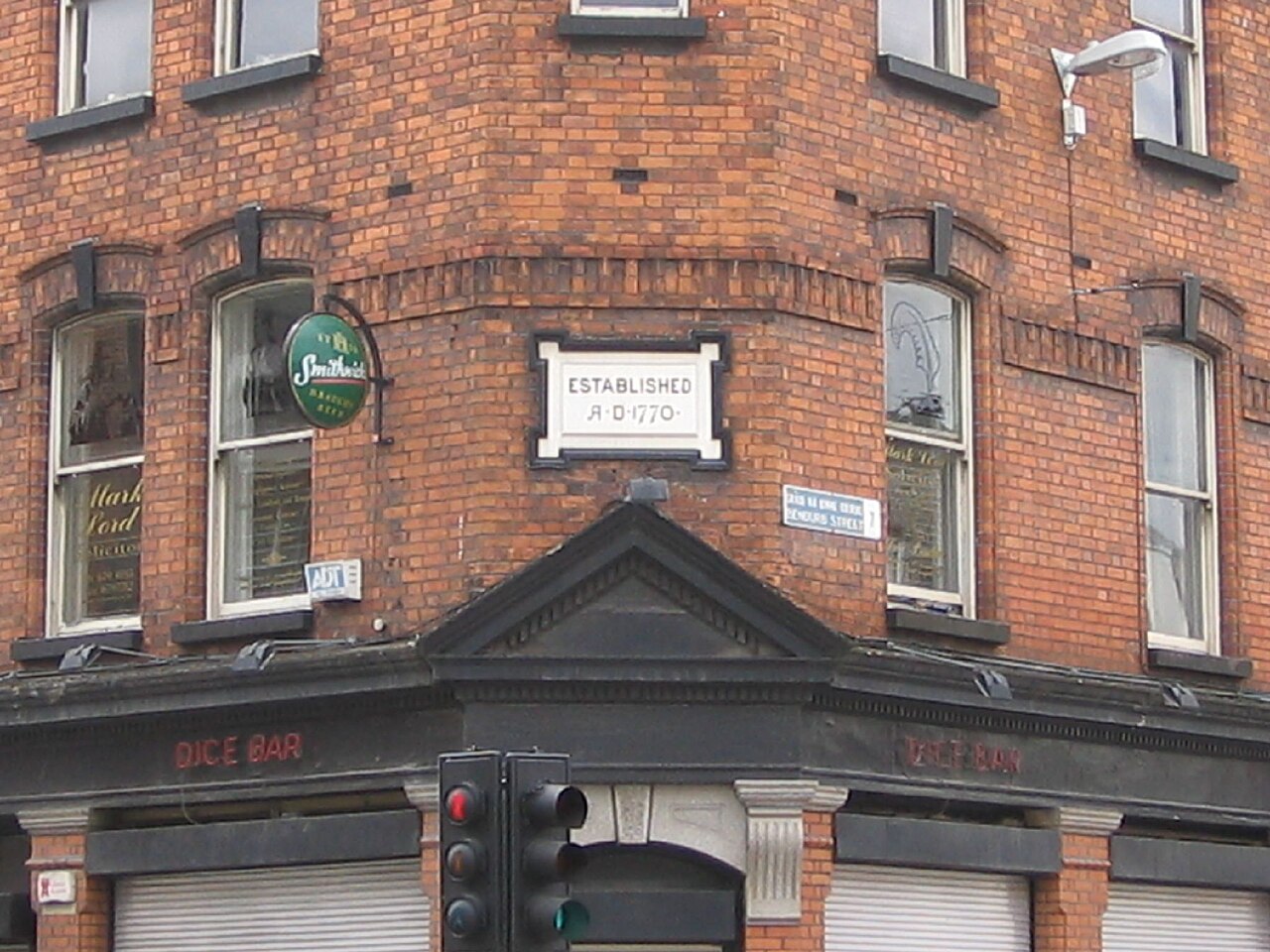
Bar dice
A dice game to decide who buys the next round.

Ewan Munro · CC BY-SA 2.0
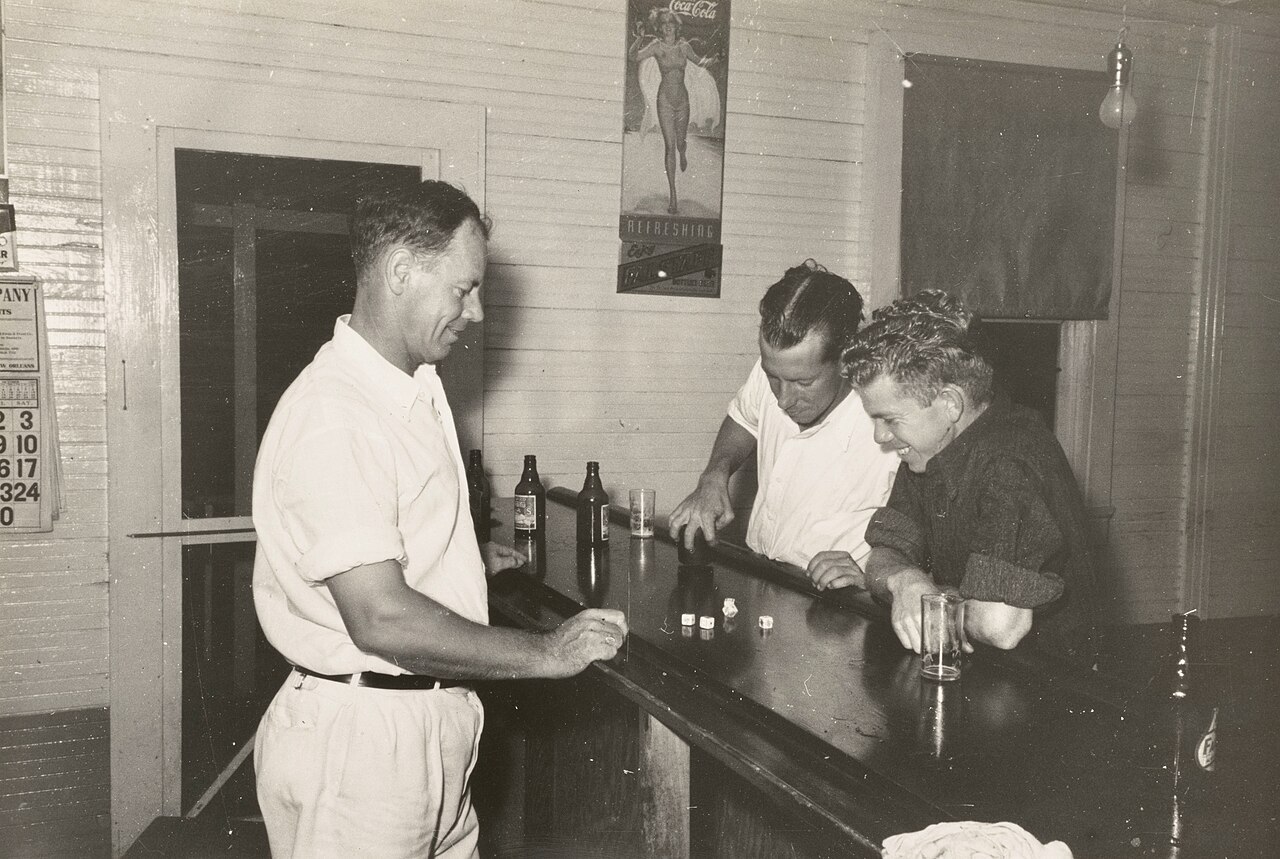
Bar dice is a drinking game played with five dice and a cup, typically in a bar, tavern, or pub. It is often used to determine which participant will pay for the next round of drinks.
- Regional variation
- In Wisconsin, all players are limited to three shakes of the dice per round.
Lore & Background
Bar dice is played with five six-sided dice, with each player attempting to assemble the highest hand possible from each flop or toss of the dice. Each round results in one player with the lowest hand; that player is 'out' and must buy the next round of drinks. Scoring is based on amassing the largest number of dice with the same digits. Each hand must include at least a single 'Ace', or one, in order to be a valid hand; Aces act as 'wilds' and can be paired with any other digit. The strength of a player's hand depends first on the number of digits and then the value of those digits. As an example, a hand with four 3's is better than a hand with three 5's, but not better than a hand with five 2's.
Reader's Guide
Bar dice serves as a social mechanism in drinking establishments, where the outcome of the game determines financial responsibility for the next round. Its rules are straightforward: players toss five dice, aiming for the highest combination, with Aces functioning as wilds. The game's structure ensures that only one player per round is eliminated from both play and payment duty, creating a gradual reduction of participants. Regional variations exist, such as in Wisconsin, where the final two players are allowed three shakes of the dice to achieve the highest score. The game's reliance on chance and simple scoring makes it accessible, though the specific rules can vary from place to place, as noted in the source. Its significance lies in its role as a common, informal drinking game that blends luck with social obligation.
Did You Know?
- Each hand must include at least one Ace (one) to be valid.
- In Wisconsin, all players are limited to three shakes of the dice per round.
Ancient Origins & the Archaeological Record
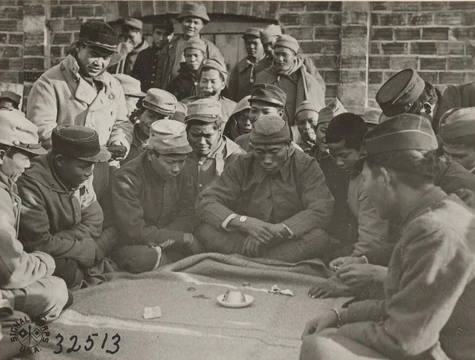
Dice predate written history, and their exact birthplace remains unknown. Scholars believe they grew out of the ancient practice of casting the talus bones of hoofed animals for divination, a technique popularly called knucklebones. Some speculation places Native American dice use in the Great Plains region as far back as 12,000 years ago, roughly 10,000 BCE. In Egypt, the board game senet—played from before 3000 BCE through the 2nd century CE—relied on flat two-sided throwsticks that served a dice-like function. Among the oldest confirmed physical dice are bone examples from Skara Brae in Scotland, dated between 3100 and 2400 BCE, and a set found at the Burnt City in south-eastern Iran as part of a backgammon-like set, estimated at 2800 to 2500 BCE. Perhaps most remarkable is a terracotta die recovered from graves at Mohenjo-daro, an Indus Valley settlement dating to 2500–1900 BCE, whose opposite faces already sum to seven—the very same convention found on modern dice.
Cultural Transmission & the Birth of New Games
Dice crossed civilizations and ultimately spawned entirely new categories of play. In ancient India, dice games are referenced in the Rigveda, Atharvaveda, Mahabharata, and Buddhist game lists. Greek culture refined knucklebones into a skill-based contest in which the four sides of the bone were assigned distinct values, closely paralleling modern dice. Romans, despite gambling being outlawed, were avid dicers who called the pastime aleam ludere; they used two formats—large four-sided tali bearing one, three, four, and six pips, and smaller six-sided tesserae. Twenty-sided dice appeared in Ptolemaic Egypt by the 2nd century BCE. In China, dice evolved into dominoes and playing cards, with the card transition occurring around the Tang dynasty (618–907 CE) alongside the shift from manuscript rolls to block-printed books. Japan developed sugoroku, a beloved dice game with two variants: ban-sugoroku, a backgammon-like contest from the Heian period, and e-sugoroku, a racing format.
Construction, Geometry & Manufacturing
A standard die is a small cube, usually 1.6 centimeters on a side, whose six faces carry patterns of round dots called pips. A core geometric rule demands that opposite faces sum to seven, which forces the one, two, and three faces to converge at a single vertex. The rotational order of those three faces determines handedness: counterclockwise yields a right-handed die (the Western standard), while clockwise produces a left-handed one (the Chinese norm). Asian-style dice distinguish themselves by placing pips nearer the face center, varying pip sizes, and coloring the one and four faces red—a red four possibly traceable to Indian origins. In production, dice split into two tiers. Precision dice, the casino standard, are larger, translucent, and carry flush markings with crisp edges. Non-precision dice, bundled with board games, are smaller, opaque, and feature recessed markings with softened corners. The latter are typically made by plastic injection molding from polymethyl methacrylate, with pips formed directly into the mold.
Terminology, Slang & the Language of Chance
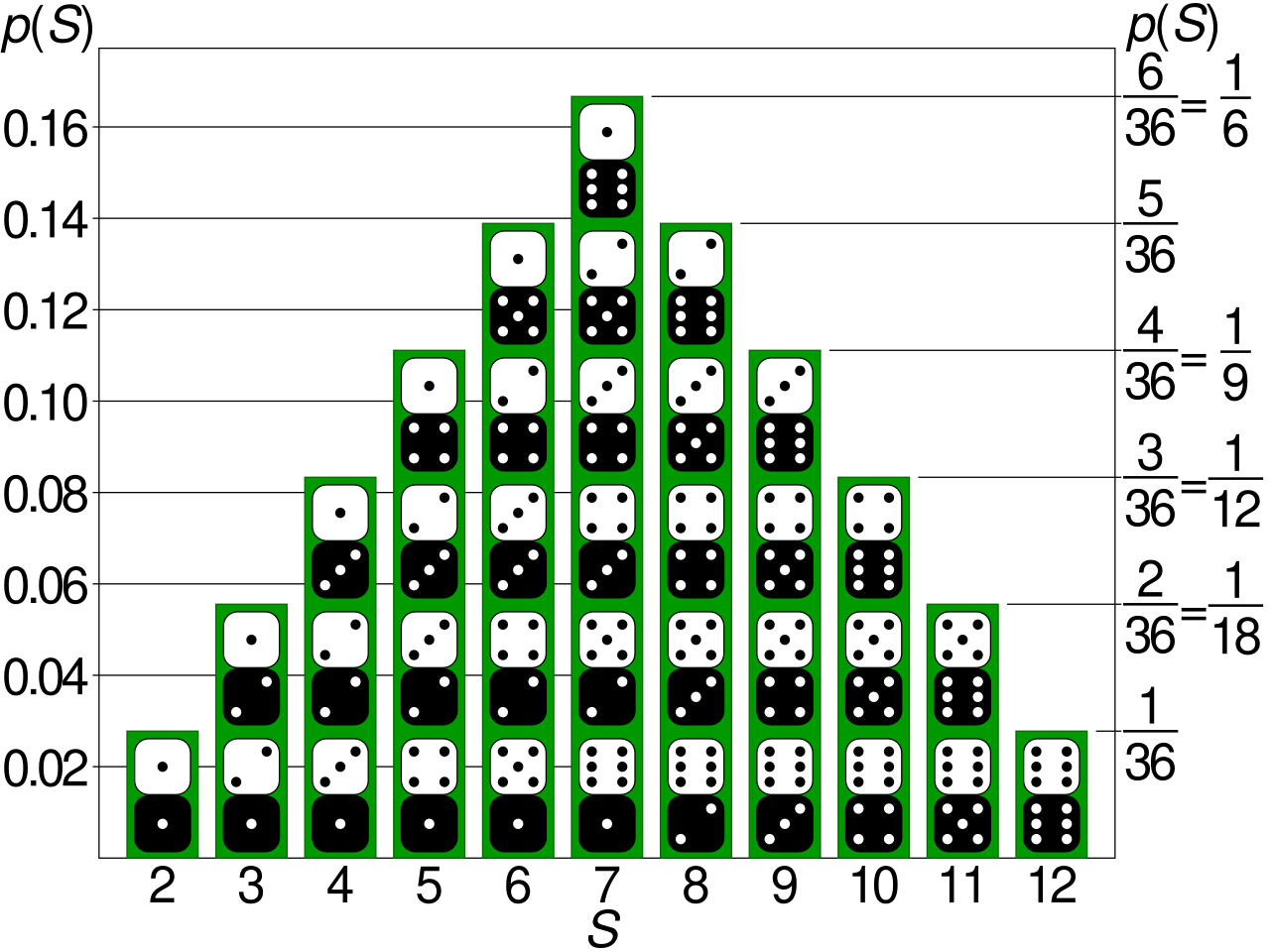
The English word for a single die traces back through Old French dé to Latin datum, meaning something given or played. A set of archaic face names—ace, deuce, trey, cater, cinque, and sice—has largely faded from everyday speech but persists among professional gamblers; 'ace' derives from Latin as for 'a unit,' while the remaining terms come from Old French numerals. Rolling two dice together gives rise to vivid slang. 'Snake eyes' denotes a one-pip result on each die, a phrase the Online Etymology Dictionary traces to 1919. 'Boxcars,' alternatively called 'midnight,' describes double sixes, an image likened to a pair of freight-train boxcars. Many of these nicknames are native to the game of craps. Collectively, this vocabulary shows how a simple mechanical randomizer accumulated centuries of linguistic texture, turning bare numbers into a shared cultural shorthand that spans continents and eras.
Gallery


Frequently Asked Questions
What is Bar dice?
Bar dice is a casual drinking game in which players shake five dice into a cup to settle a small wager.
How many dice does Bar dice use?
The game is played with exactly five dice, which are shaken and dropped into a cup.
What's the main purpose of playing Bar dice?
It is a quick, low-stakes way for a group to decide which person is footing the bill for the next round of drinks.
Where do people usually play Bar dice?
It is most commonly played in bars, taverns, or pubs, though any casual gathering with a cup and dice will do.
Are there regional rule variations for Bar dice?
Yes—in Wisconsin, for example, every player is capped at three shakes of the dice per round.
More in Dice games 1-24
Spotted an error? Know more?
Reader corrections go straight into our review queue. Suggest an edit · How this site is sourced