Cee-lo
Three-dice gambling game with Chinese origins and American urban popularity.

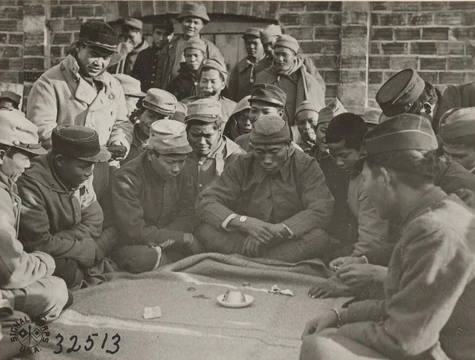
Cee-lo is a gambling game played with three six-sided dice, derived from a Chinese name meaning 'four-five-six' (四五六; Sì-Wŭ-Liù; sei3 ng5 luk6). It is a point game with common roll combinations, including a four-five-six as an automatic win and a one-two-three as an automatic loss. The game has been documented since at least 1893 and remains popular in American inner cities, particularly in New York City neighborhoods.
Quick Facts
- Subtitle
- Dice game using three dice
- Random Chance
- complete
- Materials
- 3×six-sided dice
Facts from the source article.
Lore & Background
The actual origins of Cee-lo are not clear. Some of the earliest documentation comes from 1893, when Stewart Culin reported on Chinese-American gambling, though he primarily documented Fan-Tan and domino games rather than dice; he did not describe Cee-lo as the most popular dice game. Gil Jacobs instead asserts the game is derived from passe-dix, with a betting system borrowed from craps.
Cee-lo flourished in Harlem during the 1970s and 80s. The game remains popular in American inner cities, but is more prominent in various New York City neighborhoods such as Harlem, Brownsville, Crown Heights, South Bronx, and Washington Heights, whereas 'street craps' remains popular in other American cities such as Los Angeles, Atlanta, Chicago, and parts of the south. A deadly 2019 Brooklyn shooting was linked by police to a game of cee-lo.
Many hip hop artists have referenced the dice game 'Cee-Lo' in rap songs since the 1990s. The references usually come from east coast rappers, including Kool G Rap, Big L, Jadakiss, Nas and Notorious B.I.G. as well as many other hip hop artists, and Cee-lo has seen a resurgence in popularity in American settings. A 2003 Associated Press article presented by CBS News identified Cee-lo as a fad at schools in certain areas, 'played for money even by preteens'.
Reader's Guide
Cee-lo is significant as a persistent gambling game bridging Chinese and American cultures, with documented play among Chinese-American laborers in the 1890s and later flourishing in Harlem during the 1970s and 80s. Its legacy includes widespread references in East Coast hip hop since the 1990s, which contributed to a resurgence in popularity. The game's rules are not standardized but share constants: three dice, winning combinations (four-five-six, triples), losing combinations (one-two-three), and point-setting rolls. It can be played as a banking game (with a banker who rolls first and has a ~2.7% advantage) or as a non-banking winner-take-all game. The game remains particularly prominent in New York City neighborhoods and has been linked to a deadly 2019 Brooklyn shooting. Its alternative names—Roll-off!, Sān Liù Bàozi, Chinchiro—reflect its spread across cultures. The 2003 Associated Press article noted its popularity among preteens in certain areas, indicating its reach beyond adult gambling circles.
Did You Know?
- The name 'Cee-lo' is derived from the Chinese numerical sequence four-five-six (四五六).
- In Japan, the game is known as 'Chinchiro' or 'Chinchirorin'.
More in Dice games 1-24
Spotted an error? Know more?
Reader corrections go straight into our review queue. Suggest an edit · How this site is sourced