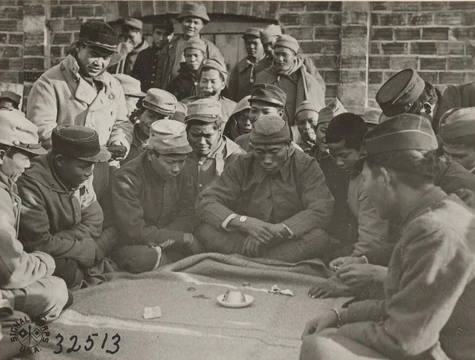
Cacho (Bolivian dice game)
Bolivian dice game played with a leather cup.

Cacho is a popular dice game from Latin America, similar to Yahtzee/Yatzy, played with five dice rolled from a distinctive leather cup. The Bolivian version described here, 'cacho alalay', is the most common variant used in tournaments organized in Cochabamba.
- Field
- Dice game
- Known for
- Bolivian cacho alalay, tournament variant played in Cochabamba
- Origin
- Latin America, with Bolivian variant possibly from Potosí
Lore & Background
Cacho alalay is a version of the dice game cacho, which is based on Generala, itself derived from European dice poker. The exact origin of cacho alalay is unknown; one theory suggests it came from Potosí in southern Bolivia, gained popularity in Cochabamba, and then spread across the country. Across Latin America, different dice games are called 'cacho' and share the use of a distinctive leather cup.
The game involves one or more players rolling five dice from a leather cup, with points awarded for combinations. Players may roll once or twice per turn. A unique rule allows the player, after the second throw, to optionally turn over one die (changing a six to a one, as opposite sides of a die sum to seven) and optionally a second die to improve the score. If the second throw uses all five dice and yields a straight, full house, four of a kind, or five of a kind, no die is turned.
Scoring is recorded on a simple chart with eleven positions: six for number values (ones through sixes, summed pips), three center combinations (straight, full house, four of a kind) with fixed points, and two spaces for 'la grande' (five of a kind). A player who rolls la grande on a single throw wins immediately—this is called 'la dormida' (slang for an instant win). Other instant-win conditions include 'la panza de oro' (a specific combination, but not an automatic win in standard rules) and having at least four of a kind in all number values plus a grande.
Reader's Guide
Cacho alalay holds significance as a standardized tournament variant of a widespread Latin American dice game, particularly in Cochabamba, Bolivia. Its rules introduce distinctive elements such as the mandatory turning of a die after the second throw, which adds strategic depth by allowing players to convert a six into a one. The scoring system, with higher points for first-throw ('de mano') combinations and the use of symbols like a hand or egg for notation, reflects a blend of tradition and practicality. The game's instant-win conditions—la dormida, la panza de oro, and the requirement of four of a kind in all numbers plus a grande—create dramatic, sudden conclusions. As a reference entry, cacho alalay illustrates how regional variations of classic games develop unique identities, preserved through local tournaments and oral tradition. Its legacy is tied to the cultural fabric of Bolivia, where the game remains a common pastime, and its rules are maintained by players and scorekeepers without need for printed forms.
Did You Know?
- The game uses a leather cup to roll the dice.
- After the second throw, a player may optionally turn over one die, changing a six to a one because opposite sides of a die always sum to 7.
- A player who rolls five of a kind (la grande) in a single throw wins immediately; this is called 'la dormida' (slang for an instant win).
- The score chart has eleven positions: six for number values, three center combinations, and two spaces for grandes.
Frequently Asked Questions
What is Cacho (Bolivian dice game)?
Cacho is a Latin American dice game in the same family as Yahtzee, in which players shake five dice inside a distinctive leather cup and score based on the combinations they land.
What does 'cacho alalay' mean in the context of this game?
Cacho alalay is the name of the most widely played Bolivian variant and serves as the standard ruleset for organized competitive events in the country.
Where did Cacho (Bolivian dice game) originate?
The game traces its roots to Latin America more broadly, while the specific Bolivian variant is thought to have developed in or around Potosí before spreading to other regions.
What equipment is needed to play Cacho?
All you need is a set of five standard dice and the traditional leather cup (sometimes called a shaker) used to tumble and release them.
Where are Cacho tournaments held in Bolivia?
Cochabamba is the hub for organized Cacho competition, hosting the most recognized tournaments that use the cacho alalay ruleset.
More in Dice games 1-24
Spotted an error? Know more?
Reader corrections go straight into our review queue. Suggest an edit · How this site is sourced