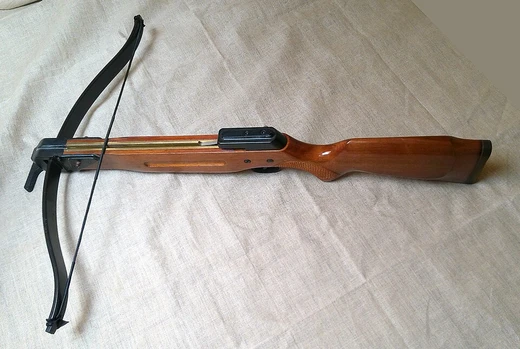
Repeating crossbow
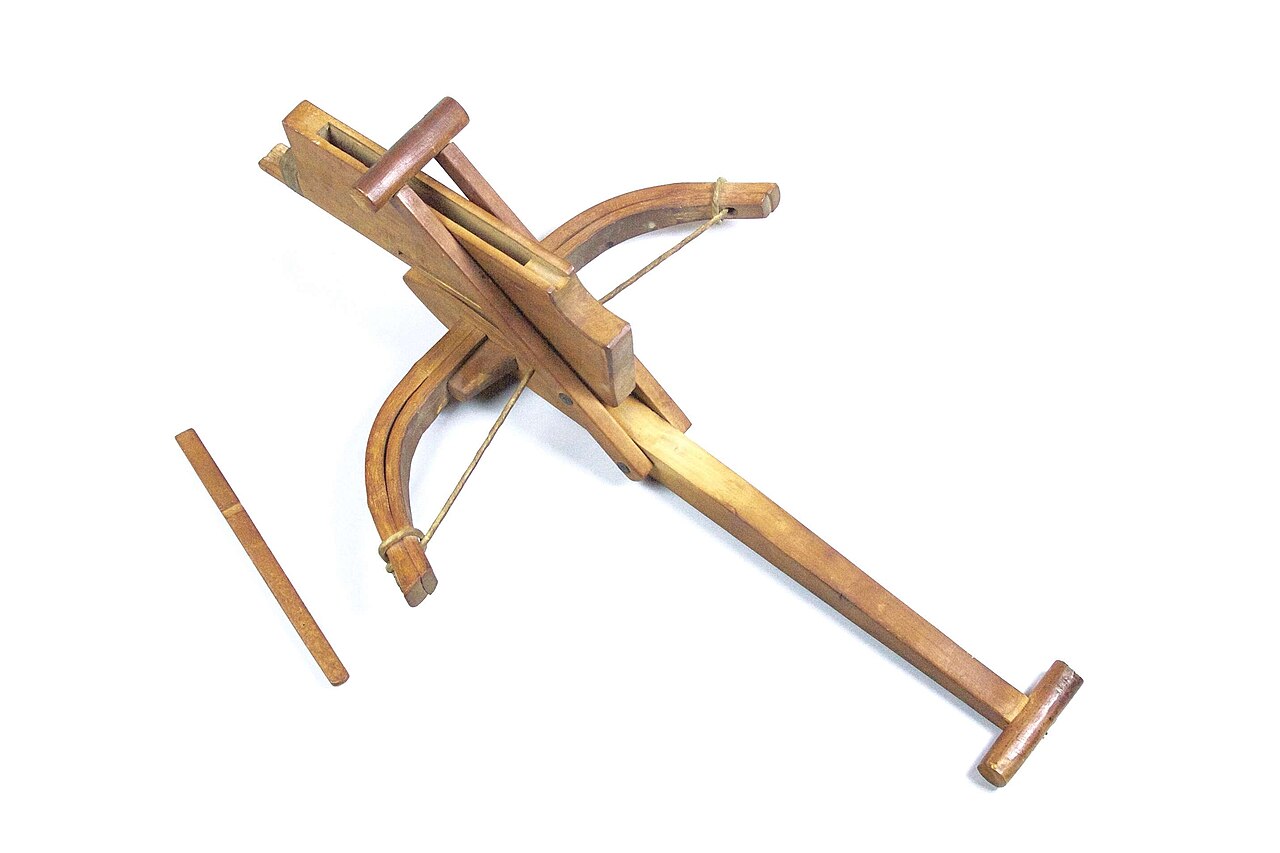
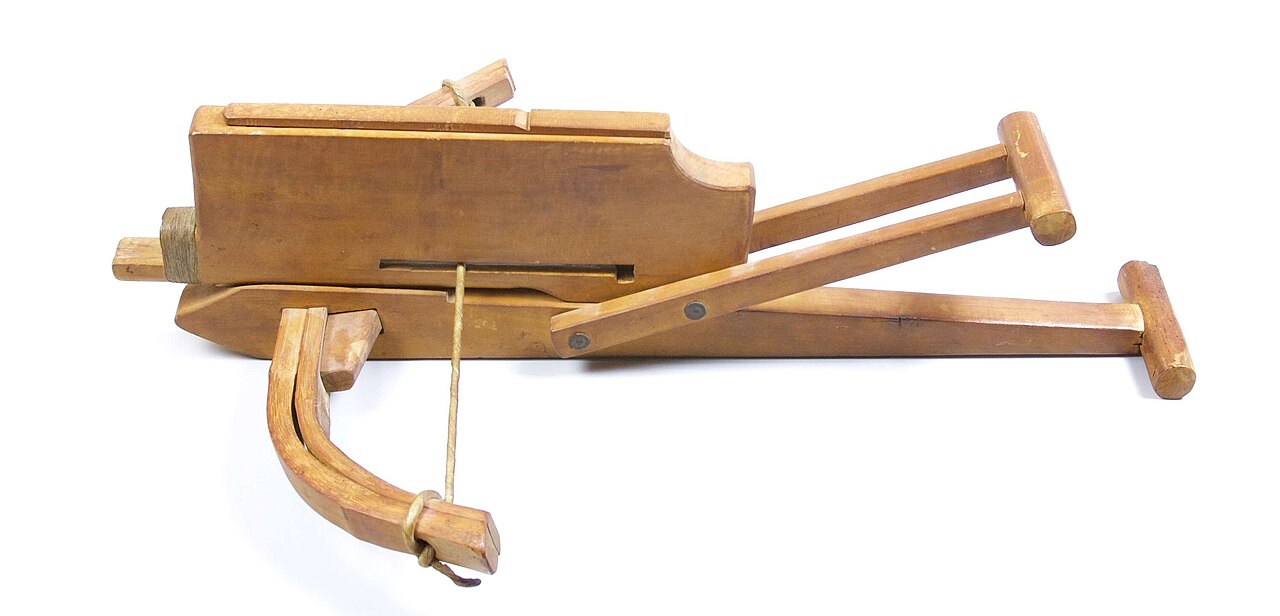
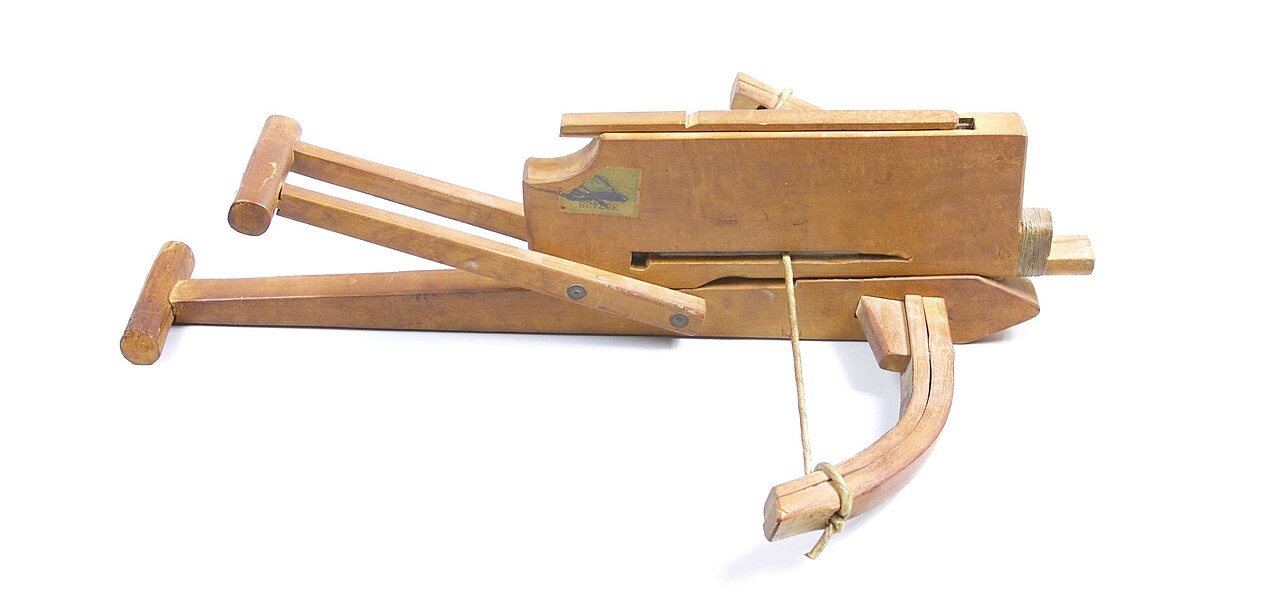
A Chinese repeating crossbow combining spanning, loading, and shooting into one motion.

Peter Dekker · CC BY 4.0
The repeating crossbow, sometimes called the repeater crossbow or the Zhuge crossbow (also spelled Chu-ko-nu) because of its link to the Three Kingdoms strategist Zhuge Liang (181–234 AD), was invented during China’s Warring States period. Its design merged the actions of drawing the bow, loading a bolt, and firing into a single motion. The oldest archaeological evidence of this weapon comes from the state of Chu, but that early version had a pistol grip, unlike the more familiar Ming dynasty model that came later. Although the repeating crossbow was used throughout most of Chinese history, lasting into the late Qing dynasty, it was typically seen as a non-military weapon. Handheld versions were considered suitable for women and for defending homes against robbers. The military preferred larger, heavier stationary crossbows for sieges and naval combat.
According to the Wu-Yue Chunqiu, a history of the Wu-Yue War written during the Eastern Han dynasty, the repeating crossbow was invented during the Warring States period by a man named Qin from the state of Chu. This matches the earliest archaeological find: a repeating crossbow excavated from Tomb 47 at Qinjiazui in Hubei Province, dated to the 4th century BC, during the Warring States period (475–220 BC). Unlike later models, this ancient double-shot version used a pistol grip and a rear-pulling mechanism to arm it. The Ming dynasty repeating crossbow, by contrast, required the user to push a rear lever up and down, back and forth. Handheld repeating crossbows were generally weak, and poison—likely aconite—was often added to make them lethal. Larger mounted versions appeared during the Ming dynasty. In 180 AD, Yang Xuan used a type of repeating crossbow powered by wheels. The invention is often wrongly credited to Zhuge Liang; this mistake comes from a record that says he improved multiple-bolt crossbows. During the Ming dynasty, repeating crossbows were used on ships. Though they were employed throughout Chinese history and even saw action against the Japanese in the 19th century Qing dynasty, they were not considered important military weapons. The 17th-century Wubei Zhi notes that people in southeast China favored them, but they lacked power and their bolts often failed to injure anyone.
Quick Facts
- L
- "Zhuge [Liang] crossbow"
- P
- Zhūgě nǔ
- W
- Chu / 1 / -ko / 2 / nu / 3
- Mi
- zh · u · 1 · g · e · 2 · - · n · u · 3
- J
- Zyu / 1 / -got / 3 / nou / 5
- Y
- Jyū-got nóuh
- Poj
- Chu-kat ló͘
- Tl
- Tsu-kat lóo
Facts from the source article.
Lore & Background
According to the Wu-Yue Chunqiu (history of the Wu-Yue War), written in the Eastern Han dynasty, the repeating crossbow was invented during the Warring States Period by a Mr. Qin from the State of Chu. This is corroborated by the earliest archaeological evidence of repeating crossbows, which was excavated from a Chu burial site at Tomb 47 at Qinjiazui, Hubei Province, and has been dated to the 4th century BC, during the Warring States Period (475–220 BC). Unlike repeating crossbows of later eras, the ancient double-shot repeating crossbow uses a pistol grip and a rear-pulling mechanism for arming. The Ming repeating crossbow uses an arming mechanism that requires its user to push a rear lever upwards and downwards back and forth. Although handheld repeating crossbows were generally weak and required additional poison, probably aconite, for lethality, much larger mounted versions appeared during the Ming dynasty. In 180 AD, Yang Xuan used a type of repeating crossbow powered by the movement of wheels. During the Ming dynasty, repeating crossbows were used on ships.
Reader's Guide
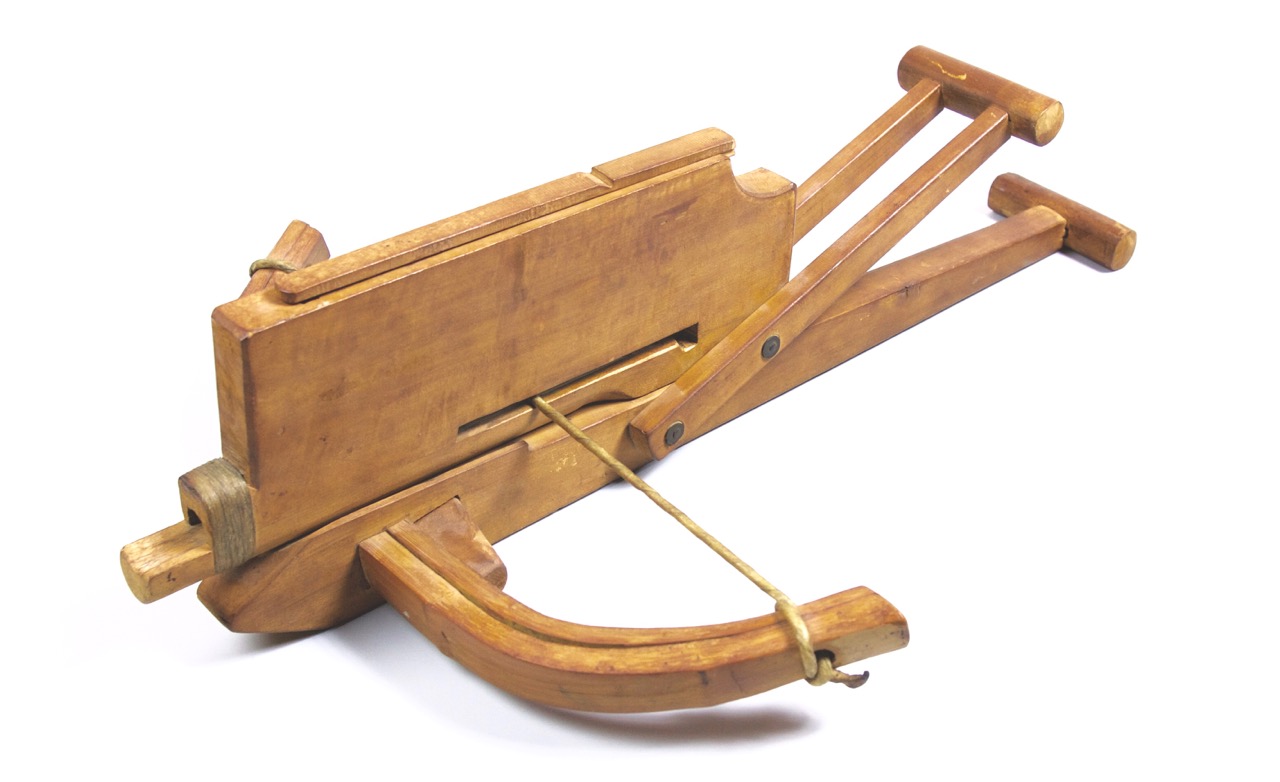
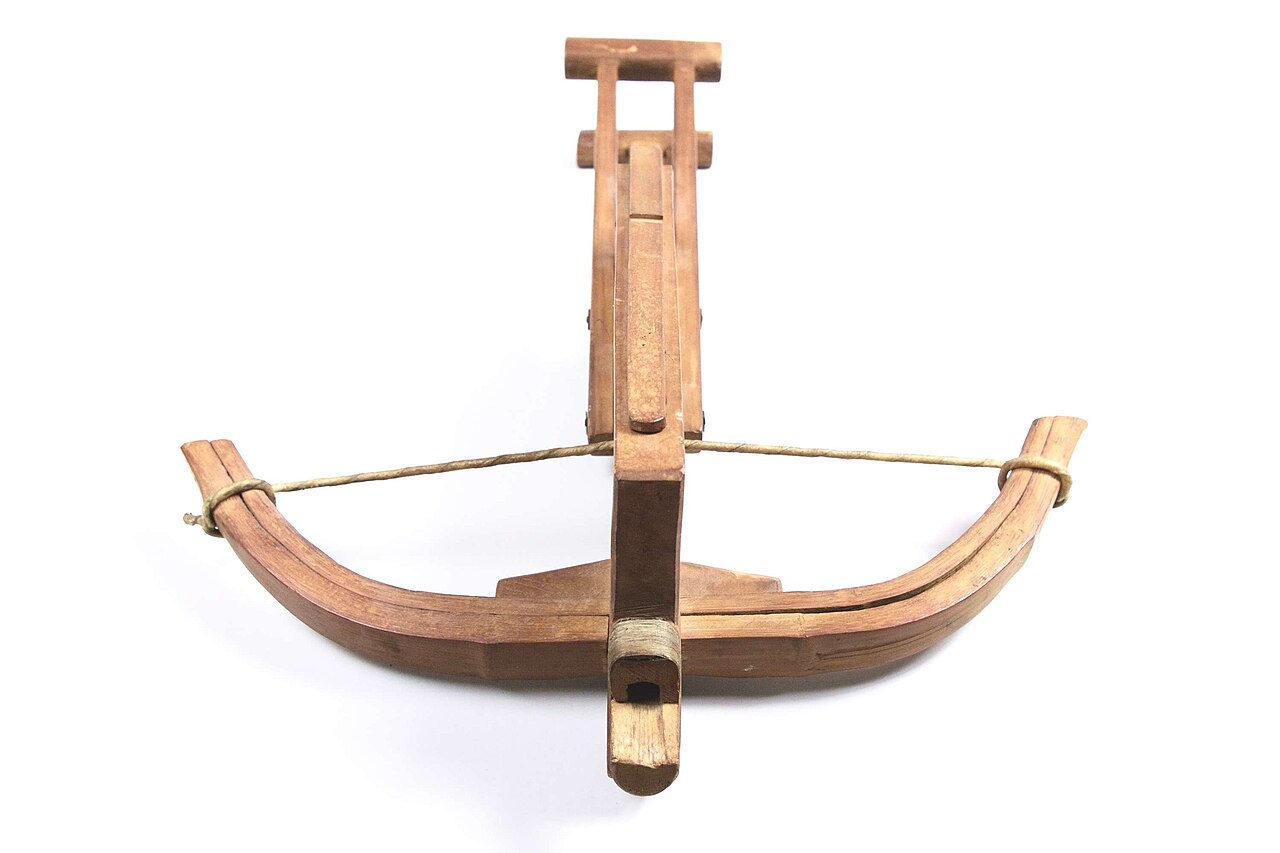
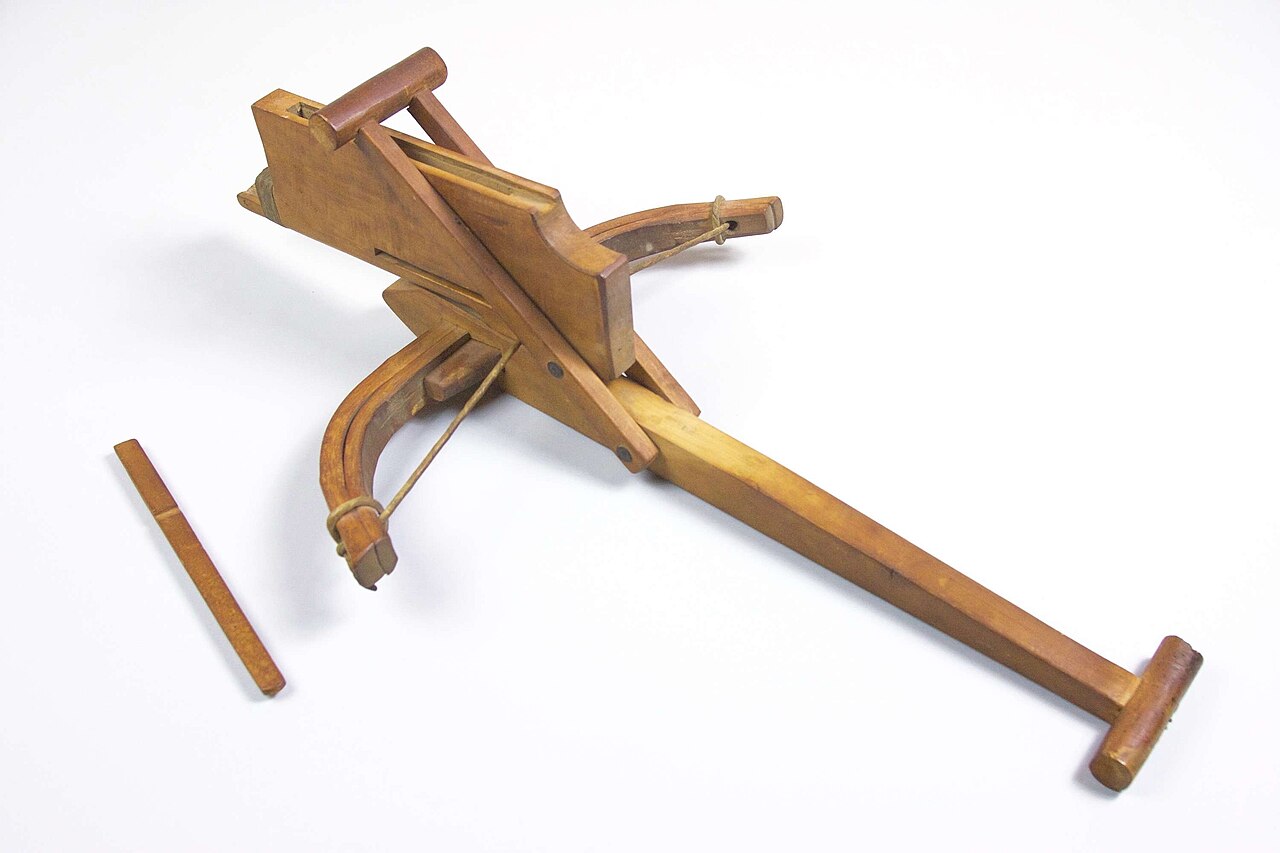
The repeating crossbow combined the actions of spanning the bow, placing the bolt, and shooting into a one-handed movement, thus allowing for a much higher rate of fire than a standard hand-held crossbow. The most common repeating crossbow design originated from the Ming Dynasty and consisted of a top-mounted magazine containing a reservoir of bolts which fed the crossbow using gravity, a rectangular lever attached to both the tiller and the magazine, and a tiller mounting the prods with a stock. By holding the tiller firmly against the hip while pushing and pulling the lever forwards and backwards, the user was able to catch the drawstring on to side notches at the back of the magazine while loading the bolt. A sliding lug nut at the back of the magazine pushed the drawstring out of the notches once the lever is fully pulled backwards; with the tiller pushing the nut up and enabling the drawstring to propel the loaded bolt. The Korean version mounted the magazine at the end of a longer stalk as well as a pivoting recurve bow as a prod; increasing the draw strength, span, range, and performance of the crossbow. Additionally, both the Ming Dynasty in China and the Joseon Dynasty in Korea developed variations that either shot two to three bolts per draw or fired pellets in place of bolts. An earlier version originated from the State of Chu during the Warring States period used a different design. It consisted of a tiller mounting a fixed double magazine on top as well as a pistol style grip at the bottom beneath the prods mount. Instead of an overhand lever for arming and shooting, it used a sliding lever that had a handle tied to the end with a chord. The lever was pumped forwards and backwards with one hand while the user held the pistol grip firm with the other hand; in a manner similar to drawing a regular bow. Within the crossbow, the lever was embedded with a special metal trigger composed of a latch and sear; the entire trigger being shaped like a crab's claw arm. Upon pushing the lever forward, the trigger was moved forward to catch the drawstring and becomes locked firm by friction and tensional forces from grooves inside the mounting lever and sear. Upon being drawn back, the draw string is spanned while the double magazine fed two bolts onto the firing slots on either side of the trigger once the drawstring is almost fully drawn. At the very end of the pulling action, the sear comes in contact with a round bar that holds the sliding lever in place. The bar pushed the sear forward to release the trigger and enable the drawstring to propel the two loaded bolts. Ultimately, it was superseded by the aforementioned design from the Ming Dynasty due to being overly complex with weaker performance.
Did You Know?
- The repeating crossbow was invented during the Warring States period in China, not by Zhuge Liang as commonly believed.
- The earliest archaeological evidence of a repeating crossbow comes from a Chu burial site dated to the 4th century BC.
- The Ming dynasty repeating crossbow used a push-and-pull lever mechanism, while the earlier Chu-state version used a pistol grip and a sliding lever.
- Handheld repeating crossbows were generally weak and often required poison (probably aconite) for lethality.
Origins in the Warring States
The repeating crossbow traces its roots to the Warring States period in China, specifically to the state of Chu. The earliest physical evidence comes from Tomb 47 at Qinjiazui in Hubei Province, where excavators uncovered a double-shot repeating crossbow dated to the 4th century BC. This ancient design differed markedly from later models: it featured a pistol-style grip beneath the prod mount and a fixed double magazine on top. Rather than the overhand lever seen in Ming-era weapons, this Chu crossbow employed a sliding lever with a chord-tied handle that the user pumped forward and backward with one hand while steadying the pistol grip with the other. Inside the mechanism, a metal trigger shaped like a crab's claw arm—comprising a latch and sear—caught the drawstring through friction and tensional forces from grooves in the mounting lever. The historical text Wu-Yue Chunqiu, composed during the Eastern Han dynasty, credits a man named Qin from the State of Chu with the invention, a claim corroborated by the archaeological find.
The Zhuge Liang Myth and Non-Military Reputation
Despite its common name, the repeating crossbow has no genuine connection to the Three Kingdoms strategist Zhuge Liang (181–234 AD). The association stems from a historical record that attributed improvements to multiple-bolt crossbows to him, but he did not invent the weapon. In practice, throughout most of Chinese history, the handheld repeating crossbow was viewed as a secondary, non-military implement. The 17th-century military compendium Wubei Zhi noted that the weapon was popular in southeast China yet lacked sufficient power, with bolts that rarely caused serious harm. The Tiangong Kaiwu, also from the 17th century, confined its utility to defending against robbers. Typical users included Confucian scholars, palace women, and timid men who needed a means of self-defense. Because the bolts fired weakly, users often tipped them with aconite-based poison—referred to as "tiger-killing poison"—so that even a superficial wound on a horse or human would prove fatal. The weapon's very limited effective range further underscored its role as a close-range household and hunting tool rather than a battlefield instrument.
Mechanical Design and Engineering Evolution
The defining engineering achievement of the repeating crossbow was collapsing three separate actions—spanning the bow, seating the bolt, and releasing the shot—into a single one-handed motion, dramatically increasing the rate of fire over a standard crossbow. The most widely recognized design, originating in the Ming dynasty, featured a top-mounted gravity-fed magazine holding a reservoir of bolts, a rectangular lever connected to both the tiller and the magazine, and a stock-mounted tiller carrying the prods. The operator braced the tiller against the hip and pushed the lever forward and backward; side notches at the magazine's rear caught the drawstring during the forward stroke, while a sliding lug nut at the back released it on the full backward pull, allowing the tiller to drive the nut upward and propel the loaded bolt. Korean Joseon Dynasty engineers adapted the concept by mounting the magazine on a longer stalk and fitting a pivoting recurve bow as the prod, which increased draw strength, span, and range. Both Chinese and Korean workshops also produced variants firing two to three bolts per cycle or discharging pellets instead of traditional bolts.
Military Applications and the Yang Xuan Episode
Although the handheld repeating crossbow was generally dismissed as a weak, non-military weapon, larger mounted versions saw genuine battlefield and naval service. During the Ming dynasty, repeating crossbows were deployed on warships, and much larger stationary designs served as siege and naval artillery. The weapon's military life extended into the 19th century, when it was still attested in Qing dynasty engagements against Japanese forces. One of the most remarkable early military applications occurred around 180 AD, when Yang Xuan, Grand Protector of Lingling, faced a rebel force with vastly inferior numbers. He loaded wagons with sacks of lime and mounted automatic crossbows powered by wheel-linkage on other wagons. Exploiting the wind, he sent clouds of blinding lime dust over the enemy, then set fire to rags on the tails of the horses pulling these driverless artillery wagons. As the horses charged into the obscured rebel formation, the wheel-driven crossbows fired repeatedly in random directions, inflicting heavy casualties. The rebels, blinded and confused, turned their own volleys on one another, allowing Yang's forces to close in and largely exterminate them.
Gallery
Frequently Asked Questions
What is the repeating crossbow?
It is a multi-bolt crossbow design originating in China's Warring States period that folds the draw, load, and fire actions into one continuous motion. The weapon is also called the repeater crossbow or the Zhuge crossbow (Chu-ko-nu) in popular usage.
Who invented the repeating crossbow?
The design dates to the Warring States era (475–220 BC), with the oldest surviving physical example recovered from a 4th-century BC Chu burial at Qinjiazui in Hubei. It is popularly credited to the Three Kingdoms strategist Zhuge Liang, though surviving records only tie him to later refinements of multi-bolt mechanisms rather than the original invention.
How fast can a repeating crossbow fire compared to a standard crossbow?
A trained operator could release seven to ten bolts in roughly fifteen to twenty seconds. By contrast, a conventional single-bolt crossbow typically manages only about two shots per minute, so the repeater multiplied individual output by several times.
What is the effective and maximum range of a repeating crossbow?
The weapon was built to hit targets reliably out to approximately seventy meters, with a maximum reach of around one hundred eighty meters. Beyond that distance the bolt lost too much kinetic energy for dependable penetration or accuracy.
Why is the repeating crossbow historically significant?
It solved the reloading bottleneck that limited a single crossbowman's battlefield contribution by integrating loading and firing into one trigger action. That allowed one soldier to deliver a volume of fire that previously required an entire squad of standard crossbow operators, reshaping infantry tactics throughout much of Chinese military history.
More in Crossbows 1-20
Spotted an error? Know more?
Reader corrections go straight into our review queue. Suggest an edit · How this site is sourced