Panjagan
A five-arrow volley weapon or technique of Sasanian heavy cavalry.

Panjagān is a projectile weapon or archery technique associated with the aswaran heavy cavalry of late Sasanian Persia. Its name, meaning 'five-fold' in Middle Persian, refers to a volley of five arrows shot simultaneously or in rapid succession. No physical examples have survived, but it is noted in later Islamic accounts, particularly as a decisive factor in the Persian conquest of Yemen.
- Name
- Panjagān
- Meaning
- Five-fold (Middle Persian)
- Associated with
- Aswaran heavy cavalry of Sasanian Persia
- Notable use
- Yemeni campaign of Wahriz against the Aksumites of Ethiopia
- Later use
- 684 AD, by Persian asāwira cavalry against spearmen at Basra
- Reported effect
- 2,000 arrows in one burst from 400 cavalrymen
Lore & Background
The panjagān is known only through references by later Islamic authors, including al-Tabari, al-Jahiz, and al-Maqdisi, who recorded its Arabized forms such as banjakān, fanjaqān, and fanrajān. Al-Tabari describes its use during the Sasanian campaign in Yemen under Wahriz against the Aksumite Ethiopians, noting that the Ethiopians were unfamiliar with it and were heavily defeated. A later account from 684 AD recounts how Persian asāwira cavalry, descendants of the Sasanian aswārān, used the panjagān to halt an advance of spearmen at the gates of Basra, firing 2,000 arrows in one burst from 400 men.
Analysis of the term is disputed. A. Siddiqi interpreted it as a five-pointed or five-barbed arrow, but C. E. Bosworth considered this unlikely and proposed it was a technique of rapid successive shooting. Ahmad Tafazzoli, however, suggested it was a device, likely a type of crossbow, and noted that a device capable of shooting five arrows simultaneously is described in the Ā'īn-Nāmah. Kaveh Farrokh has suggested the panjagān allowed archers to shoot with greater speed, volume, and focus, creating a 'kill zone', and may have been developed for wars against the Göktürks and Hephthalites.
Reader's Guide
The panjagān holds significance as a specialized weapon or technique of Sasanian heavy cavalry, reflecting the military adaptations of the late empire. Its reported use in the Yemeni campaign and later by the asāwira in Basra indicates it was employed in both imperial and post-imperial contexts. The ability to deliver a concentrated volley of five arrows—whether through a device or rapid shooting—would have provided a tactical advantage against infantry or agile cavalry, as suggested by its possible development against Göktürk and Hephthalite opponents. The lack of surviving examples and the conflicting interpretations among scholars underscore the uncertainty surrounding its exact nature. Nonetheless, its mention in multiple Islamic sources and its role in a decisive victory in Yemen have ensured its place in discussions of lost military technology. The panjagān remains a subject of analysis for understanding Sasanian warfare and the transmission of military knowledge into the Islamic period.
Did You Know?
- The name panjagān is reconstructed from Arabized forms recorded by al-Tabari, al-Jahiz, and al-Maqdisi.
- Al-Tabari records that the Ethiopians in Yemen were unfamiliar with the panjagān and were heavily defeated.
- In 684 AD, 400 Persian asāwira cavalry used panjagān to fire 2,000 arrows in one burst, forcing spearmen to retreat.
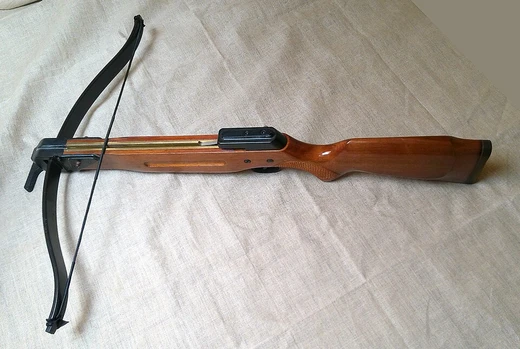
- Ahmad Tafazzoli proposed that panjagān was a type of crossbow, possibly capable of shooting five arrows simultaneously.
The Name and Its Linguistic Trail
The term panjagān carries a straightforward Middle Persian root meaning "five-fold," yet its survival in the historical record is entirely indirect. No Sasanian-era text preserves the word in its original form; instead, we encounter it only through the Arabized renderings of later Islamic writers. Al-Tabari offers two variants—banjakān and fanjaqān—while al-Jahiz and al-Maqdisi contribute a third, fanrajān. Al-Jawaliqi adds the closely related banjakiyya, which he glosses explicitly as "a volley of five arrows." This scatter of spellings across multiple medieval Arabic sources tells us the concept was well enough known to be discussed, even if the physical object or technique itself had vanished from living memory. The very fact that several independent authors felt the need to record and explain the term suggests it occupied a distinctive place in their understanding of Persian military heritage, a relic of an empire they could no longer fully reconstruct.
Two Battles, One Decisive Weapon
The panjagan enters the historical narrative through two dramatic episodes, both recorded by al-Tabari. In the first, the Sasanian general Wahriz leads a campaign in Yemen against the Aksumite forces of Ethiopia. The Ethiopians, al-Tabari notes, had never encountered this particular form of attack before, and its application proved to be the decisive factor tipping the battle toward Persian victory. The second episode is even more vividly quantified. In 684 AD, during the chaos of the Second Islamic Civil War, a force of four hundred asāwira—descendants of the old Sasanian aswārān heavy cavalry—pressed an assault on the gates of Basra. Their advance was checked by a wall of spearmen. The Persian commander Māh-Afrīdūn then ordered his riders to unleash the fanjaqān, and the result was a single burst of two thousand arrows—precisely four hundred riders times five—driving the spearmen back and killing the governor Mas'ud ibn Amr.
What Exactly Was the Panjagan?
Despite its prominence in the sources, no physical example of the panjagan has survived to the present day, leaving scholars to argue over its true nature. A. Siddiqi proposed it was a single arrow fitted with five barbs or points, a reading that C. E. Bosworth dismissed as improbable. Bosworth instead favored a purely tactical interpretation: a trained archer loosing five arrows in rapid succession. Ahmad Tafazzoli, drawing on his study of Middle Persian military vocabulary, pushed further, suggesting the term denoted an actual device—most likely a form of crossbow capable of firing five arrows at once. This mechanical reading finds a partial echo in the Ā'īn-Nāmah, a later text that describes a five-arrow simultaneous-firing mechanism. The debate thus spans the full spectrum from a simple arrowhead design, to a drilled shooting technique, to a compact poly-bolt engine, and the absence of any artifact means the question remains genuinely open.
Forging a Kill Zone Against Nomad Cavalry
Kaveh Farrokh offers a compelling strategic rationale for why the Sasanian aswaran would have developed or adopted the panjagan in the first place. The core idea is that the device or technique allowed a mounted archer to deliver a burst of arrows with greater speed, volume, and concentration than a single shot could achieve, effectively carving out a "kill zone" in which an enemy rider had almost no chance to maneuver. This tactical logic makes particular sense when viewed against the backdrop of Sasanian frontier wars, especially the prolonged conflicts with the Göktürks and the Hephthalites, both of whom fielded highly agile cavalry that thrived on speed and evasion. A five-arrow volley compressed into a single instant would have been devastating against such opponents, neutralizing their mobility advantage before they could close or disengage. In this light, the panjagan stands as a lost invention of the Sasanian military tradition, a purpose-built answer to the mounted archers of the steppe.
Frequently Asked Questions
What is Panjagān?
Panjagān is a rapid-fire archery technique or specialized projectile device employed by the aswaran heavy horsemen of the late Sasanian Empire. Rather than launching a single bolt, it was built around delivering a concentrated burst of five arrows in quick succession.
What does the name 'Panjagān' actually mean?
The term comes from Middle Persian and translates to 'five-fold,' a direct reference to the five-arrow volley that defined the technique. It essentially labels the weapon or method by its signature output.
Which military unit was Panjagān associated with?
It was the signature tactic of the aswaran, the elite heavy cavalry arm of Sasanian Persia. These heavily armored horsemen used the five-arrow burst to overwhelm infantry formations at close range.
Where does Panjagān appear in recorded history?
Later Islamic-era sources credit it as a decisive factor in Wahriz's campaign to push the Aksumite Ethiopians out of Yemen. It is also cited in a 684 AD engagement at Basra, where Persian asāwira cavalry reportedly unleashed the volley against a spearmen line.
What was the reported scale of a Panjagān volley?
One account describes 400 mounted archers releasing a combined 2,000 arrows in a single coordinated burst. No surviving physical examples of the device exist, so all figures come entirely from these later written records.
More in Crossbows 1-20
Spotted an error? Know more?
Reader corrections go straight into our review queue. Suggest an edit · How this site is sourced