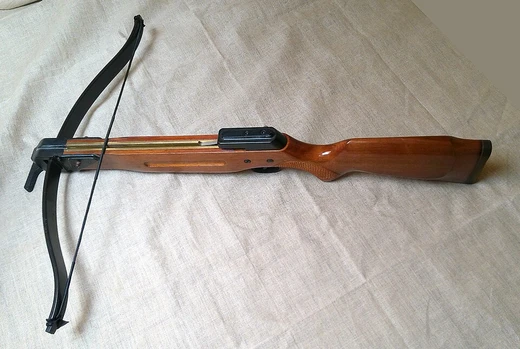
Bullet-shooting crossbow
A crossbow variant firing bullets or stones instead of bolts.

Unknown author · Public domain
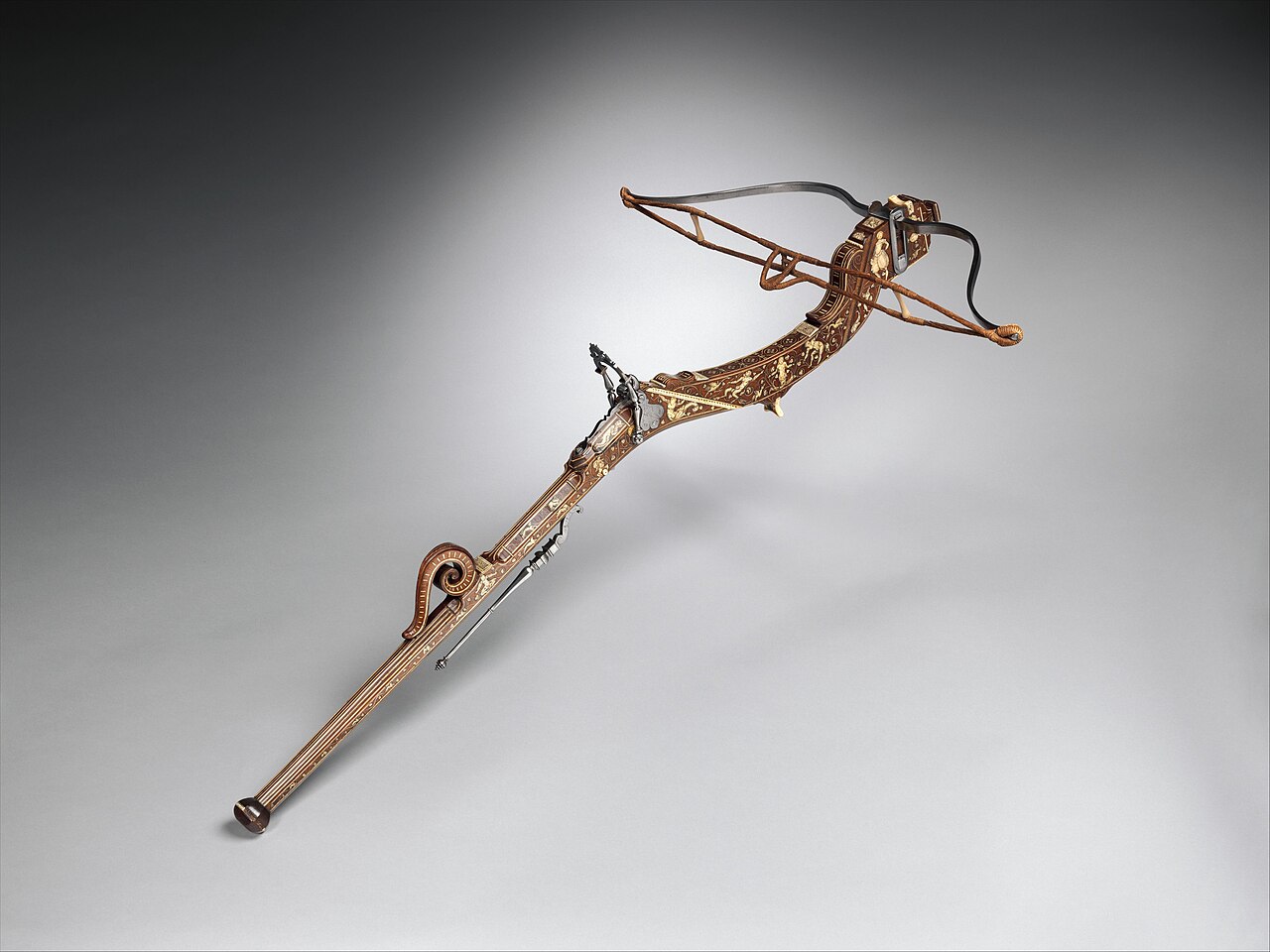
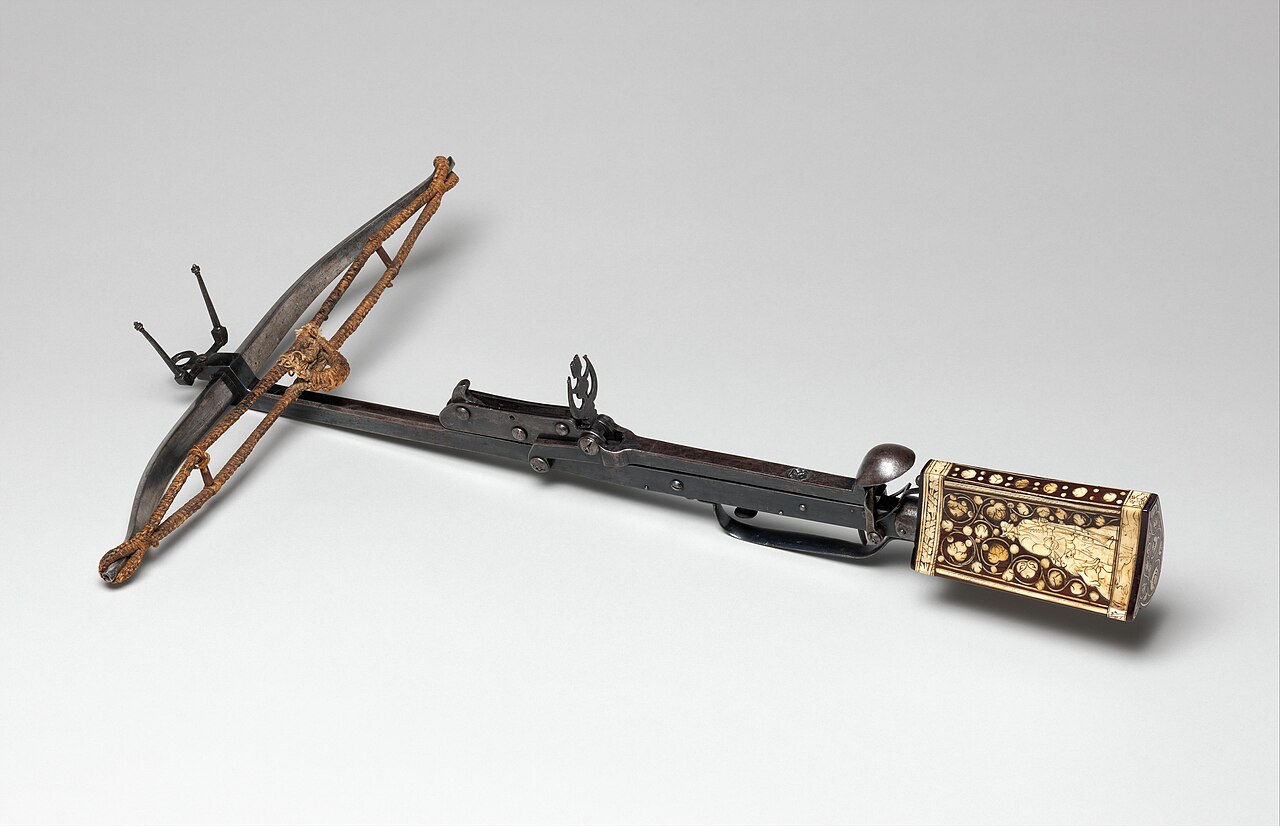
A bullet-shooting crossbow—also called a prodd, pelletbow, ballester, stone bow, or rock-throwing crossbow—is a variation of the standard crossbow. Instead of firing bolts or quarrels, it typically launches bullets or stones. The bow itself could be made from wood or steel, depending on the maker’s choice.
The crossbow first appeared in the 7th century BC, with China producing the earliest handheld versions. These original crossbows used bronze bolts and served effectively in both combat and hunting. However, the bolt-firing crossbow was too powerful for small game like birds, squirrels, and rabbits. Because the standard crossbow was far more popular, it received most of the upgrades—new ammunition, attachments, and other improvements—while the bullet-shooting version lagged behind. Interestingly, the Western-Han era mathematician and music theorist Jing Fang (78–37 BC) compared the moon’s shape to a round crossbow bullet when explaining that the moon, being spherical, produced no light of its own and was only illuminated by the sun.
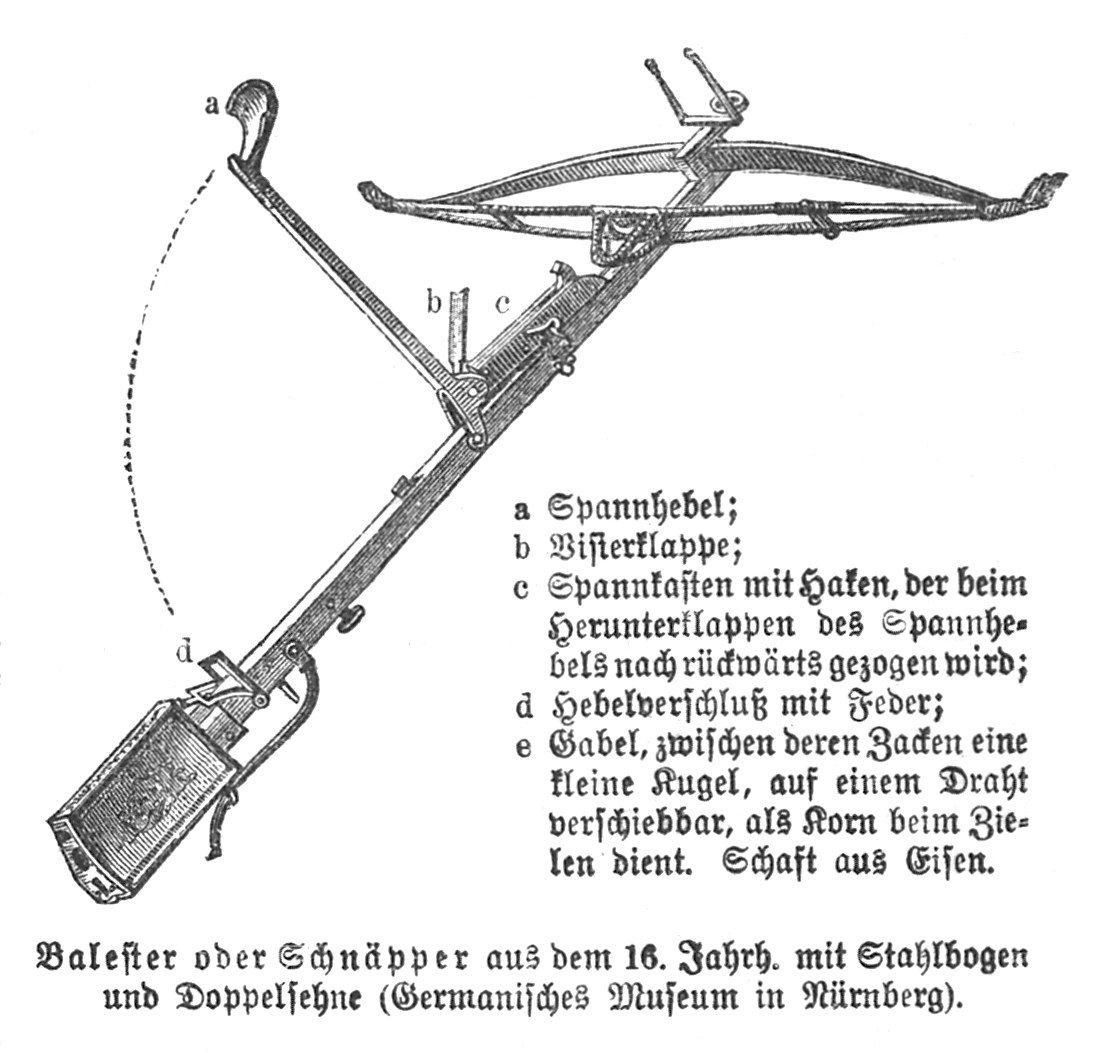
The earliest known bullet-shooting crossbow dates to the 16th century. It was a simple two-string design that shot small projectiles. Early ammunition included clay balls, which were rolled and baked into hard, round bullets. Its main purpose was hunting birds, since conventional weapons struggled to hit flying targets. The lighter pellets flew faster, giving the shooter a better chance at a moving animal.
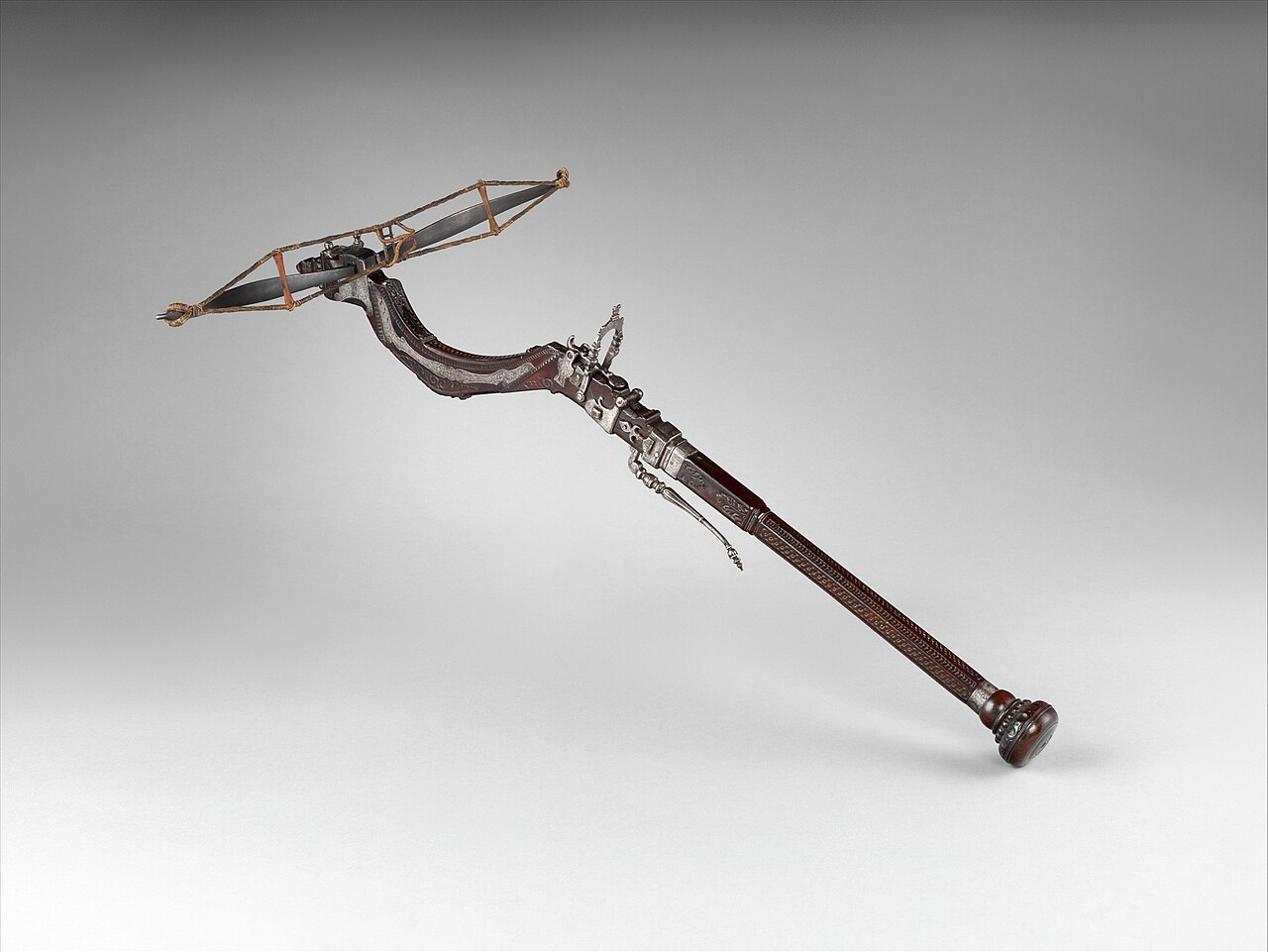
A key innovation was the strong, upwardly curved bow. This design moved the strings and pouch—which held and launched the bullet—away from the rest of the weapon, allowing for a straighter stock. That straighter body could use stronger springs to launch bullets faster and more accurately.
Despite its use in hunting, the bullet-shooting crossbow saw little improvement until the late 18th century. English makers then redesigned it for a more powerful spring and larger ammunition. The bow was adapted to fire half-ounce lead bullets, which were more accurate and caused far more damage than stones or clay pellets.
The weapon shared many features with the slingshot: both used a pouch to hold a small projectile. In side-by-side tests, the bullet-shooting crossbow was only slightly faster but much more accurate than a slingshot.
- Earliest known invention
- 16th century
- Earliest ammunition
- clay balls, rolled and baked
- Bow materials
- wood or steel
- Later ammunition
- half ounce lead bullets
- Notable user
- Jing Fang (78–37 BC), Western-Han era Chinese mathematician and music theorist
- Primary use
- hunting small animals like birds and rats
Lore & Background
The earliest known bullet-shooting crossbow was invented in the 16th century. It was a simple, two-string crossbow that shot small projectiles. The earliest forms of ammunition included clay balls, which were rolled and baked to form round, hard bullets. The bow's primary purpose was to shoot birds, as conventional weapons lacked the ability to effectively hunt flying prey. The lighter projectiles from a pellet bow flew faster, so the shooter had a better chance of hitting a moving target.
One of the most important changes to the bullet-shooting crossbow was the strong, upwardly curved bow. This allowed the strings and pouch, which hold and launch the bullet, to be placed away from the rest of the gun. This allowed for a straighter stock or body of the crossbow, which utilizes stronger springs to launch bullets faster and more accurately.
Though it was used extensively for hunting, the bullet-shooting crossbow was not significantly improved until the late 18th century. The English changed the design to allow for a more powerful spring and larger ammunition. The bow was adapted to shoot half ounce lead bullets, which are more accurate and do much more damage than stones and clay pellets.
Reader's Guide
The bullet-shooting crossbow filled a specific niche: hunting small, fast-moving animals such as birds and rats. Its quiet operation made it advantageous even after more powerful weapons like air guns appeared, because it did not scare prey off. However, it had significant limitations as a weapon of war. The velocity was too low for bullets or stones to reliably pierce human skin, and the blunt projectiles did far less damage than the sharp bolts of a standard crossbow. Steel bows, while durable, required more energy to return to position and therefore delivered less energy to the shot than wooden bows. With the invention of safe, more powerful, and more accurate rifles, the bullet-shooting crossbow became obsolete shortly after the 19th century began. Gunpowder weapons quickly became the new choice for both hunting and war. Despite its obsolescence, the bullet-shooting crossbow was used extensively throughout history because it was quiet enough not to scare prey, and it was effective for taking small game without the overkill of a bolt-shooting crossbow.
Did You Know?
- The Western-Han era mathematician Jing Fang compared the shape of the moon to a round crossbow bullet.
- The upwardly curved bow was the change that most affected the bullet-shooting crossbow.
- The English adapted the bow to shoot half ounce lead bullets in the late 18th century.
Origins and the Problem of Flying Prey
The bullet-shooting crossbow emerged in the sixteenth century as a purpose-built solution to a gap left by conventional crossbows. While the standard bolt-firing crossbow had been in use since at least the seventh century BC—first developed in China with bronze ammunition—it proved ill-suited for taking down small, fast-moving targets such as birds, squirrels, and rabbits. The earliest known pelletbow was a simple two-string design that launched small round projectiles. Its initial ammunition consisted of clay balls, carefully rolled into shape and then baked until hard enough to serve as effective bullets. The core advantage was straightforward physics: lighter projectiles left the bow at higher speed than heavy bolts, giving the shooter a significantly improved chance of striking a target in flight. This made the pelletbow an indispensable tool for hunters who needed to take birds without the overkill and inaccuracy of a full-sized crossbow.
Engineering Refinements and the English Upgrade
A transformative design change came in the form of a strongly upwardly curved bow. This geometry allowed the strings and the launching pouch to be positioned well away from the main body of the weapon. The result was a straighter stock that could house far stronger springs, which in turn propelled bullets at greater speed and with improved accuracy. For a long period after this innovation, however, the pelletbow saw relatively little further development. That changed in the late eighteenth century, when English craftsmen reworked the design to accommodate a more powerful spring and a larger caliber of ammunition. The new standard load was a half-ounce lead bullet, a significant upgrade over the earlier clay pellets and stones. Lead proved both more accurate and far more damaging on impact than the older round projectiles. This English refinement represented the high-water mark of the bullet-shooting crossbow's mechanical evolution.
Stealth, Accuracy, and the Hunter's Choice
One of the bullet-shooting crossbow's most enduring advantages was its near-silence. Because it operates as a crossbow mechanism, it produces very little sound when fired, a quality that kept prey from being startled and fleeing before the shot landed. This quiet operation gave it a practical edge over louder alternatives, including later air guns, and is a major reason the weapon remained in active use across many centuries. In terms of performance, the pelletbow occupied a middle ground between other small-arms tools. In direct comparison tests, it fired only slightly faster than a slingshot but delivered far greater accuracy. A catapult, by contrast, could achieve higher velocity and reasonable accuracy, yet it lacked the raw power of a strong pelletbow, and the elastic materials it relied upon were a relatively modern development. For hunters targeting birds, rats, and other small game, the combination of low noise, small-caliber rounds, and dependable precision made the bullet-shooting crossbow an ideal and long-lasting choice.
War Ineffectiveness and the Long Decline
Despite its hunting utility, the bullet-shooting crossbow never proved viable on the battlefield. Its fundamental weakness was velocity: the bullets and stones it launched simply could not penetrate human skin with reliable force. The only scenario in which it could inflict serious harm was a direct strike to the skull, an imprecise and unreliable method of killing an enemy. In every other respect, the blunt, slow-moving projectiles paled in comparison to the sharp bolts of the standard crossbow, which inflicted far more damage and remained the preferred weapon in wartime. Material choice also limited performance; steel bows demanded more energy to return to their resting position, leaving less force available for the shot itself. Wooden bows consistently outperformed their steel counterparts in launch speed. By the nineteenth century, the arrival of safe, powerful, and accurate rifles—fueled by gunpowder's far greater destructive capacity—sealed the pelletbow's fate. Guns rapidly displaced it in both hunting and combat, and the bullet-shooting crossbow became obsolete.
Gallery
Frequently Asked Questions
What is a bullet-shooting crossbow?
It is a crossbow variant designed to propel bullets or stones rather than the standard bolts or quarrels. The device is also known by names such as prodd, pelletbow, ballester, and rock-throwing crossbow.
What kind of ammunition did the bullet-shooting crossbow fire?
The earliest projectiles were clay balls that were rolled into shape and then baked hard. Later iterations switched to half-ounce lead bullets.
When was the bullet-shooting crossbow first invented?
The earliest known version dates to the 16th century. Its bow could be fashioned from either wood or steel, depending on the maker's preference.
What was the bullet-shooting crossbow primarily used for?
It was built for hunting small game such as birds and rats. The standard bolt-firing crossbow proved far too powerful for those smaller targets, so this lighter variant filled that niche.
Who is a notable historical user of the bullet-shooting crossbow?
Jing Fang, a Chinese mathematician and music theorist active during the Western-Han era (78–37 BC), is recorded as a notable user of the device.
More in Crossbows 1-20
Spotted an error? Know more?
Reader corrections go straight into our review queue. Suggest an edit · How this site is sourced