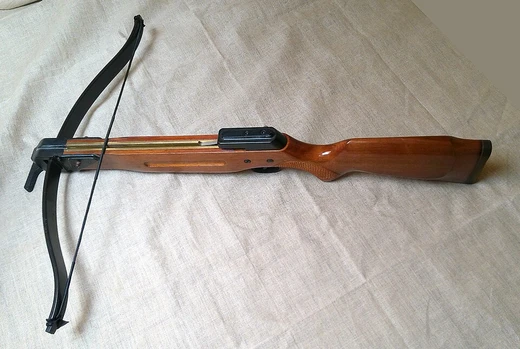
History of crossbows
A mechanical bow that shaped ancient and medieval warfare across continents.

The crossbow is a ranged weapon consisting of a bow mounted on a stock, which fires projectiles such as bolts or quarrels. It is notable for its mechanical trigger mechanism, which allows the user to hold the weapon cocked and ready to fire, enabling greater accuracy and force compared to a traditional bow. The crossbow appeared independently in China by the 7th century BCE and in Greece around the 5th or 4th century BCE, and it became a primary military weapon in China from the Warring States period through the Han dynasty.
- Earliest known appearance
- China by 7th century BCE; Greece around 5th or 4th century BCE
- Earliest archaeological evidence
- Bronze crossbow locks from China dating to around 650 BCE
- Maximum military composition
- Up to 30 to 50 percent crossbowmen in Han dynasty armies
- Effective range tang dynasty
- 225 m (standard crossbow)
- Maximum range tang dynasty
- 345 m (standard crossbow, hit target half the time)
- Entry level draw weight han dynasty
- 76 kg
- Ideal expeditionary army composition tan
- 2,200 archers and 2,000 crossbowmen out of 20,000
Lore & Background
The exact origins of the crossbow are uncertain, but it is thought to have first appeared in China by the 7th century BCE and in Greece around the 5th or 4th century BCE. In China, it served as a major military weapon from the Warring States period through the end of the Han dynasty, with armies sometimes consisting of 30 to 50 percent crossbowmen. Its popularity declined after the Han fell, likely due to the rise of heavy cavalry during the Six Dynasties. A Tang dynasty source advises a ratio of five bows to one crossbow and recommends the countermarch technique to compensate for the crossbowman's slower rate of fire. This technique was further developed during the Song dynasty, but military use of crossbows continued to drop after the Mongol conquest of China. Though it never regained its Han-era prominence, the crossbow was never fully abandoned; as late as the 17th century, military theorists still advocated for its wider adoption, but production had already shifted toward firearms and traditional composite bows.
In the West, a crossbow called the gastraphetes was recorded by the 1st-century AD Greco-Roman scientist Heron of Alexandria, who considered it a precursor to the catapult, suggesting it appeared before the 4th century BCE during the Classical period. Additional evidence for ancient European crossbows includes two stone relief carvings from a Roman grave in Gaul and vague references by Vegetius. A mounted crossbow machine, the oxybeles, was in use during the 4th century BCE. Pictish carvings from medieval Scotland, dating between the 6th and 9th centuries AD, depict what seem to be crossbows, but only for hunting, not warfare. It remains unclear how common crossbows were in Europe before the medieval period or whether they were used in battle. The limited evidence suggests the ancient European crossbow was mainly a hunting tool or a minor siege weapon, though torsion engines like the ballista are not considered crossbows. European sources do not mention crossbows again until 947 AD, when one was used as a French weapon at the siege of Senlis. From the 11th century onward, crossbows and their users held a high status in medieval European militaries, except in England, where the longbow remained preferred. During the 16th century, military crossbows in Europe were replaced by gunpowder weapons like cannons and muskets, though hunters continued using them for another 150 years, valuing their silence.
It is speculated that medieval European crossbows originated in China, though differences exist between the trigger mechanisms of European and Chinese crossbows.
A crossbowman or crossbow-maker is sometimes called an arbalist or arbalest. The projectiles are referred to as arrows, bolts, or quarrels. The bow of the crossbow is called the lath or prod; according to W.F. Peterson, the term "prod" came into use in the 19th century due to a mistranslation of "rodd" in a 16th-century list of crossbow equipment. The wooden body that holds the bow is the stock, also known as the medieval tiller. The release mechanism—including the string, sears, trigger lever, and housing—is called the lock.
In China, archaeological evidence includes cast bronze crossbow locks dating to around 650 BCE, found at Qufu, Shandong (the former capital of Lu), in Tombs 3 and 12, dating to the 6th century BCE. Bronze crossbow bolts from the mid-5th century BCE were discovered at a Chu burial site in Yutaishan, Jiangling County, Hubei Province. Other early finds come from Tomb 138 at Saobatang, Hunan Province, dating to the mid-4th century BCE. These early crossbows may have used spherical pellets as ammunition. The Western-Han mathematician and music theorist Jing Fang (78–37 BCE) compared the moon to the shape of a round crossbow bullet, and Zhuangzi also mentions crossbow bullets. The earliest Chinese texts mentioning crossbows are from the 4th to 3rd centuries BCE, attributed to followers of Mozi, which refer to a giant crossbow used between the 6th and 5th centuries BCE, during the late Spring and Autumn period. Sun Tzu's *The Art of War* (first appearing between 500 BCE and 300 BCE) describes crossbow characteristics and use in chapters 5 and 12, comparing a drawn crossbow to "might." The state of Chu favored elite armored crossbow units known for their endurance, capable of marching 160 km without resting. Wei's elite forces could march over 40 km in one day while wearing heavy armor, carrying a large crossbow with 50 bolts, a ji strapped to their back, a helmet, a side sword, and three days' rations; those meeting these standards earned exemption from corvée labor and taxes for their families. The *Huainanzi* advises against using crossbows in marshland where the soft surface makes foot-cocking difficult. The *Records of the Grand Historian* (completed in 94 BCE) mentions that Sun Bin defeated Pang Juan by ambushing him with crossbowmen.
Reader's Guide
The crossbow's significance lies in its long history as a military and hunting weapon across multiple civilizations. In China, it was a standard weapon of Han armies, with mass production in state armouries and designs improving over time. The crossbow allowed soldiers with less training to deliver powerful, accurate shots, and its mechanical lock enabled sustained volley fire tactics such as the countermarch. Despite declining after the Han dynasty, it saw a mild resurgence during the Tang dynasty, where it was used in volley fire formations coordinated by drumbeat. The Song dynasty attempted to restrict military crossbows to private homes, but civilian use as a hunting weapon and pastime increased. The Yuan dynasty employed specialist siege units called the 'Artillery Army' or 'Crossbow Army' as well as indigenous troops who used poison-tipped bolts. By the late Ming dynasty, production had shifted toward firearms, with no crossbows mentioned as produced from 1619 to 1622.
In Europe, the crossbow's legacy is marked by its high status from the 11th century onward, until it was superseded by gunpowder weaponry in the 16th century. Hunters continued to carry the crossbow for another 150 years, favoring it for its silence. The crossbow's influence on military tactics, such as volley fire and siege warfare, and its role as a transitional weapon between the bow and firearms, underscore its enduring impact. The weapon's design also influenced later mechanical artillery, though torsion engines like the ballista are not considered crossbows.
Did You Know?
- The earliest known crossbow locks, made of cast bronze, have been found in China dating to around 650 BC.
- A Tang dynasty military manual from 759 shows a technique for crossbowmen to engage in volley fire, coordinated by drumbeat.
- In the 2nd century AD, Chen Yin gave advice on shooting with a crossbow in the Wuyue Chunqiu.
- During the Song dynasty, romantic young people from rich families formed crossbow shooting clubs as a pastime.
Origins and Archaeological Evidence
The precise moment the crossbow first appeared remains uncertain, but evidence points to China as its birthplace, with the weapon emerging no later than the seventh century BCE. In the Greek world, crossbow-like devices surfaced two centuries later, during the fifth or fourth century BCE. Chinese excavations have yielded cast-bronze crossbow locks dating to around 650 BC, recovered from tombs at Qufu in Shandong. Bronze bolts from the mid-fifth century BC were found at a Chu burial site in Hubei, while a mid-fourth-century BC find at Saobatang in Hunan suggests some early models may have fired spherical pellets rather than arrows. Literary references reinforce the material record: the philosopher Zhuangzi mentions crossbow bullets, and the mathematician Jing Fang likened the moon to a round crossbow projectile. The earliest written descriptions come from fourth- and third-century BC texts linked to followers of Mozi, describing a giant crossbow in use as far back as the sixth century BC. Sun Tzu's Art of War dedicates passages to crossbow characteristics and tactical use, comparing a drawn crossbow to raw might. In the Western world, Heron of Alexandria catalogued a crossbow called the gastraphetes in the first century AD, positioning it as a precursor to the catapult.
Military Supremacy and Decline in China
From the Warring States period through the end of the Han dynasty, the crossbow served as a backbone weapon of Chinese armies, with crossbowmen comprising as much as thirty to fifty percent of total forces. Elite units demonstrated extraordinary endurance: Chu's armoured crossbow squads could march 160 kilometres without resting, while Wei's select troops covered over 40 km in a single day while carrying heavy armour, a large crossbow loaded with fifty bolts, a ji, a buckle helmet, a side sword, and three days of rations. Soldiers meeting these standards earned a family-wide exemption from corvée labour and taxes. Tactical doctrine evolved around the weapon's limitations; a Tang dynasty source recommended a five-to-one bow-to-crossbow ratio and employed the countermarch technique to compensate for the crossbow archer's slower reload rate. The Song dynasty further refined this countermarch method. Yet after the fall of the Han, the rise of resilient heavy cavalry during the Six Dynasties eroded the crossbow's dominance. The Mongol conquest dealt another blow, and although the weapon was never entirely retired, production gradually shifted toward firearms and composite bows. Even in the seventeenth century, military theorists still advocated wider crossbow adoption, but the momentum had already passed.
European Adoption and the Medieval Crossbow
The crossbow's presence in ancient Europe is sparse and ambiguous. Heron of Alexandria described a device called the gastraphetes in the first century AD, and a mounted crossbow machine known as the oxybeles appeared in the fourth century BC. Stone relief carvings from a Roman grave in Gaul and vague references by Vegetius provide additional but inconclusive evidence. Pictish imagery from medieval Scotland, dated between the sixth and ninth centuries, depicts what appear to be crossbows, but exclusively in a hunting context. The overall picture suggests the ancient European crossbow functioned primarily as a hunting tool or minor siege implement, with its military role remaining unclear. European sources go silent on the weapon until 947 AD, when it appears as a French implement during the siege of Senlis. From the eleventh century onward, crossbowmen rose to a position of high prestige within medieval European armies, with the notable exception of the English, who continued to favour the longbow. By the sixteenth century, gunpowder weapons such as cannons and muskets had displaced the military crossbow. Hunters, however, retained the crossbow for another 150 years, valuing its silence over the noise of firearms.
Terminology, Anatomy, and Cross-Cultural Design
The vocabulary surrounding the crossbow reflects centuries of linguistic layering. A crossbowman or its maker is sometimes called an arbalist or arbalest, while the projectile goes by the names arrow, bolt, or quarrel. The bow itself is termed the lath or prod; the latter word entered usage in the nineteenth century after a mistranslation of the sixteenth-century term rodd in a list of crossbow components. The wooden body on which the bow is mounted is called the stock, though medieval texts also use the word tiller. The release mechanism, encompassing the string, sears, trigger lever, and housing, is collectively known as the lock. Despite speculation that medieval European crossbows descended from Chinese models, the two traditions developed distinct trigger mechanisms, underscoring that the weapon's global spread involved independent adaptation rather than simple copying. Practical shooting doctrine also varied: the second-century AD Chinese text Wuyue Chunqiu prescribed a posture of absolute bodily stillness, instructing the archer to hold breath, swallow, and release the arrow in a single coordinated exhalation, so that the left hand remained unaware of the right hand's trigger pull.
Frequently Asked Questions
When was the crossbow first invented?
The crossbow emerged independently in two regions: in China by the 7th century BCE and in Greece sometime in the 5th or 4th century BCE. Neither culture is believed to have copied the design from the other.
What's the oldest crossbow artifact ever found?
The earliest surviving physical evidence comes from bronze crossbow trigger locks unearthed in China, dating back to roughly 650 BCE. These mechanical components predate any known wooden crossbow stock or bow assembly.
How many crossbowmen served in Han dynasty armies?
At peak deployment, crossbowmen could make up anywhere from thirty to fifty percent of a Han dynasty military force. This made the crossbow arguably the backbone of Chinese ranged warfare during that era.
How far could a Tang dynasty crossbow shoot?
A standard Tang dynasty crossbow had a reliable effective range of about 225 meters, with a maximum reach of roughly 345 meters where it could still hit a target about half the time. These figures made it one of the most powerful ranged weapons of its era.
What made the crossbow different from a regular bow?
The defining feature is its mechanical trigger, which lets the shooter lock the bowstring in the cocked position and aim at leisure before releasing. This design allowed even less-trained soldiers to deliver a powerful, accurate shot that would be far harder to replicate with a traditional longbow.
More in Crossbows 1-20
Spotted an error? Know more?
Reader corrections go straight into our review queue. Suggest an edit · How this site is sourced