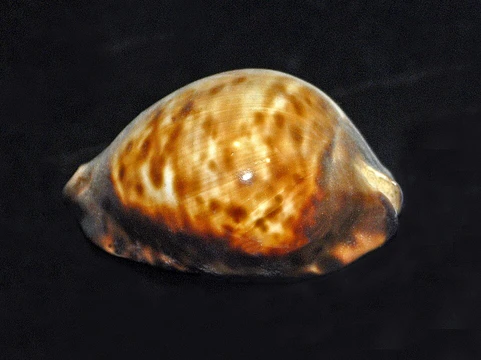
Zonarina (gastropod)
Extinct cowry genus from the Oligocene to Miocene of Europe.

Zonarina is an extinct genus of cowry, a type of marine gastropod mollusk belonging to the subfamily Zonariinae within the family Cypraeidae. Its only known remains are fossils, which have been discovered in marine deposits dating from the Oligocene through the Miocene epochs, spanning roughly 23 million to 5.3 million years ago. These fossils have been found in Italy and France.
The genus was established by Sacco, who originally included a single species, *Cypraea pinguis*, along with two varieties, *longovulina* and *spiratina*, both described in 1894. Later, Dolin and Lozouet (2004) designated *Cypraea pinguis longovulina* as the type species by original designation. However, under Article 68.3 of the zoological code, *Cypraea pinguis* itself is considered the type species by monotypy, regardless of any subspecies cited.
Quick Facts
- Taxon
- Zonarina
- Type Species
- Cypraea annulus var. pinguis / Grateloup, 1846
Facts from the source article.
Lore & Background
The genus Zonarina was established by Sacco in 1894, who included the single species Cypraea pinguis with two varieties, longovulina and spiratina. Dolin & Lozouet later cited Cypraea pinguis longovulina as the type species by original designation, but under Article 68.3 of the nomenclatural code, Cypraea pinguis itself is the type species by monotypy, regardless of any cited subspecies. This taxonomic nuance reflects the ongoing refinement of fossil cowry classification.
Fossils of Zonarina are known from marine strata in Italy and France, spanning the Oligocene to the Miocene epochs, approximately 23.03 to 5.332 million years ago. The genus is placed within the subfamily Zonariinae of the family Cypraeidae, the cowries. As an extinct lineage, Zonarina contributes to understanding the evolutionary history of cowries in the European fossil record.
Reader's Guide
Zonarina holds significance as an extinct cowry genus that documents the diversity of Cypraeidae during the Oligocene and Miocene in Europe. Its fossils, found in Italy and France, provide a window into the marine gastropod faunas of that period. The taxonomic history of Zonarina illustrates the complexities of type species designation: while Dolin & Lozouet designated a subspecies as the type, the rules of nomenclature (Article 68.3) establish the nominal species Cypraea pinguis as the type by monotypy. This distinction is important for systematic studies and for correctly applying the genus name to fossil material. The genus is part of the subfamily Zonariinae, a group within the cowry family that includes both extinct and extant members. Its legacy lies in its contribution to the fossil record of cowries, helping paleontologists trace the evolution and biogeography of this group in the Mediterranean region. The works of Sacco, Dolin & Lozouet, and Lorenz have documented and contextualized Zonarina within the broader framework of Cypraeidae systematics.
Did You Know?
- Zonarina is an extinct genus of cowry in the subfamily Zonariinae.
- Its type species is Cypraea pinguis, established by monotypy under Article 68.3.
- Fossils of Zonarina are known from Italy and France, ranging from the Oligocene to the Miocene.
- The genus was originally described by Sacco in 1894 with a single species and two varieties.
More in Cowries, Part 2 1-24
Spotted an error? Know more?
Reader corrections go straight into our review queue. Suggest an edit · How this site is sourced