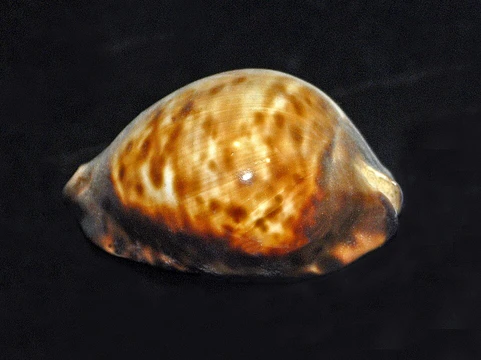
Blasicrura
A genus of cowries with debated species boundaries.

Blasicrura is a genus of sea snails, specifically marine gastropod mollusks belonging to the cowrie family, Cypraeidae. The World Register of Marine Species (WoRMS) recognizes the following species within the genus: *Blasicrura interrupta*, *Blasicrura pallidula* (with subspecies *Blasicrura pallidula luchuana* and *Blasicrura pallidula pallidula*), and *Blasicrura summersi*. The Indo-Pacific Molluscan Database additionally lists *Blasicrura luchuana* and *Blasicrura quadrimaculata* as currently used names, though WoRMS accepts the latter as *Eclogavena quadrimaculata*. Many other names once placed in *Blasicrura* have since been moved to other genera, such as *Bistolida*, *Eclogavena*, *Talostolida*, and *Ovatipsa*, making them synonyms.
- Family
- Cypraeidae
- Type
- sea snails, marine gastropod mollusks
- Current species according to worms
- Blasicrura interrupta, Blasicrura pallidula, Blasicrura pallidula luchuana, Blasicrura pallidula pallidula, Blasicrura summersi
- Additional names in current use per indo
- Blasicrura luchuana, Blasicrura quadrimaculata (accepted by WoRMS as Eclogavena quadrimaculata)
Lore & Background
The genus Blasicrura was established within the cowry family Cypraeidae. According to the World Register of Marine Species, the genus currently includes five species: Blasicrura interrupta, Blasicrura pallidula (with subspecies Blasicrura pallidula luchuana and Blasicrura pallidula pallidula), and Blasicrura summersi. The Indo-Pacific Molluscan Database additionally lists Blasicrura luchuana and Blasicrura quadrimaculata as names in current use, though the latter is accepted by WoRMS as Eclogavena quadrimaculata.
Many species once placed in Blasicrura have since been moved to other genera. For example, Blasicrura alisonae is a synonym of Blasicrura pellucens, which itself is now accepted as Talostolida pellucens. Other former members have been reassigned to Eclogavena, Bistolida, Talostolida, and Ovatipsa. This reflects ongoing taxonomic refinement within the cowries.
Reader's Guide
The significance of Blasicrura lies in its role as a taxonomic grouping within the diverse cowry family. While the genus has been narrowed in scope, its history illustrates the challenges of classifying marine gastropods. The species Blasicrura interrupta and Blasicrura pallidula remain stable members, but many others have been reassigned to genera such as Eclogavena, Bistolida, Talostolida, and Ovatipsa. This fluidity underscores the importance of ongoing systematic review. For collectors and malacologists, Blasicrura represents a case study in how morphological and molecular data can reshape taxonomic understanding. The genus's legacy is tied to the broader effort to accurately catalog cowry diversity across the Indo-Pacific.
Did You Know?
- Blasicrura is a genus of sea snails in the family Cypraeidae.
- The World Register of Marine Species lists five species in Blasicrura.
- Many former Blasicrura species are now placed in genera such as Bistolida, Talostolida, and Eclogavena.
Taxonomic Placement and Classification
Blasicrura is a genus of marine gastropod mollusk belonging to the family Cypraeidae, the cowries. It was described by Iredale in 1930. Notably, it is one of the genera within Cypraeidae that has not been assigned to any of the recognized subfamilies, leaving it in a taxonomic position distinct from the six subfamilies outlined in the 2005 Bouchet and Rocroi framework. The family itself falls under the superfamily Cypraeoidea, which groups cowries together with their close allies. In that broader phylogenetic arrangement, Cypraeoidea sits within the clade Littorinimorpha, which in turn is part of Hypsogastropoda. This places Blasicrura among a diverse assemblage of sea snails sharing a common evolutionary lineage. The genus exists alongside many others in the family, some extant and others known only from the fossil record, reflecting the deep evolutionary history of this group of marine snails.
Shell Morphology and the Cowry Body Plan
As a member of Cypraeidae, Blasicrura shares the defining shell characteristics of the cowry family. Adult cowry shells are notably rounded and ovate, bearing little resemblance to the coiled, spiraled shells typical of many other gastropods. The upper surface is generally convex while the underside is flattened, and in fully mature specimens the spire is typically not visible. A long, narrow aperture runs along the ventral side, bordered by small tooth-like structures. The shells are characteristically smooth and glossy, a result of the living animal's mantle covering the shell almost entirely. Juvenile shells, by contrast, look quite different from those of adults, sometimes resembling bubble snails, and often lack the distinctive color patterns seen in mature individuals. Blasicrura, like other cowries, lacks an operculum, the trapdoor-like structure found in many other snail families.
Historical Taxonomy and the Great Reclassification
For nearly two centuries, all cowry species were lumped together under a single genus, Cypraea, a practice dating back to Linnaeus's 1758 work. Blasicrura was carved out of this monolithic grouping by Iredale in 1930, representing an early step in recognizing the true diversity within the family. However, it was not until 2002 that a comprehensive taxonomic revision split the cowries into many distinct genera, fundamentally reshaping the family's structure. The 2005 taxonomy of Bouchet and Rocroi further organized these genera into six recognized subfamilies, yet Blasicrura remains unassigned to any of them, standing as a genus of uncertain subfamily placement. This taxonomic limbo highlights the ongoing challenges in fully resolving relationships among the hundreds of cowry species and subspecies recognized by conchologists, a diversity driven by subtle variations in shell form and coloration patterns.
Ecological Niche and Tropical Distribution
Cowries, including members of the genus Blasicrura, are among the most widely distributed and abundant gastropod groups found in tropical and subtropical marine environments. They thrive on coral reefs, rocky intertidal flats, and sandy substrates, particularly in island regions. Their ecological interactions are shaped by their distinctive shell architecture: the narrow, tooth-lined aperture makes it difficult for many predators to access the soft body inside. Nevertheless, several specialized predators have evolved strategies to overcome this defense, including certain tropical crustaceans that can crack the shell's dorsum, venomous cone snails that inject toxins and extend their stomachs through the aperture, and octopuses that bore holes using acidic secretions. On the feeding side, cowries are largely nocturnal and cryptic, making their diet hard to study, though sponges are the most commonly documented prey, with some species consuming even chemically defended sponge varieties.
Frequently Asked Questions
What is Blasicrura?
Blasicrura is a genus of marine gastropod mollusks—essentially a small group of sea snails—that sits within the cowrie family, Cypraeidae. It is not a single species but a taxonomic bucket holding several closely related shell-bearers found in ocean waters.
Which species does Blasicrura officially include?
According to the World Register of Marine Species, the genus currently holds Blasicrura interrupta, Blasicrura pallidula (split into the subspecies pallidula and luchuana), and Blasicrura summersi. The Indo-Pacific Molluscan Database additionally lists B. luchuana and B. quadrimaculata as active names, though WoRMS reassigns the latter to the genus Eclogavena.
Why do fans argue about Blasicrura's species boundaries?
The genus is a textbook case of contested taxonomy: one authority treats a name as a subspecies of B. pallidula while another elevates it to full species rank, and a shell once called B. quadrimaculata is considered a different genus altogether by WoRMS. This means the 'roster' of Blasicrura members shifts depending on which reference you trust.
How does Blasicrura fit into the broader cowrie family?
Like all members of Cypraeidae, Blasicrura species are marine snails with the characteristic smooth, often glossy cowrie shell. They are grouped together on the basis of shared anatomical and morphological traits that distinguish them from neighboring cowrie genera.
Is Blasicrura a single well-known 'character' or a small ensemble?
It is a small ensemble—only a handful of recognized species and subspecies—rather than one iconic individual. Its main claim to fan attention comes from the ongoing taxonomic debate over which shells truly belong under the Blasicrura banner and which have been moved to other genera.
More in Cowries, Part 2 1-24
Spotted an error? Know more?
Reader corrections go straight into our review queue. Suggest an edit · How this site is sourced