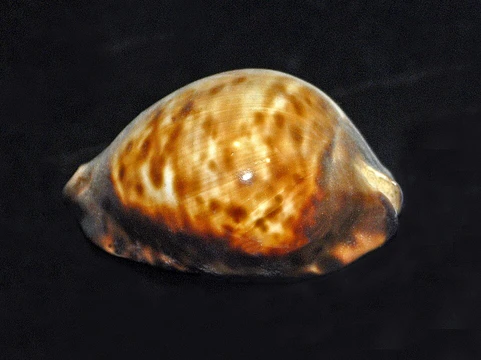
Cribrarula
A genus of cowries with many species in the Indo-Pacific.

Cribrarula is a genus of marine gastropod mollusks, specifically sea snails, belonging to the cowrie family Cypraeidae. The genus comprises a number of species, including *Cribrarula abaliena*, *Cribrarula abrolhensis*, *Cribrarula astaryi*, *Cribrarula boninensis*, *Cribrarula catholicorum*, the extinct †*Cribrarula cincta*, *Cribrarula comma*, *Cribrarula compta*, *Cribrarula cribellum*, *Cribrarula cribraria*, *Cribrarula cumingii*, *Cribrarula esontropia*, *Cribrarula exmouthensis*, *Cribrarula fallax*, *Cribrarula francescoi*, *Cribrarula garciai*, *Cribrarula gaskoini*, *Cribrarula gaspardi*, *Cribrarula gravida*, *Cribrarula melwardi*, *Cribrarula pellisserpentis*, *Cribrarula rottnestensis*, and *Cribrarula taitae*. Several former species have been reclassified as subspecies or synonyms, such as *Cribrarula angelae* (now *Cribrarula rottnestensis angelae*), *Cribrarula fischeri* (synonym of *Cribrarula esontropia*), *Cribrarula lefaiti* (synonym of *Cribrarula astaryi*), and *Cribrarula toliaraensis* (now *Cribrarula comma toliaraensis*).
Quick Facts
- Taxon
- Cribrarula
- Type Species
- Cypraea cribraria / Linnaeus, 1758
Facts from the source article.
Lore & Background
The genus Cribrarula was established by Jousseaume in 1884 in a division of the Cypraeidae. Species within the genus have been described by various authors, including Lorenz, Schilder, and others, from the 18th century to the 21st. Some species have been brought into synonymy; for example, Cribrarula angelae is accepted as a subspecies of Cribrarula rottnestensis, and Cribrarula fischeri is accepted as Cribrarula esontropia. The genus includes both extant and fossil species, such as †Cribrarula cincta described by K. Martin in 1899.
Reader's Guide
The genus Cribrarula holds significance in the study of cowries due to its diversity and the ongoing refinement of its taxonomy. The species list includes many named by prominent malacologists, reflecting a long history of collection and classification. The synonymies recorded indicate that taxonomic boundaries within the genus have been subject to revision, with some former species now considered subspecies or synonyms. The genus is notable for its presence in the Indo-Pacific, as discussed in a 2010 work by Heiman. The inclusion of a fossil species shows that the genus has a geological record extending into the past. The continued description of new species into the 21st century suggests that the genus remains an active area of research.
Did You Know?
- The genus Cribrarula was first divided by Jousseaume in 1884.
- Cribrarula angelae is now accepted as a subspecies of Cribrarula rottnestensis.
- The species Cribrarula cribraria was described by Linnaeus in 1758.
Taxonomic Identity and Placement
Cribrarula is a genus of marine gastropod mollusk belonging to the family Cypraeidae, the cowries. First described by Strand in 1929, it occupies a distinctive position within the family's classification: unlike many of its relatives, Cribrarula has not been assigned to any of the six subfamilies recognized in the Bouchet and Rocroi (2005) taxonomy. Instead, it sits among a group of genera that remain unaffiliated with the established subfamily framework. At a broader level, the family Cypraeidae falls within the superfamily Cypraeoidea, which encompasses cowries and their close allies. This superfamily is nested in the clade Littorinimorpha, itself a component of the larger clade Hypsogastropoda. As a member of Cypraeidae, Cribrarula shares the fundamental identity of being a small-to-large sea snail, though the family's extraordinary diversity in shell form and coloration has led conchologists to recognize roughly sixty genera and hundreds of species and subspecies across the group.
Shell Morphology and Structure
As a member of the cowry family, Cribrarula would be expected to display the hallmark shell architecture shared across Cypraeidae. Adult shells in this family are characteristically rounded and ovate, bearing a resemblance to a small egg rather than the coiled form typical of most gastropods. The surface is notably smooth and highly polished, a quality attributed to the living animal's mantle, which nearly always fully covers the shell. The dorsal side tends to be convex while the ventral side is flattened, and in fully mature specimens no spire is visible. Running along the length of the ventral surface is a long, narrow aperture bordered by a row of teeth. Cowries lack an operculum entirely. Juvenile shells present a striking contrast: they more closely resemble those of bubble snails in the order Cephalaspidea and typically lack the vivid color patterns that characterize adults, making young specimens difficult to identify to species.
Ecological Niche and Interactions
Cowries, including members of the genus Cribrarula, inhabit tropical and subtropical seas and represent one of the most widely distributed and abundant groups of gastropods on coral reefs, rocky intertidal flats, and sandy substrates in island regions. Their daily behavior is largely nocturnal and cryptic, which has left their feeding habits relatively poorly documented. Where observations exist, sponges emerge as the most commonly described prey; in Australian coastal waters, common cowry species are known to consume sponges, and on Caribbean reefs they feed on sponge species that are otherwise chemically defended against other predators. Despite the protective design of their narrow, toothed aperture, adult cowries remain vulnerable to several predators. Tropical crustaceans can fracture the dorsal shell, certain cone snails such as Conus textile inject venom and extend their stomach through the aperture to consume the soft tissue, and octopuses can bore a small hole using a specialized barb and acidic secretion to deliver a lethal toxin.
Taxonomic History and the 2002 Reorganization
For nearly two centuries, every species now recognized within the family Cypraeidae was lumped into a single genus, Cypraea, a classification that persisted from Linnaeus's 1758 description onward. The genus Cribrarula, described by Strand in 1929, was thus originally nested within that monolithic framework. A major taxonomic revolution arrived in 2002, when the cowries were formally divided into numerous separate genera, shattering the old single-genus arrangement. The subsequent Bouchet and Rocroi (2005) taxonomy further organized the family into multiple subfamilies, each containing one or more tribes with various historical synonyms. However, Cribrarula has not been placed within any of these subfamilies; it remains in the category of genera not assigned to a subfamily. The World Register of Marine Species treats these subfamilies as an alternate representation of the family, underscoring the ongoing complexity and revisionary nature of cowry classification.
Frequently Asked Questions
What is Cribrarula?
Cribrarula is a genus of small marine snails classified within the cowrie family Cypraeidae. It is a notably species-rich group found across the Indo-Pacific, and it sits alongside the more familiar collector cowries in the same family.
How many species are recognized in Cribrarula?
Twenty-three species are currently listed under the genus, from C. abaliena through C. gaspa. One of them, C. cincta, is known only from fossils and is considered extinct.
What is the type species of Cribrarula?
The type species is Cribrarula cribraria, which Linnaeus described in 1758. It has served as the taxonomic anchor for the genus ever since.
Where do Cribrarula species live?
Their range spans tropical and subtropical waters of the Indo-Pacific, with individual species tied to places like the Bonin Islands, the Abrolhos, and the Gulf of Exmouth. Most are associated with shallow reef or coastal habitats.
How is Cribrarula different from the 'classic' cowries collectors know?
Although it belongs to the same Cypraeidae family as famous money cowries, Cribrarula members are generally smaller and less glossy than genera like Lyncina or Cypraea. They are often overlooked by casual collectors but prized by specialists for their subtle patterning.
More in Cowries, Part 2 1-24
Spotted an error? Know more?
Reader corrections go straight into our review queue. Suggest an edit · How this site is sourced