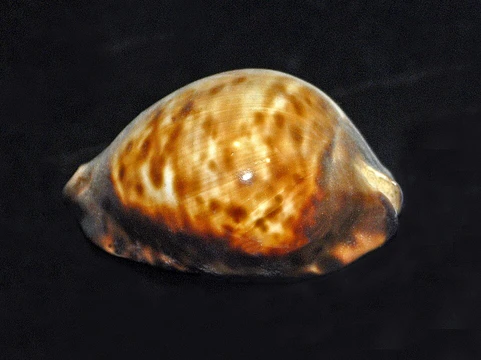
Zoila decipiens
A heavy, globular cowry with a deceptive taxonomic history.

Zoila decipiens, called the humpback cowry or deceptive cowry, is a marine gastropod mollusk in the cowry family Cypraeidae. Its species name *decipiens* means "deceiving," because the damaged holotype was mistakenly identified as *Zoila thersites*.
These fairly uncommon snails reach 32 to 70 mm in length. The shell is quite heavy, globular, and almost inflated, with a distinctly arched dorsum. Its color is pale brown, densely covered with irregular dark brown spots, and a lighter, usually visible dorsal line. A dark brown frame separates the dorsal surface from the edges. The base is dark brown, nearly flat, with angled edges. The narrow mouth has short teeth darker than the base on both lips.
This endemic species lives in the sea off northwestern Australia. Divers most often find the shells southwest of Broome. These large, colorful cowries inhabit cold, deep water, feeding on sponges in crevices and rocks. They occur at depths up to 60 to 70 meters but are more common between 15 and 35 meters.
Subspecies include *Zoila decipiens decipiens* (Smith, 1880) and *Zoila decipiens suprasinum* (Lorenz, 2002).
Quick Facts
- Taxon
- Zoila decipiens
Facts from the source article.
Lore & Background
The humpback cowry is a quite uncommon snail, with a rather heavy shell that is globular and almost inflated. Its dorsum is distinctly arched, colored pale brown and more or less densely covered with irregular dark brown spots, while the dorsal line is lighter and usually clearly visible. The dorsal surface is separated from the edges by a dark brown frame, and the base is dark brown, almost flat, with angled edges. The mouth is narrow, with short teeth darker than the base present on both lips.
This endemic species occurs in the sea along North West Australia, with shells most frequently found by divers from an area southwest of Broome. These large, colorful cowries live in cold deep water, feeding on sponges in crevices and rocks at a maximum depth of 60–70 m, though they are more usually found at a depth of 15–35 m.
The species name decipiens, meaning 'deceiving', was given because the damaged holotype was wrongly classified as Zoila thersites. Two subspecies are recognized: Zoila decipiens decipiens and Zoila decipiens suprasinum.
Reader's Guide
Zoila decipiens holds a notable place in cowry taxonomy due to the confusion surrounding its original classification. The damaged holotype was initially misidentified as Zoila thersites, leading to the specific epithet decipiens, meaning 'deceiving'. This error underscores the challenges of identifying cowries from incomplete specimens and highlights the importance of careful morphological study in malacology.
As an endemic species restricted to the waters off North West Australia, particularly southwest of Broome, Zoila decipiens represents a localized component of the region's marine biodiversity. Its habitat in cold deep water, feeding on sponges in crevices and rocks, places it within a specialized ecological niche. The species is quite uncommon, and its shells are sought after by divers and collectors for their distinctive globular shape, heavy build, and striking color pattern of pale brown with dark spots and a dark brown frame.
The recognition of two subspecies—Zoila decipiens decipiens and Zoila decipiens suprasinum—indicates some geographic or morphological variation within the population. The species is documented in standard references on worldwide cowries, and its presence in taxonomic databases such as WoRMS and Biolib ensures its place in the scientific record. The humpback cowry remains a subject of interest for its deceptive history and its role in the cowry fauna of northwestern Australia.
Did You Know?
- These snails reach about 32–70 mm in length and have a rather heavy, globular shell.
- The species is endemic to the sea along North West Australia, most frequently found southwest of Broome.
More in Cowries, Part 2 1-24
Spotted an error? Know more?
Reader corrections go straight into our review queue. Suggest an edit · How this site is sourced