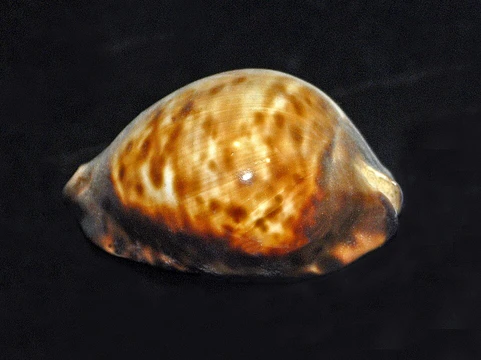
Paradusta hungerfordi
A variable cowry from Japan and northeastern Australia.

Paradusta hungerfordi, called Hungerford's cowry, is a marine gastropod mollusk belonging to the cowry family Cypraeidae. Its shell is pear-shaped, measuring between 20 and 48 mm, and shows wide variation in both color and pattern. The upper surface is usually pale brown or whitish with brown dots, while the underside can be whitish, yellowish, or orange. This species is found around Japan and along the northeastern coast of Australia. Four subspecies are recognized: P. hungerfordi bealsi, P. hungerfordi coucoumi, P. hungerfordi hungerfordi, and P. hungerfordi lovetha.
Quick Facts
- Taxon
- Paradusta hungerfordi
Facts from the source article.
Lore & Background
The shell of Paradusta hungerfordi is pear-shaped and displays a quite variable coloration and pattern. The dorsum surface is typically pale brown or whitish with brown dots, while the ventral surface may be whitish, yellowish, or also orange. This species is found around Japan and on the northeastern coast of Australia.
Several subspecies have been recognized: Paradusta hungerfordi bealsi, Paradusta hungerfordi coucoumi, Paradusta hungerfordi hungerfordi, and Paradusta hungerfordi lovetha. The species was originally described by Sowerby III in 1888.
Reader's Guide
Paradusta hungerfordi is a member of the cowry family Cypraeidae, a group of marine gastropods known for their glossy, often colorful shells. The species' pear-shaped shell and variable patterning—ranging from pale brown to whitish with brown dots on the dorsum, and whitish, yellowish, or orange on the ventral side—make it a subject of interest among conchologists. Its distribution spans from Japan to the northeastern coast of Australia, indicating a broad but specific range in the western Pacific. The recognition of four subspecies—bealsi, coucoumi, hungerfordi, and lovetha—reflects geographic or morphological variation within the species. The original description by Sowerby III in 1888 places it within the historical context of 19th-century malacology, when many cowry species were first formally named. The species continues to be referenced in modern taxonomic works, such as Lorenz's 2017 volume on cowries and the 2008 checklist of marine biota of China seas, underscoring its established place in the scientific literature.
Did You Know?
- It has four recognized subspecies: bealsi, coucoumi, hungerfordi, and lovetha.
- The shell size ranges from 20 to 48 mm.
- Its distribution includes both Japan and the northeastern coast of Australia.
More in Cowries, Part 2 1-24
Spotted an error? Know more?
Reader corrections go straight into our review queue. Suggest an edit · How this site is sourced