Great Wall of Sand
PRC artificial island chain in the Spratly Islands, 2013–2016.

The "Great Wall of Sand" refers to a series of large-scale land reclamation projects undertaken by the People's Republic of China (PRC) in the Spratly Islands area of the South China Sea between late 2013 and late 2016. The name was first used in March 2015 by U.S. Admiral Harry Harris, then commander of the Pacific Fleet, to describe the construction of artificial islands intended to strengthen territorial claims.
- Start date
- late 2013
- End date
- late 2016
- Total reclaimed land by 2015
- over 810 hectares (2,000 acres)
- Total reclaimed land by december 2016
- 1,300 hectares (3,200 acres)
- Number of reclamation sites
- 7
- First use of name
- March 2015
- Named by
- U.S. Admiral Harry Harris
Lore & Background
The PRC used hundreds of dredges and barges, including the giant self-propelled dredger Tian Jing Hao, built in 2009 in China. This 127-meter-long cutter suction dredger, designed by German engineering company Vosta LMG, has a dredging capacity of 4,500 m³/h and operated on Cuarteron Reef, the Gaven Reefs, and Fiery Cross Reef. The PRC states the construction is for improving working and living conditions and providing shelter, navigation aid, weather forecasts, and fishery assistance to passing ships. Defence analysts IHS Jane's described it as a 'methodical, well planned campaign to create a chain of air and sea-capable fortresses,' with military-ready installations including sea-walls, deep-water ports, barracks, and runways on Fiery Cross Reef, Mischief Reef, and Subi Reef.
Reader's Guide
The "Great Wall of Sand" is notable for its scale and geopolitical implications. The reclamation created around five square miles of artificial islands by 2023, at least one housing military equipment. The construction outpaced previous artificial island building by the Philippines and Vietnam from 2014 to 2016. The project raised legal issues under the United Nations Convention on the Law of the Sea (UNCLOS). In 2016, the Permanent Court of Arbitration ruled that China's artificial islands in the Spratly archipelago fell outside China's Exclusive Economic Zone (EEZ), violating the Philippines' exclusive right to construct artificial islands under Article 60(1)(a) of UNCLOS. China disputed the ruling, labeling it 'null and void.'
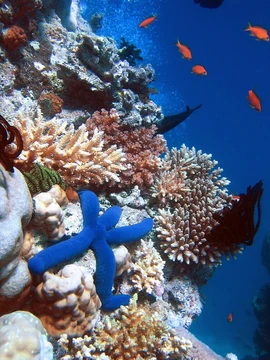
Environmental concerns were also prominent. The dredging destroyed reef ecosystems, with sediment plumes smothering marine life and blocking sunlight for reef-building corals. Shallow-water dredging removed not only sand and gravel but also lagoon and reef flat ecosystems. Damaged reefs may not fully recover for 10 to 15 years, and placing artificial islands on reefs prevents coral regrowth and harms fisheries. These actions were argued to violate Articles 192, 194(2), and 194(5) of UNCLOS, as well as Article 3 of the Convention on Biological Diversity, particularly since the construction occurred outside China's EEZ and within that of other states.
Did You Know?
- By December 2016, the reclamation had created 1,300 hectares (3,200 acres) of new land.
- The PRC used the giant dredger Tian Jing Hao, built in 2009 and designed by a German company.
- The 2016 Permanent Court of Arbitration ruling found China's construction violated the Philippines' exclusive right to build artificial islands under UNCLOS.
More in Coral Reefs 1-24
Spotted an error? Know more?
Reader corrections go straight into our review queue. Suggest an edit · How this site is sourced