Coral sand
Coral sand is acid-soluble limestone sand from marine bioerosion.

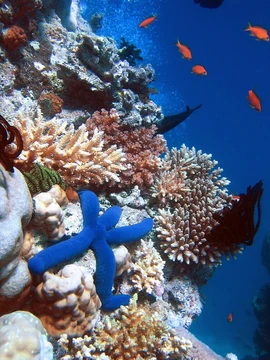
Coral sand consists of aragonite particles found in tropical and subtropical seas. It forms mainly through the bioerosion of limestone skeletal material from marine life. Parrotfish and other corallivores contribute by digesting coral and excreting sand. Despite its name, "coral" here broadly refers to recently formed biological limestone, and corals themselves are not the main source of the sand in most deposits. Instead, coral sand is a mixture of coral fragments along with remnants of foraminifera, calcareous algae, molluscs, and crustaceans. Because it is limestone-based, it dissolves in acid.
Mining coral sand is a major industry in some regions, with serious environmental consequences. In Mauritius, over half a million tons were extracted each year until a ban took effect in 2001. Beaches in the Comoros show scarring from sand mining. In 1974, Tanzania exported more than 250 tons of shells and corals. As supplies off Tanzania and Kenya have been depleted, mining has shifted to Zanzibar and Mafia islands. This large-scale extraction harms reef ecosystems and beaches. At current consumption rates, living coral rock from inner atoll faros in North Malé could be exhausted within three decades.
- Annual mining mauritius
- over 500,000 tons
- Ban date mauritius
- October 2001
- Export tanzania 1974
- over 250 tons of shells and corals
- Estimated exhaustion north male
- within 30 years at current consumption rate
Lore & Background
Coral sand originates from the bioerosion of limestone skeletal material of marine organisms, often through the digestive processes of corallivores like parrotfish. Despite its name, corals are not the dominant contributors; the sand is a mix of fragments from foraminifera, calcareous algae, molluscs, and crustaceans. Because it is composed of limestone, coral sand is acid-soluble.
Environmental issues have arisen from coral sand mining, which is a significant industry in some areas. Over 500,000 tons of coral sand were mined annually from Mauritius until the practice was banned in October 2001. Many Comoros beaches have been scarred by sand mining, and over 250 tons of shells and corals were exported from Tanzania in 1974. Exploitive collection has moved from depleted areas off Tanzania and Kenya to the islands of Zanzibar and Mafia.
Such extensive mining can be very harmful to reef ecosystems and beaches. It is estimated that, at the current rate of consumption, the supply of living coral rock from inner atoll 'faros' in North Malé will be exhausted within 30 years.
Reader's Guide
Coral sand is notable for its origin from bioerosion of limestone skeletal material, primarily by corallivores such as parrotfish, and for its composition as a mix of fragments from foraminifera, calcareous algae, molluscs, and crustaceans rather than dominant coral contributions. Its significance is underscored by environmental concerns: coral sand mining has been a major industry, with over 500,000 tons mined annually from Mauritius until a ban in October 2001. Beaches in the Comoros have been scarred by sand mining, and over 250 tons of shells and corals were exported from Tanzania in 1974. Exploitive collection has shifted from depleted areas off Tanzania and Kenya to Zanzibar and Mafia. The legacy of this mining includes potential exhaustion of living coral rock from inner atoll 'faros' in North Malé within 30 years at current consumption rates, highlighting the harmful effects on reef ecosystems and beaches. The acid-soluble nature of coral sand, due to its limestone composition, is a key characteristic.
Did You Know?
- Coral sand is primarily from bioerosion of limestone skeletal material, often by parrotfish.
- Corals are not the dominant contributors to most coral sand deposits.
More in Coral Reefs 1-24
Spotted an error? Know more?
Reader corrections go straight into our review queue. Suggest an edit · How this site is sourced