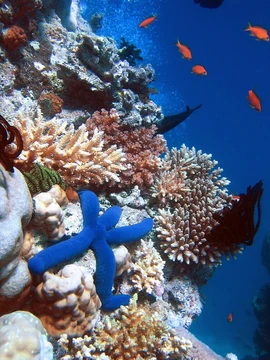
Coral reef fish
Coral reef fish are diverse, colorful inhabitants of complex reef ecosystems.

Coral reef fish are marine species that live among or near coral reefs. These reefs form complex, highly biodiverse ecosystems, and the fish that inhabit them are especially vivid and engaging to observe. In a small section of a healthy reef, hundreds of fish species can be found, many of which are hidden or well-camouflaged. Over time, reef fish have developed a range of specialized traits to survive in this environment.
Although coral reefs cover less than 1% of the world’s ocean surface, they are home to about 25% of all marine fish species. This is a stark contrast to the open-water habitats that make up the other 99% of the ocean. However, coral reefs and their fish are under threat from habitat loss and degradation, rising pollution, and overfishing—including destructive fishing practices.
Coral reefs themselves are the product of millions of years of coevolution among algae, invertebrates, and fish. The resulting crowded and intricate environment has driven fish to evolve many clever survival strategies. Most coral reef fish are ray-finned fishes, with sharp, bony rays and spines in their fins. These spines can be locked in place or are venomous, providing strong defense. Many reef fish also use cryptic coloration to confuse predators.
Behavioral adaptations are equally complex. Small reef fish hide in crevices or form schools and shoals to avoid predators. Many stay within a small, familiar neighborhood where every hiding spot is known and quickly reachable. Others roam the reef in groups to find food but return to a known hiding area when resting. Even at rest, small fish are vulnerable to predators that hunt in crevices, so some—like triggerfish—squeeze into tight spaces and wedge themselves by erecting their spines. Surgeonfish, for example, are herbivores that graze on benthic turf algae. They also clean algae from the shells of marine turtles. They do not tolerate other fish of the same color or shape, and when alarmed, they erect spines on their tail and slash sideways at an opponent.
Coral reefs host the most diverse fish assemblages on Earth, with an estimated 6,000 to 8,000 species living in reef ecosystems worldwide. The reasons for this concentration of species have been debated for decades, and no single factor is widely agreed upon as most important.
- Reef area percentage
- less than 1% of the world ocean surface
- Marine fish species percentage
- 25% of all marine fish species
- Estimated total reef fish species
- 6,000–8,000
- Indo pacific species estimate
- 4,000–5,000
- Greater caribbean species estimate
- 500–700
Lore & Background
Coral reefs are the result of millions of years of coevolution among algae, invertebrates, and fish, leading to crowded and complex environments. Most reef fish are ray-finned fishes with sharp, bony rays and spines that provide formidable defenses, often lockable or venomous. Many have evolved cryptic coloration to confuse predators. Small reef fish gain protection by hiding in crevices or by shoaling and schooling, often confining themselves to a small neighborhood where every hiding place is known. Resting fish remain vulnerable, so some, like triggerfish, wedge themselves into hiding spots by erecting their spines. Surgeon fishes are herbivores that feed on benthic turf algae and also clean marine turtles by removing algal growth; they do not tolerate fish of the same color or shape and can slash opponents with tail spines.
Reader's Guide
Coral reef fish are significant as they represent the most diverse fish assemblages on Earth, with an estimated 6,000–8,000 species dwelling within coral reef ecosystems. The mechanisms maintaining this diversity are debated, with no general scientific consensus, but likely factors include rich habitat complexity, variety of food resources, and pre- and post-larval settlement processes. Two major regions of reef development exist: the Indo-Pacific (including the Pacific and Indian Oceans and the Red Sea) and the tropical western Atlantic (greater Caribbean), each with unique, non-overlapping faunas. The Indo-Pacific is richest, with 4,000–5,000 species, while the Caribbean has 500–700. However, loss and degradation of coral reef habitat, increasing pollution, and overfishing including destructive practices threaten the survival of coral reefs and associated reef fish.
Did You Know?
- Coral reefs occupy less than 1% of the world ocean surface but provide a home for 25% of all marine fish species.
- The foureye butterflyfish has a false eyespot on its rear to confuse predators into thinking it will flee tail first.
- The clown triggerfish has countershading: white spots on its ventral surface and black spots on its dorsal surface.
- The tasseled scorpionfish is an ambush predator that looks like part of the sea floor encrusted with coral and algae.
More in Coral Reefs 1-24
Spotted an error? Know more?
Reader corrections go straight into our review queue. Suggest an edit · How this site is sourced