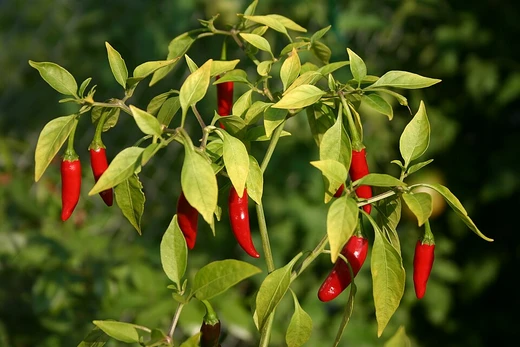
Prik Kee Nu pepper
Small, pungent chili used widely in Asian cuisines.
Native to Mexico, this Capsicum annuum variety is named for its shape and widely grown in Southeast Asia for Asian cooking. It can be confused with the smaller, upward-pointing siling labuyo from Capsicum frutescens.
Quick Facts
- Scoville units
- 50,000 – 100,000
- Species
- Capsicum annuum
- Origin
- Mexico
Facts from the source article.
Did You Know?
- The bird's eye chili plant is a perennial with small, tapering fruits, often two or three at a node.
- All chilis found worldwide today originate from Mexico, Central America, and South America, spread through the Columbian Exchange.
- Chili varieties in Southeast Asia were brought there in the 16th or 17th centuries.
Uses
In Indonesian cuisine, these chilis are widely used in dishes and sambals, and whole green bird's eye chili is eaten raw as a side for gorengan. In Vietnamese cuisine, they appear in soups, salads, stir-fried dishes, and various sauces, pastes, and marinades, eaten raw fresh or dried. Thai cuisine values them for their fruity taste and extreme spiciness, using them in curries and salads, or raw alongside dishes like khao kha mu. They are also used in Indian cuisine, known natively as Kanthari chili. The decorative Thai ornamental variety, slightly less pungent, has upward-pointing peppers that change from green to yellow, orange, then red, and is the basis for the hybrid 'NuMex Twilight', which starts with purple fruit.
More in Chili Pepper Varieties
Spotted an error? Know more?
Reader corrections go straight into our review queue. Suggest an edit · How this site is sourced