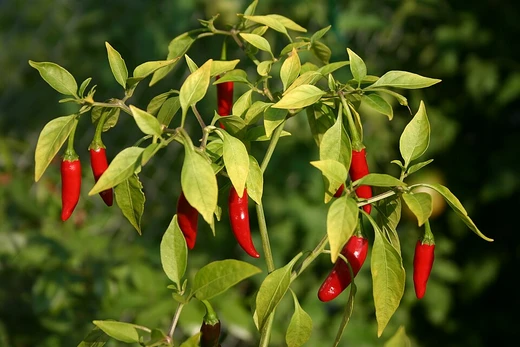
Cayenne pepper
A hot, tapered chili used in spice and herbal supplements.
The cayenne pepper is a hot chili pepper of the species Capsicum annuum, typically measuring 10 to 25 cm in length with a tapered, skinny shape and a curved tip. It is widely used to flavor dishes and is often dried and ground into a powdered spice, though commercial cayenne powder may contain other pepper varieties.
Quick Facts
- Genus
- Capsicum
- Species
- C. annuum
- Cultivar
- Cayenne
Facts from the source article.
Did You Know?
- The word cayenne likely derives from kyynha, meaning "capsicum" in the Old Tupi language once spoken in Brazil.
- English botanist Nicholas Culpeper used the phrase "cayenne pepper" in 1652, before the city of Cayenne was renamed in 1777.
- In North America, the primary cultivar in crushed red pepper is cayenne.
Taxonomy
The cayenne pepper belongs to Capsicum annuum, a species that also includes bell peppers, jalapeños, and pimientos, within the nightshade family Solanaceae. Although sometimes considered a variety of Capsicum frutescens, cayenne peppers hang from the bush, whereas true frutescens peppers, such as tabasco, grow upright. In the 19th century, modern cayenne peppers were classified as C. longum, later synonymised with C. frutescens, while cayenne powder was often made from bird's eye peppers, then classified as C. minimum. Nicholas Culpeper's 1653 Complete Herbal listed cayenne pepper as a synonym for "pepper (guinea)", a term that by the late 19th century referred to bird's eye chili or piri-piri.
Varieties
Cayenne peppers are long, skinny, and usually red, with a curved tip and rippled skin, hanging down from the bush. They come in many named types, like Cow-horn, Ring of Fire, and Cayenne Thomas Jefferson. While most are red today, yellow and purple varieties exist, and yellow ones were common in the 1800s. Most cayennes rate between 30,000 and 50,000 Scoville units, though some mild types are 20,000 or less.
History
Cayenne peppers have been cultivated by indigenous peoples of the Americas for 7,000 years. They originated in what is now French Guiana and were introduced to the rest of the world by Christopher Columbus around 1493. At that time, a spice shortage in Europe, caused by myths about spice origins and heavy taxes by the Ottoman Empire, made peppers a luxury item. Cayenne peppers, being easy to grow, helped end the shortage by serving as a substitute for expensive spices like black pepper, earning them the name "the poor man's pepper".
More in Chili Pepper Varieties
Spotted an error? Know more?
Reader corrections go straight into our review queue. Suggest an edit · How this site is sourced