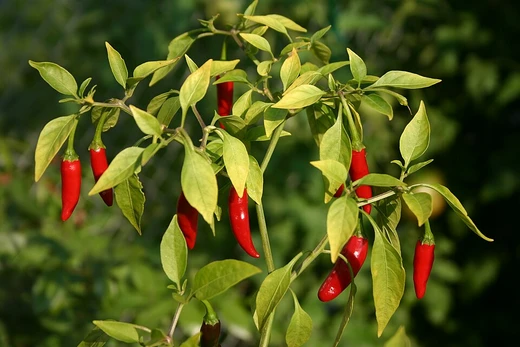
Aleppo pepper
A moderately hot Capsicum annuum cultivar, the Aleppo pepper is employed as a spice in Turkish, Middle Eastern, and Mediterranean cooking.[1] After ripening to a deep red, the pods are partially dried, have their seeds removed, and are then either crushed or coarsely ground.[1]
Quick Facts
- Species
- Capsicum annuum
- Origin
- South America
Facts from the source article.
Key facts and history
Columbus brought peppers to Europe from the West Indies, and from there they spread throughout the known world, according to spice merchant Tom Erd.[2] The spice trading Moors moved peppers from Spain into North Africa.[2] New varieties of chile peppers soon sprang up, including the Aleppo.[2] Use of Aleppo pepper in Europe and the United States outside immigrant communities was rare until the 21st century.[3]
Los Angeles magazine dated its rise among the broader U.S. population to the 1994 edition of The Cooking of the Eastern Mediterranean by Paula Wolfert.[3] South America is the original home of chiles, which, together with potatoes and tomatoes, were part of the New World crops.[4] On the Scoville scale, the Aleppo pepper registers a moderate heat, approximately 10,000 units.[5] Compared to the ancho chile, its taste is more oily and somewhat salty, with a fruitiness reminiscent of raisins.[6]
In Turkey, the flaked form of this pepper is called pul biber, while in Armenia it is referred to as Halebi bibar.[1]
What the cited sources add
A National Geographic article notes that the path of Aleppo pepper from seed to plate has been tragically disrupted by war in Syria.[2] Urfa pepper is often substituted as “Aleppo-like” but is smokier, darker and much hotter, the article warns.[2] A 2009 Metro article quotes a chef listing Aleppo pepper among spices used most often, alongside cinnamon, allspice, nutmeg and sumac.[7] The same Metro article includes a recipe for veggie burgers seasoned simply with salt and Aleppo pepper.[7]
References
- Wikipedia, "Aleppo pepper" (CC BY-SA 4.0), which cites: "Chiles You Haven't Heard of but Soon Will", www.spicesinc.com; David Floyd, "The Aleppo Pepper", The ChileFoundry, June 10, 2010 (original not read by us) en.wikipedia.org
- "How Syria's Famous Aleppo Pepper Might Be Saved", National Geographic, 2016-04-05. nationalgeographic.com
- Wikipedia, "Aleppo pepper" (CC BY-SA 4.0), which cites: "Hot Stuff", Los Angeles, May 2002 (original not read by us) en.wikipedia.org
- Wikipedia, "Aleppo pepper" (CC BY-SA 4.0), which cites: Verde, "The Long Journey of the Aleppo Pepper", The New York Times, 2018-10-09 (original not read by us) en.wikipedia.org
- Wikipedia, "Aleppo pepper" (CC BY-SA 4.0), which cites: "Aleppo Pepper: Silk Roads and Subpar Steaks", Riverfront Times, July 27, 2010; "Pepper Heat Ratings in Scoville Units", Penzeys Spices (original not read by us) en.wikipedia.org
- Wikipedia, "Aleppo pepper" (CC BY-SA 4.0), which cites: David Floyd, "The Aleppo Pepper", The ChileFoundry, June 10, 2010 (original not read by us) en.wikipedia.org
- "Bank holiday special: A picnic with a twist", Metro, 27 April 2009. metro.co.uk
Each numbered sentence above was checked against the source it cites before publication. Sentences citing Wikipedia adapt text from the English Wikipedia article Aleppo pepper (contributors), used under CC BY-SA 4.0; this entry is available under the same licence. Other sources were used for facts only.
More in Chili Pepper Varieties
Spotted an error? Know more?
Reader corrections go straight into our review queue. Suggest an edit · How this site is sourced