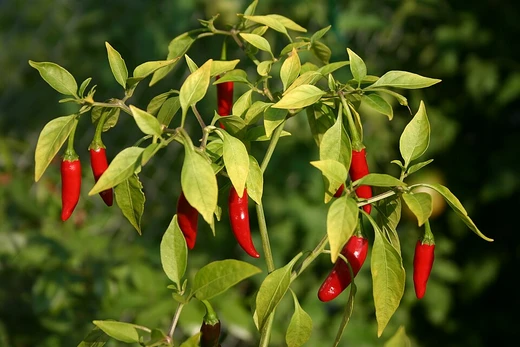
Datil pepper
A hot, sweet pepper native to St. Augustine, Florida.
The datil is a very hot pepper, a variety of Capsicum chinense (syn. Capsicum sinense). It is a green to yellowish-golden aromatic pepper, with a mature fruit measuring 3–4 cm long, having a blunt tip, a golden-orange color, and weighing 3 grams. Its taste combines heat and sweetness, and its name derives from Spanish and Catalan for date palm, due to the pepper's resemblance to that fruit.
Quick Facts
- Species
- Capsicum chinense
Facts from the source article.
Origin
The origin of the datil pepper is tied to events following the Treaty of Paris in 1763. Andrew Turnbull, a Scotsman, obtained over 100,000 acres of land and led families of workers from Mediterranean countries to Florida via Minorca, a Spanish island acquired by the British. This land became New Smyrna. The environment at New Smyrna was poor, and survivors fled north to St. Augustine. After the American Revolution, those remaining in St. Augustine received a few acres and slaves. Historic research suggests the datil pepper came to St. Augustine from Minorca, though others believe it arrived through Turnbull's slaves, the Mandingos. No Capsicum chinense was cultivated in the Mediterranean at that time, indicating the pepper originated elsewhere. Another origin story holds that slaves from New Smyrna were in the West Indies, where common peppers were abundant; Mandingos were transported from West Indian slave markets via British ships, such as from Havana to Florida. Chili peppers were loaded onto ships with slaves, and trading from Cuba and the West Indies along the North American coast is another possible source. Research suggests the St. Augustine datil may belong to the same species as the Habanero pepper, but it is improbable that the pepper was given to the Minorcans from Africans in New Smyrna due to little connection with Cuba.
Cultivation
The datil pepper was the first Capsicum chinense grown for profit in the United States since its arrival in St. Augustine. It is typically grown in back-yard gardens by families in northeastern Florida. Seeds are scarce commercially and are usually available through local farmers or the Internet. Local families grow small batches for use in local restaurants and businesses. Datil peppers do not last when fully ripe, so the optimal stage to buy them is when they are green. Seeds germinate at soil temperatures of 75–80 degrees Fahrenheit, taking 10–20 days. Seeds can be planted indoors in late winter and transferred when temperatures warm, or planted in mid-summer and transferred around autumn. Seeds extracted from a mature pepper must be dried for several days and stored in a dry, cool location. A frequent pest is the pepper weevil. Research by the American Society for Horticultural Science found that fruit harvested at the yellow stage had 91 percent marketability compared to 75 percent for orange-harvested fruit. Yellow-harvested peppers are faintly less sweet than orange ones and allow up to 21 days of storage at 2 °C (35.6 °F) before quality declines. Common varieties used in cooking include Wanda, Sensation, and Terra Time.
Culture
The datil pepper is widely known across St. Augustine and has become a staple in Florida cuisine and culture due to its centuries-long exclusivity to the area. Its commercially made sauces are prominent in the St. Augustine tourism industry, occupying grocery and souvenir stores. In September 2013, the St. Johns County Board of County Commissioners declared the first Saturday in October as Datil Pepper Day. The pepper is the official plant of St. Johns County. The county hosts the annual Datil Pepper Fall Festival in October; the 12th annual festival was held on October 5, 2019.
Characteristics
The datil pepper has a Scoville heat rating similar to the Habanero pepper, ranging between 100,000 and 300,000. It is approximately 12 times hotter than a jalapeño. The plant reaches maturity in about 5 months and grows to 18 inches (1 ft 6 in). Its color ranges from green to yellow to orange. Compared to the habanero, also a Capsicum chinense, the datil is longer, skinnier, and sweeter.
More in Chili Pepper Varieties
Spotted an error? Know more?
Reader corrections go straight into our review queue. Suggest an edit · How this site is sourced